预约演示
更新于:2026-10-06

Shanghai Institute of Pharmaceutical Industry
更新于:2026-10-06
概览
标签
肿瘤
呼吸系统疾病
神经系统疾病
小分子化药
化学药
合成多肽
疾病领域得分
一眼洞穿机构专注的疾病领域

技术平台
公司药物应用最多的技术
靶点
公司最常开发的靶点
关联
靶点 |
作用机制 |
在研机构 |
原研机构 |
在研适应症 |
非在研适应症 |
最高研发阶段 |
首次获批国家/地区 |
首次获批日期 |
靶点 |
作用机制 |
在研机构 |
原研机构 |
在研适应症 |
非在研适应症 |
最高研发阶段 |
首次获批国家/地区 |
首次获批日期 |

靶点 |
作用机制 |
在研机构 |
原研机构 |
在研适应症 |
非在研适应症 |
最高研发阶段 |
首次获批国家/地区 |
首次获批日期 |

CTR20262115
米氮平片在健康参与者中的生物等效性试验

CTR20262258
青霉素V钾片在健康研究参与者中的生物等效性研究

CTR20261913
琥珀酸美托洛尔缓释胶囊在健康研究参与者中的随机、开放、单次给药、两制剂、两周期、自身交叉及餐后药代动力学研究
100 项与 上海医药工业研究院有限公司 相关的临床结果
登录后查看更多信息
登录后查看更多信息
2026-11-01PHYTOMEDICINE
Agrimol B induces autophagic death in TP53-mutant pancreatic cancer by targeting the S100A6-HDAC2-mutant p53 acetylation axis
Article
作者: Jiang, Yixin ; Xu, Rui ; Xiong, Qingyi ; Yan, Yue ; Lu, Dong ; Luan, Xin ; Zhang, Weidong ; Chen, Xin ; Chen, Hongzhuan ; Wu, Tong ; Zhou, Wei ; Jin, Jinmei ; Xia, Liuyuan
BACKGROUND:
Pancreatic ductal adenocarcinoma (PDAC) harbors TP53 mutations at high frequency, yet therapeutic strategies that specifically target mutant p53 remain limited.
PURPOSE:
This study aimed to identify S100A6, a calcium-binding protein frequently upregulated in TP53-mutant PDAC, as a critical regulator of mutant p53 stability and tumor progression, and to explore potential S100A6-targeting agents for therapeutic intervention.
METHODS:
We integrated computer-assisted drug screening with transcriptomics, acetylation omics, and molecular biology techniques to identify Agrimol B (AgrB), a bioactive compound derived from the traditional Chinese herb Agrimonia pilosa Ledeb., as a potential S100A6-targeting agent.
RESULTS:
High S100A6 expression was closely associated with poor prognosis in patients with TP53-mutant PDAC, whereas S100A6 depletion markedly suppressed PDAC cell growth and metastatic potential. Mechanistically, AgrB enhanced the interaction between S100A6 and the deacetylase HDAC2, leading to reduced acetylation of mutant p53 at lysine 382. This disruption activated autophagy-dependent cell death and thereby inhibited PDAC progression.
CONCLUSION:
Our findings reveal an S100A6-HDAC2-mutant p53 acetylation axis that regulates TP53-mutant pancreatic tumorigenesis, providing mechanistic evidence supporting S100A6 as a therapeutic vulnerability and highlighting AgrB as a promising natural-product-derived candidate for further development against this aggressive malignancy.
2026-09-01INTERNATIONAL JOURNAL OF BIOLOGICAL MACROMOLECULES
Non-phase change arylazopyrazole-containing alginate dressings with controlled heat release providing “hot spring” effect for wound healing
Article
作者: Xue, Wei ; Zhao, Xiaojian ; Lv, Fang ; Wu, Zhongtao ; Liu, Yun ; Liu, Kang ; Zhang, Xu ; Liu, Zhongjia ; Li, Xingkai
Mild heat condition could promote tissue repair by enhancing angiogenesis and accelerating regeneration. Photon energy is a bio-friendly natural energy capable of creating mild heat, while, it remains a challenge to fabricate the photothermal biomaterial with merits of high energy storage density, easy-controlled heat release and stable physical state. Here, a type of alginate complexes is designed by electrostatically complexing alginate and arylazopyrazole-containing surfactants, which could gain good photothermal effect in solid state. Taking advantage of arylazopyrazole isomerization, the ionic complexes address gravimetric energy density as high as 264.0 J/g upon UV-charging, and the stored photon energy could be released out as heat for increasing environmental temperature 3-8 °C with 3.0 mg of sample through a controlled Vis-discharging way. The high photothermal efficiency and consistent physical state make such ionic alginate complexes good biomedical dressing materials for wound healing treatment. In vitro experiments demonstrate that the ionic alginate complexes can effectively enhance cell proliferation and migration by providing mild heat stimulation, and in vivo wound healing studies confirm their ability to accelerate tissue regeneration. This study would widen the application scenarios of photoswitches-based solar thermal fuels, especially in biomedical area.
2026-06-01BIOORGANIC & MEDICINAL CHEMISTRY
Design, synthesis and evaluation of trofinetide prodrug based on diketopiperazine strategy
Article
作者: Bian, Jing ; Feng, Jun ; Lu, Jianguang ; Guo, Chen ; Xu, Zhiru ; Dong, Yuanzhen ; Feng, Xue ; Luo, Tao ; Peng, Wenjing
Trofinetide is the only drug approved worldwide for the treatment of Rett syndrome, a rare pediatric disease. However, its extremely short half-life, large oral dose, high incidence of gastrointestinal adverse reactions, and consequently high treatment costs pose formidable clinical and economic challenges. To address these issues, we employed a diketopiperazine strategy to design a novel class of trofinetide prodrugs, aiming to alter the administration route and optimize its pharmacokinetic properties. Through the determination of solubility and in vitro conversion half-life, and based on the established screening criteria, TFD 10 was selected from the series of qualified compounds as a representative for pharmacokinetic evaluation. TFD 10 exhibited efficient conversion to trofinetide both in vitro and in vivo. Compared to oral administration of trofinetide, subcutaneous injection of TFD 10 markedly prolonged the half-life (6-fold) and substantially increased systemic exposure (40-fold), successfully achieving the design objectives. This study validates the feasibility of this strategy, and TFD 10, as a proof-of-concept lead compound, demonstrates significant potential for further development.
100 项与 上海医药工业研究院有限公司 相关的药物交易
登录后查看更多信息
100 项与 上海医药工业研究院有限公司 相关的转化医学
登录后查看更多信息
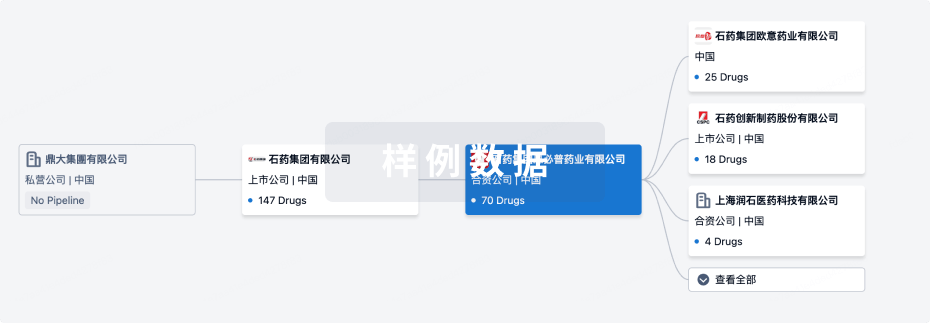
组织架构
使用我们的机构树数据加速您的研究。
登录
或
管线布局
2026年10月11日管线快照
管线布局中药物为当前组织机构及其子机构作为药物机构进行统计,早期临床1期并入临床1期,临床1/2期并入临床2期,临床2/3期并入临床3期
药物发现
5
10
临床前
临床申请
1
8
临床1期
临床2期
5
1
临床3期
批准上市
16
30
其他
登录后查看更多信息
当前项目
登录后查看更多信息
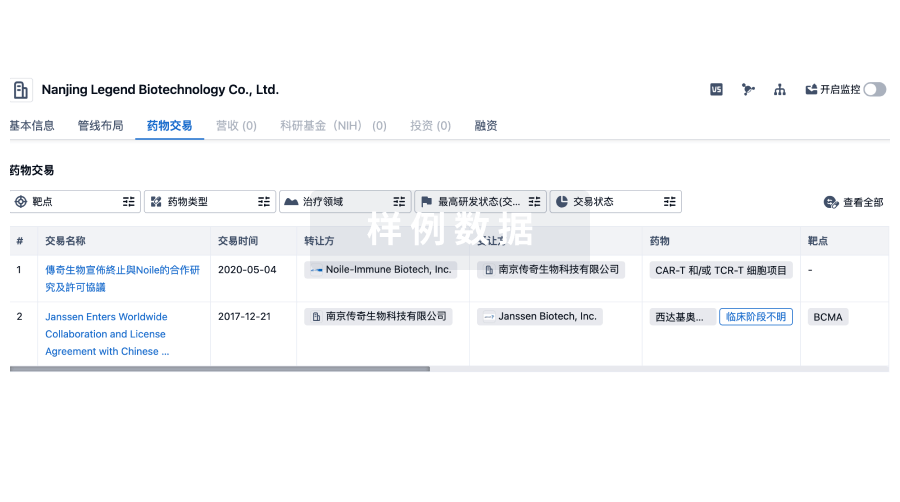
药物交易
使用我们的药物交易数据加速您的研究。
登录
或
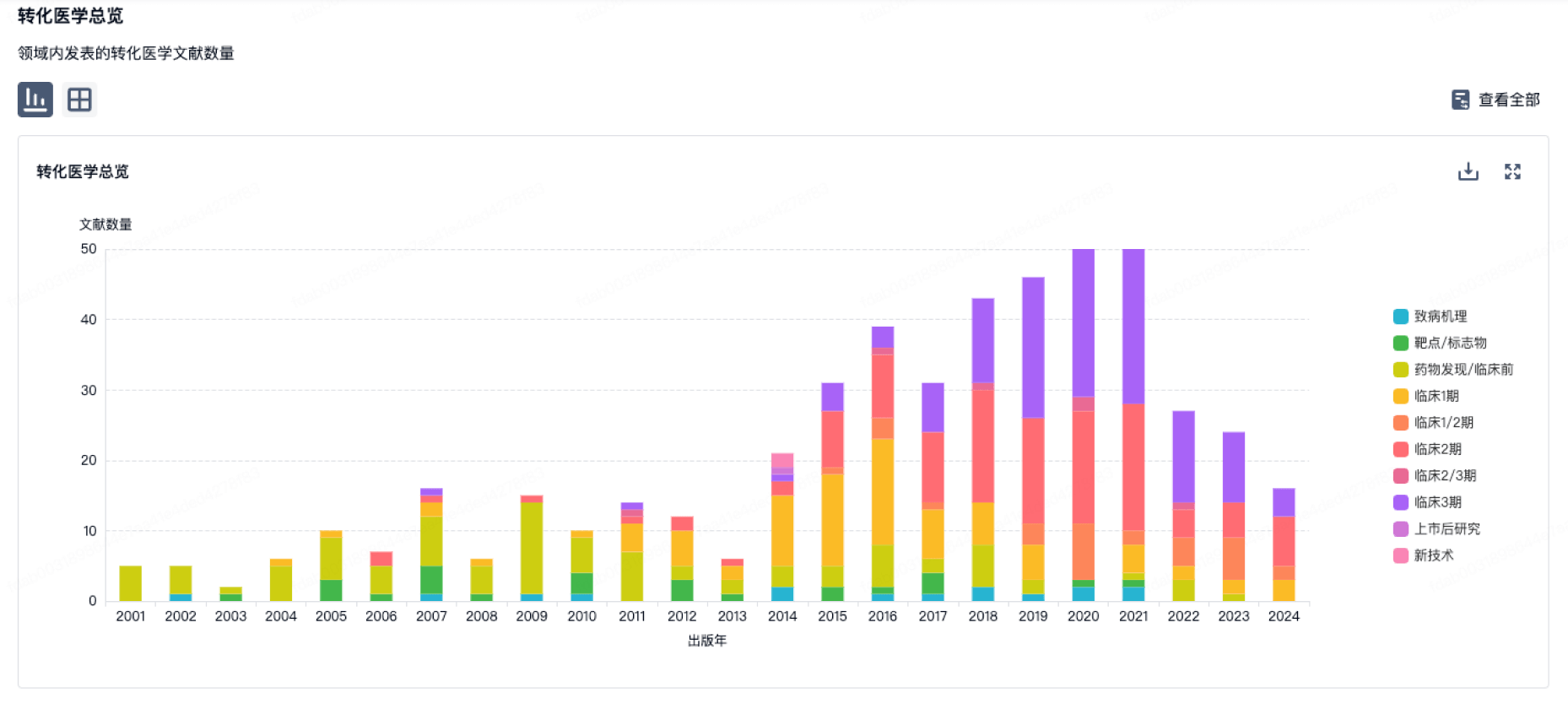
转化医学
使用我们的转化医学数据加速您的研究。
登录
或
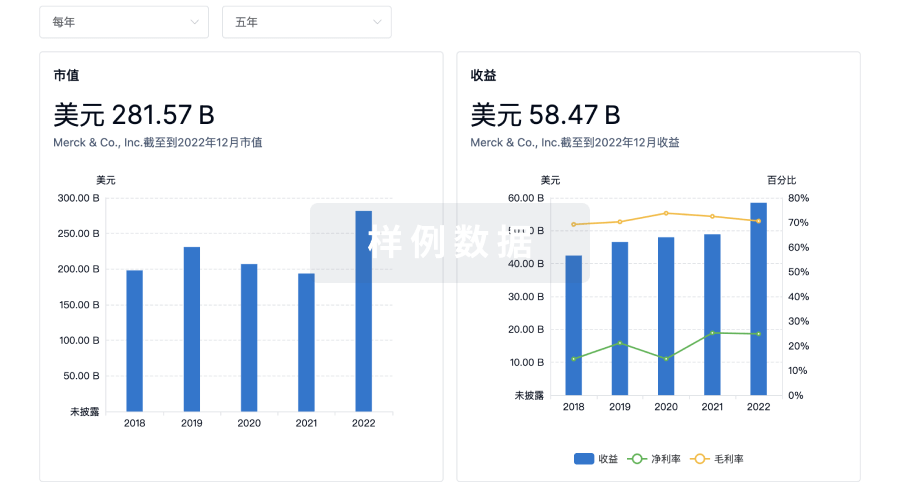
营收
使用 Synapse 探索超过 36 万个组织的财务状况。
登录
或
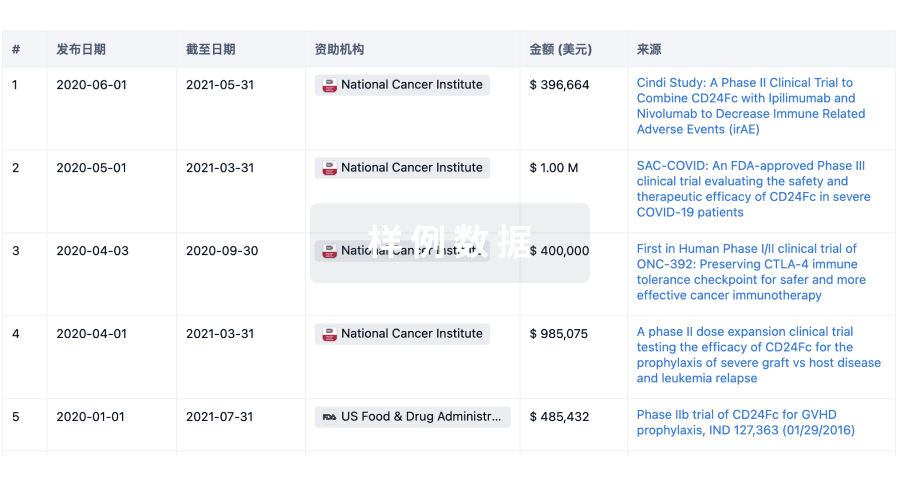
科研基金(NIH)
访问超过 200 万项资助和基金信息,以提升您的研究之旅。
登录
或
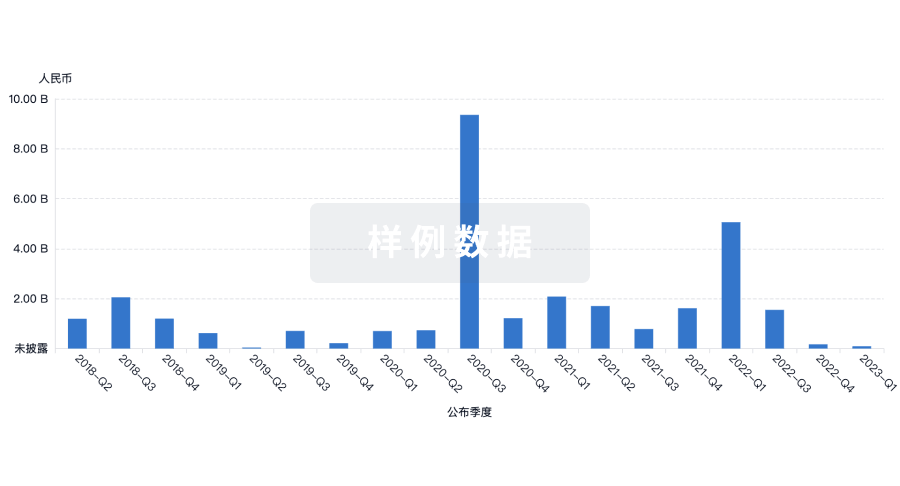
投资
深入了解从初创企业到成熟企业的最新公司投资动态。
登录
或
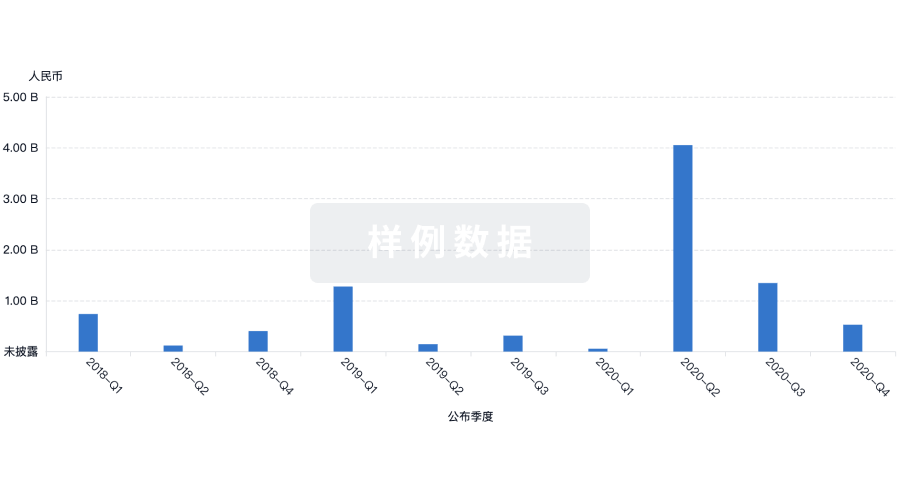
融资
发掘融资趋势以验证和推进您的投资机会。
登录
或
提出任何生物医药研究问题
让每一步生物医药决策都精准制胜
基于十亿级生物数据与全球情报的精准 AI,赋能早期药物发现
立即开始免费试用!
智慧芽新药情报库是智慧芽专为生命科学人士构建的基于AI的创新药情报平台,助您全方位提升您的研发与决策效率。
立即接入生物医药数据包
智慧芽新药库数据也通过智慧芽开放平台,以MCP或API服务形式对外开放。立即使用我们的MCP服务定制您的LLM智能体。
生物序列数据库
生物药研发创新
免费使用
化学结构数据库
小分子化药研发创新
免费使用