预约演示
更新于:2026-11-01

Hrain Biotechnology Co., Ltd.
更新于:2026-11-01
概览
标签
肿瘤
血液及淋巴系统疾病
免疫系统疾病
CAR-T
自体CAR-T
细胞疗法
疾病领域得分
一眼洞穿机构专注的疾病领域

技术平台
公司药物应用最多的技术
靶点
公司最常开发的靶点
关联
靶点 |
作用机制 |
在研机构 |
原研机构 |
在研适应症 |
非在研适应症 |
最高研发阶段 |
首次获批国家/地区 |
首次获批日期 |
靶点 |
作用机制 |
在研机构 |
原研机构 |
在研适应症 |
非在研适应症 |
最高研发阶段 |
首次获批国家/地区 |
首次获批日期 |
靶点 |
作用机制 |
在研机构 |
原研机构 |
在研适应症 |
非在研适应症 |
最高研发阶段 |
首次获批国家/地区 |
首次获批日期 |
NCT07888530
Non-Interventional Study of Ranicabtagene Autoleucel Injection for Relapsed/Refractory B-cell Non-Hodgkin Lymphoma (B-NHL)
CTR20262140
评估抗人CD70 T细胞注射液在晚期/转移性肾癌受试者中的安全性及耐受性的Ⅰ期临床研究
NCT07647744
A Phase I Clinical Study to Evaluate the Safety and Tolerability of Anti-Human CD70 T-Cell Injection in Subjects With Advanced/Metastatic Renal Cell Carcinoma
100 项与 上海恒润达生生物科技股份有限公司 相关的临床结果
登录后查看更多信息
登录后查看更多信息
2026-09-01Transplantation and Cellular Therapy
Lineage Plasticity–Mediated Resistance to CD7-Directed CAR-T Therapy in Relapsed/Refractory T-ALL/LBL
Article
作者: Dong, Baoxia ; Song, Xianmin ; Wang, Kun ; Tong, Yin ; Zhou, Kun ; Xiang, Fang ; Wan, Liping ; Huang, Chongmei ; Cai, Yu ; Jiang, Jingwei ; Wang, Haopeng ; Ding, Xueying ; Niu, Jiahua ; Qiu, Huiying ; Qiu, Shizhen ; Yang, Jun
CD7-directed chimeric antigen receptor (CAR) T-cell therapy has shown promising efficacy in relapsed or refractory (R/R) T-cell acute lymphoblastic leukemia and lymphoblastic lymphoma (T-ALL/LBL). However, relapse remains a major obstacle. We generated a recyclable CD7 CAR-T cells (CD7 CARRecyclable) and conducted a phase I clinical trial to evaluate its safety and response in patients with R/R T-ALL/LBL (NCT05290155). Fourteen patients received CAR-T cells and were evaluable for safety and response. Immunophenotypic and molecular profiling were performed longitudinally to characterize relapse patterns. Robust CAR-T expansion was observed in 13 of 14 patients (92.9%). Peak CAR-T concentration (Cmax) reached 62,389.69 copies/μg DNA (range: 3175.94 to 326,482.67) at median 12 days postinfusion (range: 10 to 21). All patients experienced hematologic toxicities, and cytokine release syndrome occurred in 71.4% of patients, predominantly grade 1 to 2. While ICANS developed in 2 patients (14.3%, grade 2 and 3) at day 8 and 28, respectively. Three out of 4 patients achieved measurable residual disease (MRD)-negative complete remission in bone marrow, while the objective response rate for extramedullary disease was 78.6%. With a median follow-up of 8.5 months, the estimated 6-month overall survival (OS) and progression-free survival (PFS) were 62.3% and 44.6%, respectively. Notably, lineage switch relapse occurred in 2 patients with ETP-immunophenotype following CAR-T therapy. These findings suggest that lineage plasticity might represent an under-recognized mechanism of resistance to CD7-directed CAR-T therapy in T-ALL/LBL, particularly in ETP-ALL/LBL, warranting further exploring.
2022-01-01Cancer immunology, immunotherapy : CII2区 · 医学
Lenalidomide enhances the efficacy of anti-BCMA CAR-T treatment in relapsed/refractory multiple myeloma: a case report and revies of the literature
2区 · 医学
Review
作者: He, Feng ; Wei, Runhong ; Wu, Yi ; Zhao, Guoxing ; Feng, Lei ; Xiao, Mingxing ; Cheng, Zhi
Abstract:
We report successful clinical experience using anti-BCMA CAR-T combined with lenalidomide in a patient who was refractory to a previous CAR-T treatment. The patient was a 51-year-old man, and was diagnosed with IgD-λ multiple myeloma(MM) in October 2015. 10 courses of chemotherapy including immunomodulators and proteasome inhibitors were used for remission and autologous hematopoietic stem cell transplantation was performed. MM relapsed after 12 months of remission. His disease continued to progress after multiple chemotherapy regimens, mouse anti-BCMA CAR-T and human-derived anti-BCMA CAR-T therapy. After a conditioning chemotherapy regimen of fludarabine and cyclophosphamide, patient took lenalidomide on day -1 and human-derived anti-BCMA CAR-T cells were infused on the next day. He suffered grade 2 cytokine-releasing syndrome(CRS) and grade 3 myelosuppression after infusion, and were resolved after symptomatic treatment. Very good partial response (VGPR) was achieved 14 days after CAR-T treatment, and had been maintained for more than 8 months. We demonstrated for the first time in patients that anti-BCMA CAR-T cell therapy combined with lenalidomide is feasible and effective in the treatment of RRMM. It provides a new strategy for RRMM patients who do not respond to anti-BCMA CAR-T cell therapy alone, and the adverse event is reversible.
2021-01-01Theranostics1区 · 医学
Peripheral eosinophil counts predict efficacy of anti-CD19 CAR-T cell therapy against B-lineage non-Hodgkin lymphoma
1区 · 医学
ArticleOA
作者: Li, Qi-Jing ; Liu, Yarong ; Zhang, Yajing ; Alexander, Peter B ; He, Feng ; Hu, Chunyan ; Xie, Qichao ; Jia, Qingzhu ; Shi, Zixiao ; Jin, Tao ; Fang, Hongliang ; Han, Weidong ; Wang, Pin ; Peng, Lina ; Zhu, Bo ; Qin, Diyuan ; Zuo, Xuejiao ; Wang, Yongsheng ; Zhu, Jun ; Xu, Luxiang ; Ying, Zhitao ; Cheng, Jia-Nan ; Song, Yuqin
Rationale: The onset of cytokine release syndrome (CRS) and in vivo persistence of anti-CD19 chimeric antigen receptor T (CAR-T) cells after infusion correlate with clinical responsiveness. However, there are no known baseline biomarkers that can predict the prognosis of patients with B-lineage non-Hodgkin lymphoma (B-NHL). The aim of this study was to identify blood cell populations associated with beneficial outcomes in B-NHL patients administered CAR-T cell immunotherapies. Methods: We enumerated peripheral blood and CAR-T cells by retrospectively analyzing three CAR-T cell trials involving 65 B-NHL patients. We used a preclinical model to elucidate the eosinophil mechanism in CAR-T cell therapy. Results: During an observation period up to 30 mo, B-NHL patients with higher baseline eosinophil counts had higher objective response rates than those with low eosinophil counts. Higher baseline eosinophil counts were also significantly associated with durable progression-free survival (PFS). The predictive significance of baseline eosinophil counts was validated in two independent cohorts. A preclinical model showed that eosinophil depletion impairs the intratumoral infiltration of transferred CAR-T cells and reduces CAR-T cell antitumor efficacy. Conclusion: The results of this study suggest that peripheral eosinophils could serve as stratification biomarkers and a recruitment machinery to facilitate anti-CD19 CAR-T cell therapy in B-NHL patients.
100 项与 上海恒润达生生物科技股份有限公司 相关的药物交易
登录后查看更多信息
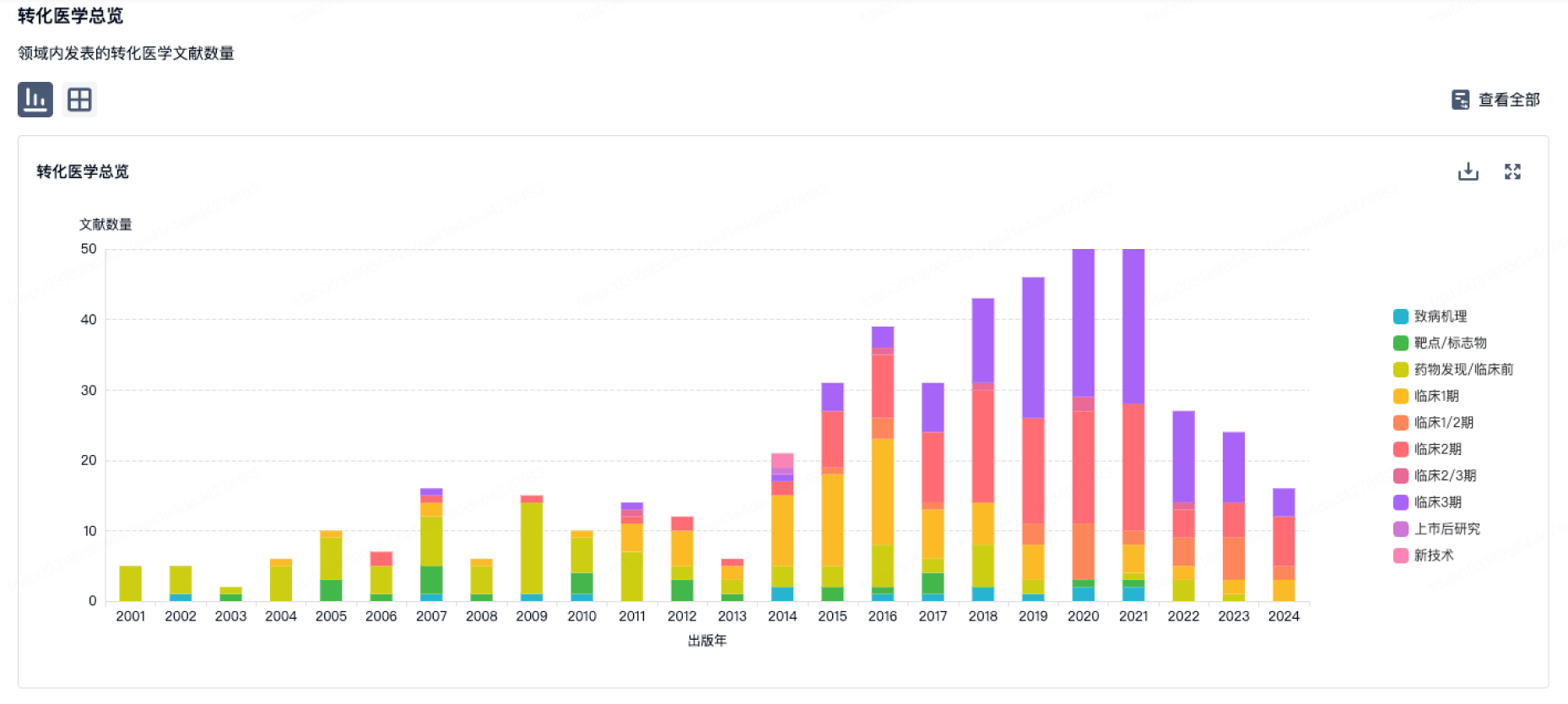
100 项与 上海恒润达生生物科技股份有限公司 相关的转化医学
登录后查看更多信息
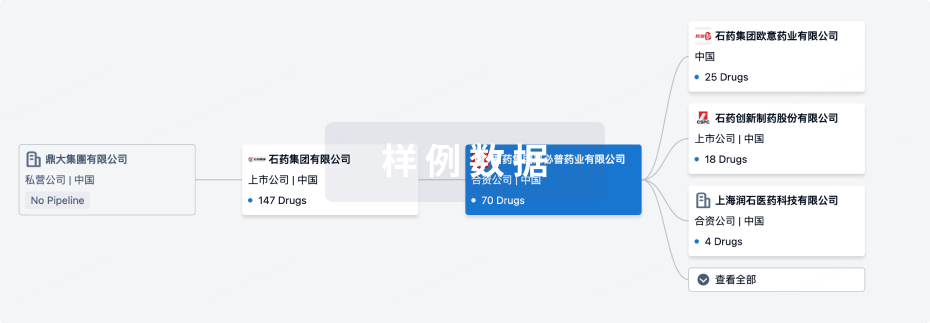
组织架构
使用我们的机构树数据加速您的研究。
登录
或
管线布局
2026年11月08日管线快照
管线布局中药物为当前组织机构及其子机构作为药物机构进行统计,早期临床1期并入临床1期,临床1/2期并入临床2期,临床2/3期并入临床3期
药物发现
9
4
临床前
临床1期
6
1
临床2期
批准上市
1
5
其他
登录后查看更多信息
当前项目
登录后查看更多信息
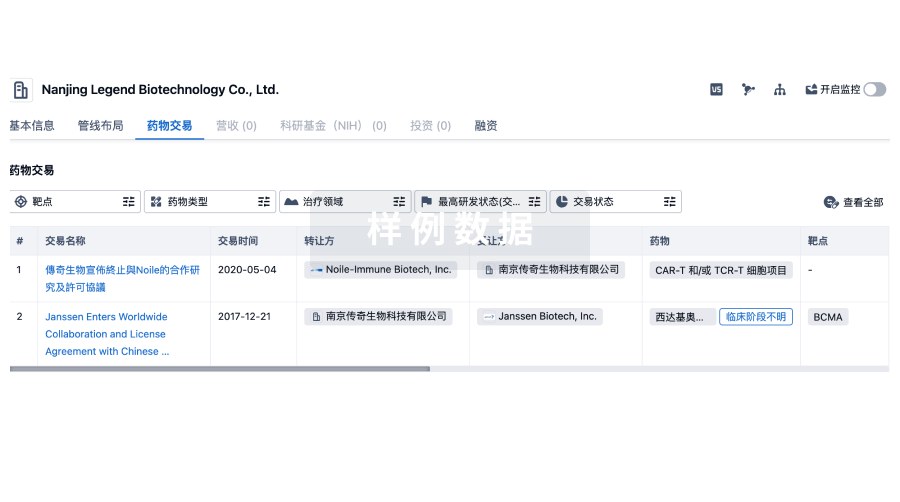
药物交易
使用我们的药物交易数据加速您的研究。
登录
或
转化医学
使用我们的转化医学数据加速您的研究。
登录
或
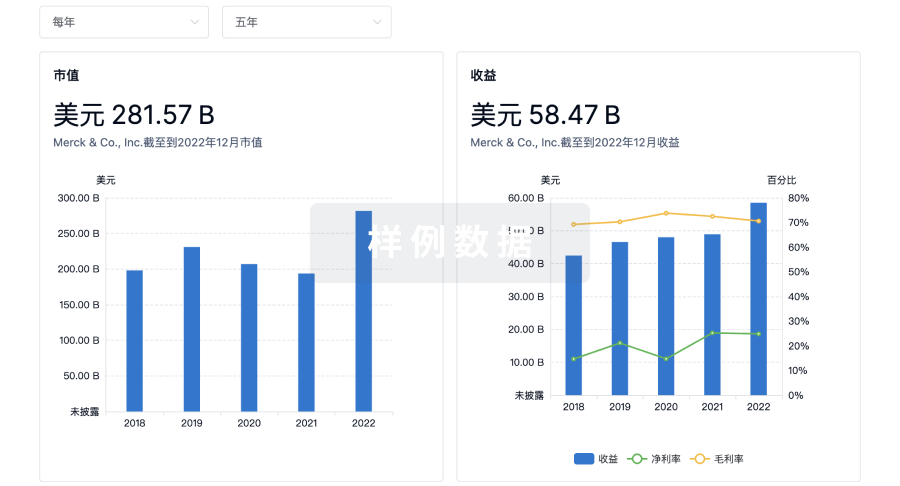
营收
使用 Synapse 探索超过 36 万个组织的财务状况。
登录
或
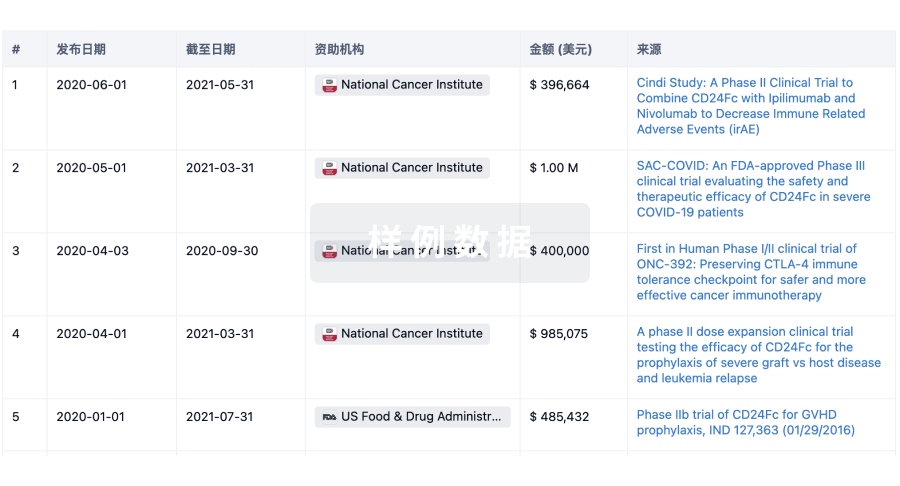
科研基金(NIH)
访问超过 200 万项资助和基金信息,以提升您的研究之旅。
登录
或
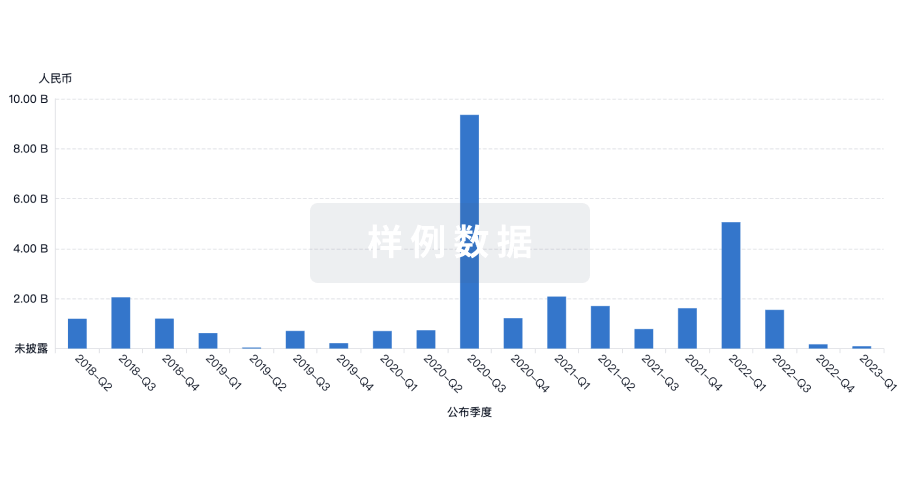
投资
深入了解从初创企业到成熟企业的最新公司投资动态。
登录
或
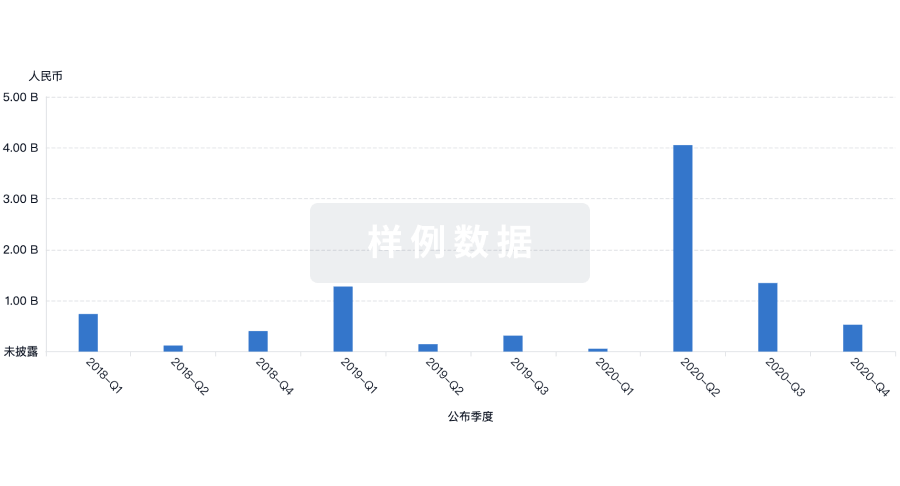
融资
发掘融资趋势以验证和推进您的投资机会。
登录
或
提出任何生物医药研究问题
让每一步生物医药决策都精准制胜
基于十亿级生物数据与全球情报的精准 AI,赋能早期药物发现
立即开始免费试用!
智慧芽新药情报库是智慧芽专为生命科学人士构建的基于AI的创新药情报平台,助您全方位提升您的研发与决策效率。
立即接入生物医药数据包
智慧芽新药库数据也通过智慧芽开放平台,以MCP或API服务形式对外开放。立即使用我们的MCP服务定制您的LLM智能体。
生物序列数据库
生物药研发创新
免费使用
化学结构数据库
小分子化药研发创新
免费使用