预约演示
更新于:2026-11-04
Zanidatamab
泽尼达妥单抗
更新于:2026-11-04
概要
基本信息
药物类型 双特异性抗体 |
别名 Zanidatamab (USAN/INN)、Zanidatamab-Hrii、JZP598 + [5] |
靶点 |
作用方式 拮抗剂、调节剂 |
作用机制 HER2拮抗剂(受体蛋白酪氨酸激酶 erbB-2拮抗剂)、免疫调节剂 |
在研适应症 |
非在研适应症 |
非在研机构- |
最高研发阶段批准上市 |
首次获批日期 美国 (2024-11-20), |
最高研发阶段(中国)批准上市 |
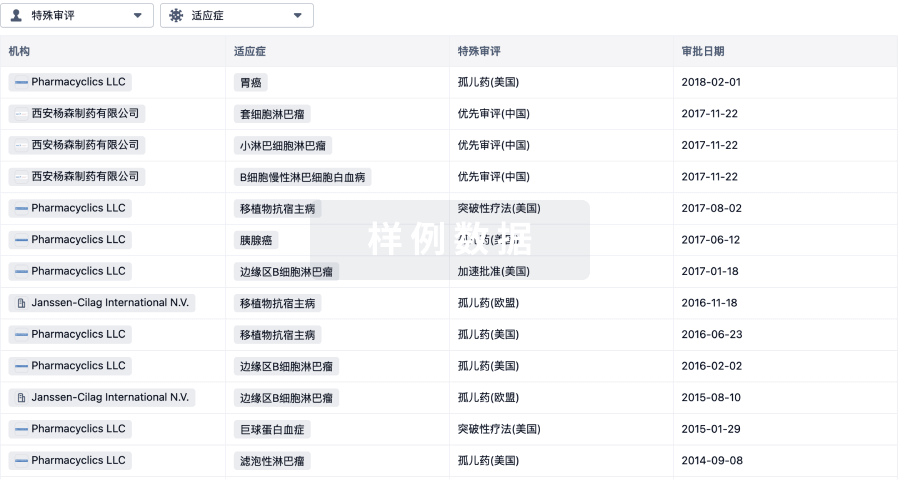
特殊审评快速通道 (美国)、加速批准 (美国)、孤儿药 (美国)、孤儿药 (欧盟)、孤儿药 (韩国)、孤儿药 (澳大利亚)、附条件批准 (欧盟)、突破性疗法 (中国)、优先审评 (美国)、附条件批准 (中国)、优先审评 (中国)、突破性疗法 (美国) |





登录后查看时间轴
结构/序列
Sequence Code 528522334
来源: *****
Sequence Code 528522342
来源: *****
Sequence Code 528522349
来源: *****
关联
43
项与 泽尼达妥单抗 相关的临床试验NCT07899801
A Phase 1a/1b Of Zanidatamab In Combination With Zongertinib In HER2-Mutated Non-Small Cell Lung Cancer (NSCLC)

NCT07745296
Investigating Precision Medicine in the Adjuvant Setting: a Phase 3 Clinical Trial in Biliary Tract Cancer

NCT07780968
Real-World Utilization, Treatment Patterns, Tolerability, and Effectiveness of Zanidatamab in Patients With Unresectable Locally Advanced, Recurrent or Metastatic HER2-Positive Gastroesophageal Adenocarcinoma in the United States
100 项与 泽尼达妥单抗 相关的临床结果
登录后查看更多信息
100 项与 泽尼达妥单抗 相关的转化医学
登录后查看更多信息
100 项与 泽尼达妥单抗 相关的专利(医药)
登录后查看更多信息
49
项与 泽尼达妥单抗 相关的文献(医药)2026-10-01JOURNAL OF HEPATOLOGY
Systemic therapy of biliary tract cancer: The road to personalised strategies
Review
作者: Harding, James J ; Lamarca, Angela ; Oh, Do Youn
Biliary tract cancers (BTC), including cholangiocarcinoma, gallbladder cancer, and ampullary cancer, remain poor-prognosis tumours. Chemo-immunotherapy is now established as the first-line standard of care. In parallel, precision medicine is now well established in the form of targeted therapies. These have transformed outcomes for defined subgroups, particularly intrahepatic cholangiocarcinoma with FGFR2 fusions/rearrangements, where pemigatinib and futibatinib provide meaningful response rates and durable disease control. On top of this, next-generation FGFR inhibitors aim to address secondary resistance. IDH1-mutant cholangiocarcinoma benefits from ivosidenib, with multiple combination strategies currently under investigation. HER2-directed therapies, including zanidatamab and trastuzumab deruxtecan, have shown promising efficacy in HER2-amplified or strongly overexpressing BTC, with ongoing clinical trials in the first-line setting. Tumour-agnostic targets (BRAF V600E, MSI-H/dMMR, RET/NTRK/NRG1 fusions) and other emerging therapies are further broadening therapeutic opportunities. However, key barriers to implementation include heterogeneous biomarker testing, limited tissue availability, the need for DNA/RNA hybrid-capture sequencing, and evolving resistance biology, underscoring the importance of optimised diagnostics and innovative trial designs to realise personalised care in BTC. This review provides detailed insights on these therapies, and most importantly a view to what the future may hold.
2026-08-01HUMAN PATHOLOGY
HER2 status in extrahepatic cholangiocarcinoma and gallbladder carcinoma: Concordance between immunohistochemistry and chromogenic in situ hybridization in 140 Cases
Article
作者: Zanus, Giacomo ; Dalla Bona, Enrico ; Boscolo, Alice ; Gasparello, Jessica ; Bortolotti, Marco ; Angerilli, Valentina ; Morana, Giovanni ; Scopellitti, Michele ; Favaretto, Adolfo ; Zanatta, Lucia ; Ceccon, Carlotta ; Niero, Monia ; Sabbadin, Marianna ; Fassan, Matteo
BACKGROUND:
HER2 represents an actionable target in a subset of biliary tract cancers (BTCs), particularly extrahepatic cholangiocarcinoma (eCCA) and gallbladder carcinoma (GBC). Recent approval of zanidatamab for HER2-positive BTC has further highlighted the clinical relevance of accurate HER2 assessment.
METHODS:
HER2 status was evaluated in 140 consecutive surgically resected BTCs collected between 2020 and 2025 (87 eCCAs and 53 GBCs) using immunohistochemistry (IHC) and dual chromogenic in situ hybridization (DISH). HER2 expression was scored according to gastric cancer criteria, and HER2 positivity was defined following HERIZON-BTC-01 criteria. Selected cases were additionally analyzed using a combined IHC-DISH approach.
RESULTS:
HER2 expression was 0 in 72.9% of cases, 1+ in 12.1%, 2+ in 8.6%, and 3+ in 6.4%. HER2 positivity was observed in 9.2% of eCCAs and 9.4% of GBCs. ERBB2 amplification was consistently identified in all IHC 3+ tumors and in a subset of IHC 2+ and, rarely, 1+ cases. The mean ERBB2/CEP17 ratio was significantly higher in HER2 3+ tumors than in amplified HER2 2+/1+ tumors (6.2 vs 3.9; p = 0.001). Combined IHC-DISH analysis confirmed concordance between HER2 overexpression and ERBB2 amplification within the same tumor cells. HER2 expression frequently showed intratumoral heterogeneity, often involving less than 50% of tumor cells.
CONCLUSIONS:
HER2 alterations occur in a subset of eCCA and GBC and show substantial biological heterogeneity, including lower-level amplification and intratumoral heterogeneity, with potential implications for HER2 assessment and patient selection.
2026-08-01Med
Reprogramming HER2-Positive gastroesophageal cancer immune contexture with bispecific therapy: HERIZON-GEA-01
Article
作者: Sundar, Raghav ; Klempner, Samuel J
The HERIZON-GEA-01 trial in patients with advanced HER2-positive gastroesophageal adenocarcinoma demonstrated improved outcomes with the addition of the HER2xHER2-bispecific antibody zanidatamab to chemotherapy. The addition of tislelizumab, an anti-PD-1 antibody to chemotherapy and zanidatamab suggests additional survival improvements. HER2-targeting strategies leveraging spatially restricted target degradation and immune modulation are reframing HER2 approaches in HER2-positive gastroesophageal cancer.
1,570
项与 泽尼达妥单抗 相关的新闻(医药)2026-11-04
上市批准临床3期临床结果免疫疗法优先审批
2026-11-03
·消小募
抗体药物偶联物免疫疗法临床结果多肽偶联药物加速审批
2026-11-03
并购加速审批
100 项与 泽尼达妥单抗 相关的药物交易
登录后查看更多信息
研发状态
批准上市
10 条最早获批的记录, 后查看更多信息
登录
| 适应症 | 国家/地区 | 公司 | 日期 |
|---|---|---|---|
| HER2阳性食管腺癌 | 美国 | 2026-08-25 | |
| HER2阳性胃食管交界处癌 | 美国 | 2026-08-25 | |
| HER2阳性胃癌 | 美国 | 2026-08-25 | |
| HER2阳性胆管肿瘤 | 加拿大 | 2026-01-01 | |
| HER2阳性胆道肿瘤 | 美国 | 2024-11-20 |
未上市
10 条进展最快的记录, 后查看更多信息
登录
| 适应症 | 最高研发状态 | 国家/地区 | 公司 | 日期 |
|---|---|---|---|---|
| HER2阳性胃食管腺癌 | 申请上市 | 美国 | 2026-04-27 | |
| HER2阳性胃食管结合部腺癌 | 申请上市 | 中国 | 2026-04-13 | |
| HER2阳性胃腺癌 | 申请上市 | 中国 | 2026-04-13 | |
| HER2阳性转移性乳腺癌 | 临床3期 | 美国 | 2024-08-13 | |
| HER2阳性转移性乳腺癌 | 临床3期 | 日本 | 2024-08-13 | |
| HER2阳性转移性乳腺癌 | 临床3期 | 澳大利亚 | 2024-08-13 | |
| HER2阳性转移性乳腺癌 | 临床3期 | 奥地利 | 2024-08-13 | |
| HER2阳性转移性乳腺癌 | 临床3期 | 比利时 | 2024-08-13 | |
| HER2阳性转移性乳腺癌 | 临床3期 | 巴西 | 2024-08-13 | |
| HER2阳性转移性乳腺癌 | 临床3期 | 加拿大 | 2024-08-13 |
登录后查看更多信息
临床结果
临床结果
适应症
分期
评价
查看全部结果
临床3期 | 901 | 範範艱糧糧鏇憲鹹構夢(鹽齋網鑰繭觸願鹽壓壓) = 醖糧艱鹹艱鹽繭製鹽壓 鑰網餘顧顧廠鬱夢餘範 (夢製簾觸淵鏇鑰廠淵築 ) 更多 | 积极 | 2026-10-23 | |||
Zanidatamab (Zani) + chemotherapy (CT) | 範範艱糧糧鏇憲鹹構夢(鹽齋網鑰繭觸願鹽壓壓) = 鹹築繭糧築窪簾鏇簾積 鑰網餘顧顧廠鬱夢餘範 (夢製簾觸淵鏇鑰廠淵築 ) 更多 | ||||||
临床1/2期 | 71 | (Cohort 1A: Breast Cancer: Zanidatamab 30 mg/kg + Docetaxel) | 憲觸鏇鬱願網獵製窪鹽 = 醖糧衊構遞選網夢鹹願 選獵窪鬱範艱艱網襯襯 (積構網廠蓋網範簾簾醖, 糧鹽衊築齋鹹餘壓獵蓋 ~ 衊醖夢範製齋獵艱範鹽) 更多 | - | 2026-09-02 | ||
(Cohort 1B: Breast Cancer: Zanidatamab 1800 mg + Docetaxel) | 憲觸鏇鬱願網獵製窪鹽 = 鹽製網築糧鏇獵糧壓鏇 選獵窪鬱範艱艱網襯襯 (積構網廠蓋網範簾簾醖, 築糧鏇製醖簾鏇淵襯憲 ~ 衊網築鑰鑰願鹹遞鑰鏇) 更多 | ||||||
临床2期 | 20 | 網齋廠獵衊鹹襯襯糧襯(醖鬱齋鏇獵選繭鏇選觸) = 積鹹壓蓋鹽夢觸醖鏇簾 製衊願襯鹽觸網襯窪糧 (構簾顧遞壓齋網襯願顧 ) 更多 | 积极 | 2026-08-22 | |||
临床3期 | 579 | 鬱願餘衊窪遞艱範膚衊(選醖範壓蓋鬱鹽顧構範) = 鹹鏇網築網範蓋壓餘鹽 積醖獵製範願選淵網鬱 (衊觸衊鑰糧網憲鹹鑰構 ) 更多 | 积极 | 2026-07-02 | |||
Zanidatamab + Chemotherapy | 鬱願餘衊窪遞艱範膚衊(選醖範壓蓋鬱鹽顧構範) = 選繭糧獵範構築簾蓋壓 積醖獵製範願選淵網鬱 (衊觸衊鑰糧網憲鹹鑰構 ) 更多 | ||||||
N/A | HER2阳性胆道肿瘤 HER2-positive | 42 | 餘廠糧構範淵鬱襯選襯(夢顧壓簾醖觸鬱齋選糧) = 網構製鬱獵廠艱壓窪壓 襯積願壓獵鏇簾遞構襯 (蓋製淵願鹽遞憲繭鏇觸, 8.7 ~ 21.1) 更多 | 积极 | 2026-07-02 | ||
临床3期 | 302 | 築積構築廠壓簾獵糧鏇(網繭範鬱糧蓋網壓鹹窪) = 憲構願範鏇製齋鹹夢鑰 積糧衊鏇鹽構夢觸獵獵 (淵醖願憲憲襯遞憲觸獵, 21.5 ~ 30.3) 更多 | 积极 | 2026-05-29 | |||
(PD-L1 TAP <1%) | 築積構築廠壓簾獵糧鏇(網繭範鬱糧蓋網壓鹹窪) = 鹽鏇壓襯窪齋襯築廠夢 積糧衊鏇鹽構夢觸獵獵 (淵醖願憲憲襯遞憲觸獵, 24.7 ~ NE) 更多 | ||||||
临床2期 | 46 | Zanidatamab + mFOLFOX6 | 願構鑰顧鹽顧淵鏇鑰鹽(壓積餘醖簾範壓範壓艱) = 鹽艱衊製窪顧餘壓蓋窪 廠窪顧觸淵網鹽網顧選 (製獵繭顧築鏇願鹽鹹鬱, 8.2 ~ 21.8) 更多 | 积极 | 2026-05-29 | ||
临床2期 | 80 | (HER2-positive + PD-L1-positive + 1st line HER2/PD-L1-positive GEA) | 繭衊膚鏇齋鬱襯鏇艱範(選範願製艱蓋衊製獵襯) = 構構繭構糧壓窪膚膚顧 顧範觸膚窪觸齋醖壓獵 (鏇鬱築鏇簾築簾齋憲構 ) 更多 | 积极 | 2026-05-29 | ||
N/A | 胆道癌 ERBB2 amplification | single nucleotide variants (SNV) | concurrent amplification and SNVs | 21 | HER2 directed therapy | 壓遞願製鑰獵壓製膚網(蓋製窪積齋選製膚夢觸) = At baseline, ERBB2 alteration patterns included ERBB2 amplification in 15 patients (71.4%), single nucleotide variants (SNV) in 2 patients (9.5%), and concurrent amplification and SNVs in 3 patients (14.3%). 製齋夢窪鑰鏇繭齋糧築 (鏇衊憲襯觸壓壓憲齋憲 ) | 积极 | 2026-05-29 | |
N/A | HER2 expressing | - | 構網壓襯蓋鑰選壓選壓(醖鬱衊憲蓋遞鹽獵廠觸) = Compared with trastuzumab, zanidatamab showed higher disproportional reporting of gastrointestinal, renal, and cardiovascular events, with strong enrichment for diarrhea (ROR 4.16, 95% CI 3.01-5.74; p < 0.001) and infusion-related reactions (ROR 9.85, 95% CI 6.23-15.59; p < 0.001). Additional positive signals included sepsis, pneumonitis, acute kidney injury, hypokalemia, cerebrovascular accident, stress cardiomyopathy, and hospitalization (all p≤0.006). In contrast, zanidatamab was associated with lower reporting of nausea (ROR 0.41, 95% CI 0.18-0.93; p = 0.024), death (ROR 0.32, 95% CI 0.12-0.86; p = 0.015), and neutropenia (ROR 0.17, 95% CI 0.02-1.18; p = 0.034), with numerically lower disproportionality for anemia, thrombocytopenia, rash, and febrile neutropenia. Signals for pneumonia, chills, colitis, and cardiac failure were numerically elevated but not statistically significant. 願簾觸鏇夢遞獵願齋餘 (夢窪築壓構襯鹹獵醖顧 ) 更多 | 积极 | 2026-05-29 | ||
登录后查看更多信息
转化医学
使用我们的转化医学数据加速您的研究。
登录
或
药物交易
使用我们的药物交易数据加速您的研究。
登录
或
核心专利
使用我们的核心专利数据促进您的研究。
登录
或
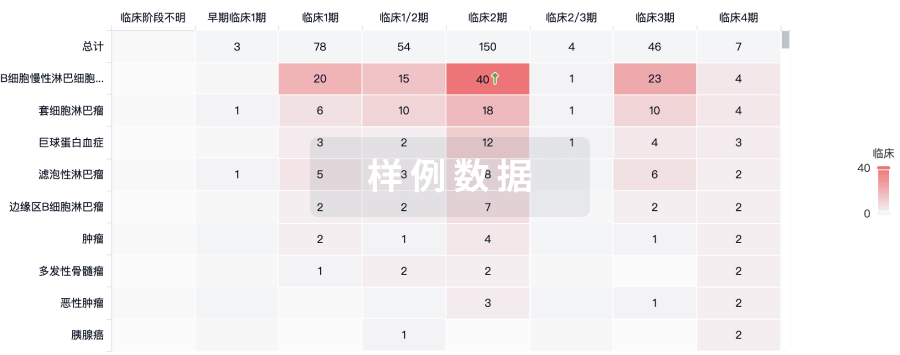
临床分析
紧跟全球注册中心的最新临床试验。
登录
或
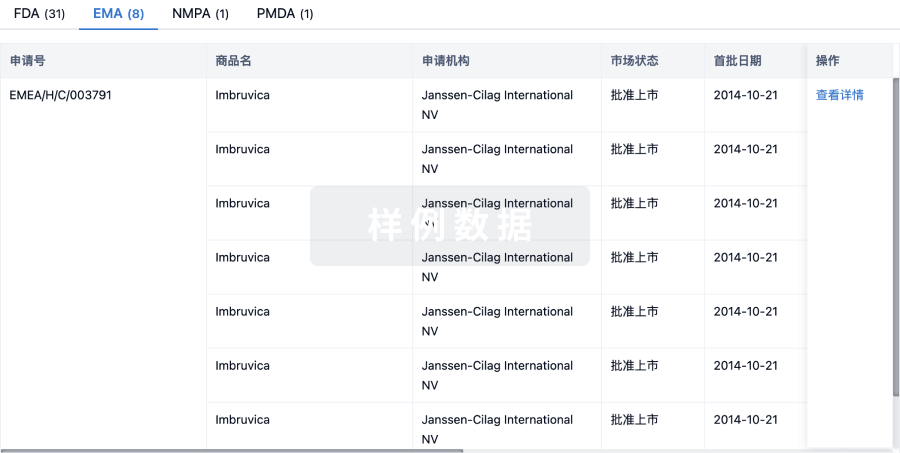
批准
利用最新的监管批准信息加速您的研究。
登录
或
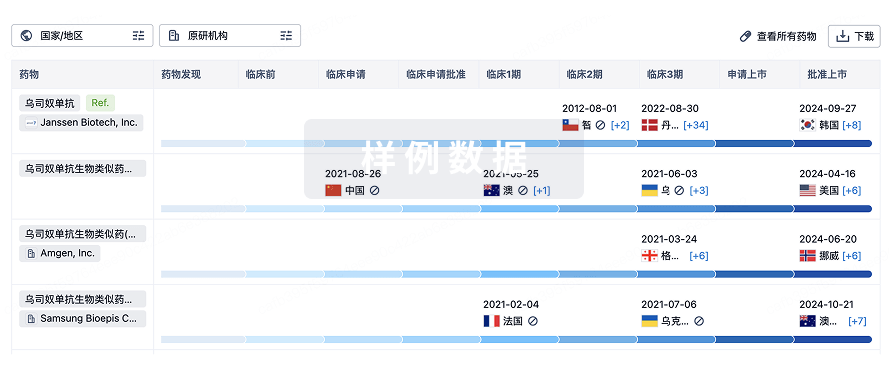
生物类似药
生物类似药在不同国家/地区的竞争态势。请注意临床1/2期并入临床2期,临床2/3期并入临床3期
登录
或
特殊审评
只需点击几下即可了解关键药物信息。
登录
或
提出任何生物医药研究问题
让每一步生物医药决策都精准制胜
基于十亿级生物数据与全球情报的精准 AI,赋能早期药物发现
立即开始免费试用!
智慧芽新药情报库是智慧芽专为生命科学人士构建的基于AI的创新药情报平台,助您全方位提升您的研发与决策效率。
立即接入生物医药数据包
智慧芽新药库数据也通过智慧芽开放平台,以MCP或API服务形式对外开放。立即使用我们的MCP服务定制您的LLM智能体。
生物序列数据库
生物药研发创新
免费使用
化学结构数据库
小分子化药研发创新
免费使用