预约演示
更新于:2026-10-15

Fresenius SE & Co. KGaA
更新于:2026-10-15
概览
标签
神经系统疾病
其他疾病
内分泌与代谢疾病
小分子化药
合成多肽
多肽激素
疾病领域得分
一眼洞穿机构专注的疾病领域

技术平台
公司药物应用最多的技术
靶点
公司最常开发的靶点
关联
靶点 |
作用机制 |
在研机构 |
原研机构 |
在研适应症 |
非在研适应症 |
最高研发阶段 |
首次获批国家/地区 |
首次获批日期 |

靶点 |
作用机制 |
在研机构 |
原研机构 |
在研适应症 |
非在研适应症 |
最高研发阶段 |
首次获批国家/地区 |
首次获批日期 |
靶点 |
作用机制 |
在研机构 |
原研机构 |
在研适应症 |
非在研适应症 |
最高研发阶段 |
首次获批国家/地区 |
首次获批日期 |

NCT07180576
The FORCE Trial Pilot

DRKS00040114
M-PNatSS Onco Kids—Multicenter pilot study to investigate the feasibility and adherence of supervised sports therapy interventions in children and adolescents with cancer - M-PNatSS Onco Kids
DRKS00039752
Evaluation of the Ergonomics and Usability of a Point-of-Care Handheld Ultrasound System Using Mixed Reality (MR) Glasses - Easy-MR

100 项与 Fresenius SE & Co. KGaA 相关的临床结果
登录后查看更多信息
登录后查看更多信息
2026-11-01NEOPLASIA
Understanding tumor adaptations and resistance to MET inhibitors in MET-altered non-small cell lung cancer
Article
作者: Reguart, Noemí ; García-Roman, Silvia ; Aguado, Cristina ; Yekelchyk, Michail ; Reusch, Christof ; Rico-Pastó, Marc ; Karachaliou, Niki ; Querol, Marina ; Simard, Manon A ; Geist, Felix ; Hijazo-Pechero, Sara ; Bender, Sebastian ; Ockfen, Sophie ; Apata, Tolulope ; Mardin, Balca R ; Esser, Markus ; Marín, Elba ; Jordana-Ariza, Núria ; Schmelas, Carolin ; Yang, Jing ; Teixido, Cristina ; Román, Ruth ; Morfouace, Marie ; Molina-Vila, Miguel Ángel ; Schadt, Oliver ; Schaefer, Rebecca ; Esparré, Carlos ; Berges, Nina
AIM:
Type Ib MET inhibitors are clinically active in selected MET-altered non-small cell lung cancer, particularly tumors with MET exon 14 skipping or MET amplification, but acquired resistance remains incompletely understood. Here, we investigated resistance across biologically distinct MET-altered contexts, including MET exon 14 skipping, MET amplification, and MET overexpression.
METHODS:
Paired baseline and progression samples from seven patients treated with tepotinib or capmatinib were analyzed using spatial transcriptomics, whole-exome sequencing, RNA sequencing, CRISPR screening, and drug-combination assays. Patient-derived cultures and resistant cell-line models were used to explore resistance-associated changes.
RESULTS:
MET inhibitor resistance was heterogeneous, with persistence of the initial MET alteration in most evaluable cases and emergence of patient-specific genomic events. Three main resistance-associated, often overlapping, routes were identified: on-target MET evolution through kinase-domain alterations; extracellular matrix and tumor-microenvironment remodeling, including collagen and fibronectin upregulation, complement-related signaling, and partial EMT-associated programs; and bypass signaling involving EGFR/HER, MAPK, and PI3K/Akt pathways. In vitro models reproduced several tumor-cell-intrinsic features but only partially captured microenvironment-associated changes.
CONCLUSIONS:
MET inhibitor resistance in this cohort involved overlapping, context-dependent genomic, phenotypic, and signaling adaptations, supporting combination strategies for MET-altered lung cancer.
2026-10-01INTERNATIONAL JOURNAL OF CANCER
Plasma
PlGF
as a Potential Biomarker in Ramucirumab‐Based Second‐Line Therapy for Advanced Gastroesophageal Adenocarcinoma: Exploratory Biomarker Analysis from the Phase
II
Part of the
RAMIRIS
Trial
Article
作者: Sonja Loges ; Stefan Probst ; Sylvie Lorenzen ; Melanie Janning ; Victoria Gensch ; Peter Reichardt ; Peter Thuss-Patience ; Christian Müller ; Claudia Pauligk ; Jurek Hille ; Florian Lordick ; Thorsten O. Goetze ; Carsten Bokemeyer ; Martin Sökler ; Eray Goekkurt ; Salah E. Al-Batran ; Thomas Ettrich ; Daniel Pink
ABSTRACT:
Antiangiogenic treatment with ramucirumab (RAM) is a standard second‐line option in advanced gastric and gastroesophageal junction (GEJ) adenocarcinoma. However, reliable biomarkers are lacking. The phase II RAMIRIS trial compared RAM plus paclitaxel with RAM plus FOLFIRI (5‐fluororuracil, leucovorin and irinotecan) in this setting. We present the exploratory biomarker analysis evaluating placental growth factor (PlGF), carbonic anhydrase IX (CAIX), and tryptase. Plasma samples from 99 patients enrolled in RAMIRIS were collected at predefined timepoints (baseline, Cycle 2 Day 1, and Cycle 4 Day 1). PlGF, CAIX, and tryptase were quantified by ELISA. Associations with progression‐free survival (PFS) and overall survival (OS) were analyzed using dichotomized biomarker levels and Cox regression models. PlGF levels increased substantially under treatment, whereas CAIX showed a transient rise, followed by a slight decline, and tryptase remained stable. Elevated PlGF levels at baseline and early‐treatment (c2d1) were associated with shorter OS in univariate analysis (baseline HR
u
= 1.75;
p
= 0.020; c2d1 HR
u
= 1.69;
p
= 0.054). After multivariate adjustment, the association remained directionally consistent; although statistical support was retained only for c2d1 (baseline HR
m
= 1.41,
p
= 0.198; c2d1 HR
m
= 1.85,
p
= 0.030). CAIX and tryptase showed no consistent associations with survival. Elevated PlGF—particularly its early increase during RAM‐based therapy—was associated with shortened survival and may represent a dynamic marker of unfavorable prognosis in advanced gastric/GEJ adenocarcinoma. Given the exploratory nature of this analysis, these findings should be considered hypothesis‐generating and require validation in independent biomarker‐driven studies.
2026-10-01BRITISH JOURNAL OF ANAESTHESIA
Perioperative management of patients taking sodium-glucose cotransporter 2 inhibitors: Society for perioperative Assessment and Quality Improvement (SPAQI) multidisciplinary consensus statement. Comment on Br J Anaesth 2026; 136: 1776–99
Letter
作者: Camilleri Podesta, Anne M ; Rüggeberg, Anne
2026-10-14
专利到期一致性评价
2026-10-13
·今日头条
100 项与 Fresenius SE & Co. KGaA 相关的药物交易
登录后查看更多信息
100 项与 Fresenius SE & Co. KGaA 相关的转化医学
登录后查看更多信息
组织架构
使用我们的机构树数据加速您的研究。
登录
或
管线布局
2026年10月26日管线快照
管线布局中药物为当前组织机构及其子机构作为药物机构进行统计,早期临床1期并入临床1期,临床1/2期并入临床2期,临床2/3期并入临床3期
药物发现
1
3
临床前
临床2期
1
4
临床3期
申请上市
2
64
批准上市
其他
11
登录后查看更多信息
当前项目
登录后查看更多信息
药物交易
使用我们的药物交易数据加速您的研究。
登录
或
转化医学
使用我们的转化医学数据加速您的研究。
登录
或
营收
使用 Synapse 探索超过 36 万个组织的财务状况。
登录
或
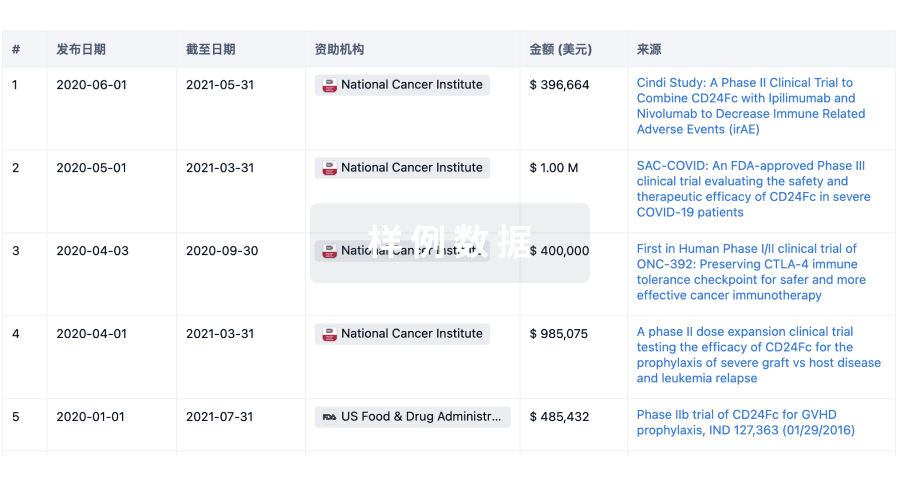
科研基金(NIH)
访问超过 200 万项资助和基金信息,以提升您的研究之旅。
登录
或
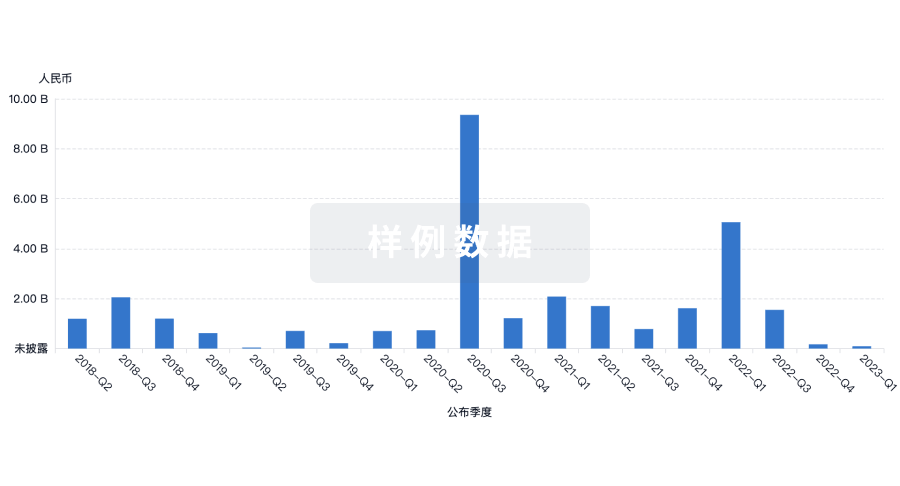
投资
深入了解从初创企业到成熟企业的最新公司投资动态。
登录
或
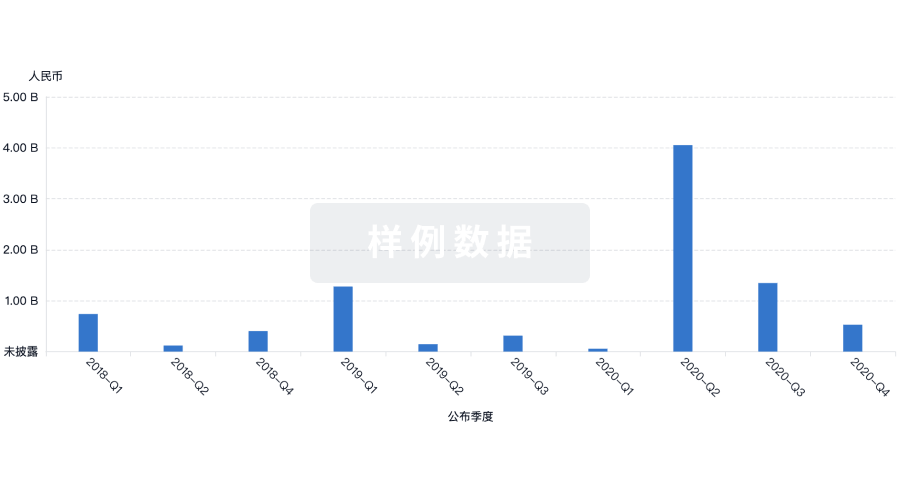
融资
发掘融资趋势以验证和推进您的投资机会。
登录
或
提出任何生物医药研究问题
让每一步生物医药决策都精准制胜
基于十亿级生物数据与全球情报的精准 AI,赋能早期药物发现
立即开始免费试用!
智慧芽新药情报库是智慧芽专为生命科学人士构建的基于AI的创新药情报平台,助您全方位提升您的研发与决策效率。
立即接入生物医药数据包
智慧芽新药库数据也通过智慧芽开放平台,以MCP或API服务形式对外开放。立即使用我们的MCP服务定制您的LLM智能体。
生物序列数据库
生物药研发创新
免费使用
化学结构数据库
小分子化药研发创新
免费使用