预约演示
更新于:2026-10-16

Shionogi & Co., Ltd.
更新于:2026-10-16
概览
标签
感染
神经系统疾病
其他疾病
小分子化药
合成多肽
预防性疫苗
疾病领域得分
一眼洞穿机构专注的疾病领域

技术平台
公司药物应用最多的技术
靶点
公司最常开发的靶点
关联
靶点 |
作用机制 |
在研机构 |
原研机构 |
在研适应症 |
非在研适应症 |
最高研发阶段 |
首次获批国家/地区 |
首次获批日期 |
靶点 |
作用机制 |
在研机构 |
原研机构 |
在研适应症 |
非在研适应症 |
最高研发阶段 |
首次获批国家/地区 |
首次获批日期 |

靶点 |
作用机制 |
在研机构 |
原研机构 |
在研适应症 |
非在研适应症 |
最高研发阶段 |
首次获批国家/地区 |
首次获批日期 |

JPRN-UMIN000059051
A Database Study Investigating Household Transmission Dynamics of COVID-19 and Influenza
NCT07750990
A Phase 2, Open-label, Multicenter, Extension Study to Investigate the Long-term Safety and Efficacy of S-606001 in Patients With Late-onset Pompe Disease
TCTR20260621008
A phase 3 randomized, double-blind, placebo-controlled study to evaluate the efficacy and safety of secutrelvir in participants with COVID-19
100 项与 Shionogi & Co., Ltd. 相关的临床结果
登录后查看更多信息
登录后查看更多信息
2026-12-01MethodsX
QuickConc Vacuum: A high-sensitive cationic-assisted method for large-volume eDNA concentration and sensitive biodiversity monitoring
Article
作者: Wu, Qianqian ; Iwamoto, Ryo ; Minamoto, Toshifumi ; Kuroita, Tomohiro
Environmental DNA (eDNA) analysis enables biodiversity surveys with minimal disturbance to aquatic environment. We previously developed QuickConc to capture eDNA by combining dispersed glass fibers with quaternary ammonium surfactants, but manual processing limited small volumes. Here, we introduce QuickConc Vacuum (QCV), an advanced protocol adapting this cationic-assisted technology for vacuum filtration to process liter-scale samples. We performed comparisons with glass fiber filters (GF) and Sterivex, using aquarium water and field seawater. In aquarium experiments, total eDNA yield positively correlated with volume for all methods, with QCV showing significantly higher total eDNA at 2 L. While species-specific yields showed no significant differences among methods, metabarcoding revealed that QCV and Sterivex detected significantly higher fish-species richness than GF. In field seawater trials, QCV consistently recovered higher eDNA yields and detected significantly more fish species at the 2 L volume compared to other methods. QCV successfully overcomes the volume limitations of the original method while maintaining high eDNA yields, providing a robust solution for high-sensitivity eDNA monitoring in aquatic ecosystems.•QCV is a vacuum-filtration protocol based on the cationic-assisted capture technology using dispersed glass fibers for efficient eDNA binding.•QCV is designed to process liter-scale environmental water samples.
2026-12-01INTERNATIONAL JOURNAL OF ANTIMICROBIAL AGENTS
In reply to letter to editor regarding ``a multicenter, randomised, double-blind, imipenem/cilastatin-controlled clinical study of cefiderocol for the treatment of complicated urinary tract infections caused by Gram-negative pathogens in Chinese adults''
Letter
作者: Huang, Haihui ; Baba, Takamichi ; Jia, Bei ; Zhang, Yingyuan ; Gu, Tao ; Sonoyama, Takuhiro ; Xie, Ningning ; Fan, Deyong ; Wu, Henglan ; Dou, Honghong ; Yuan, Jinyi
2026-11-01VACCINE
LP.8.1-directed recombinant protein COVID-19 vaccine S-268025, formulated with squalene-based adjuvant A-910823, elicits robust immunogenicity and neutralizing breadth in mice
Article
作者: Rokushima, Masatomo ; Kinuta, Hirotaka ; Saiki, Shouta ; Hashimoto, Kumi ; Hamana, Shunsuke ; Yajima, Kana ; Toyota, Takashi ; Ishida, Satoru ; Omoto, Shinya ; Kunita, Hiromu ; Yamori, Kensuke ; Kuroiwa, Miho ; Kugimiya, Akira ; Kato, Hirohito ; Nakajima-Yoshida, Hitomi ; Nikaido, Eiji ; Susai, Natsumi
SARS-CoV-2 continues to evolve by repeatedly undergoing antigenic mutations and evolving into different lineages, evading host immunity. Currently, viruses derived from the JN.1 lineages such as XFG and NB.1.8.1 strains have continued to spread globally, and the BA.3.2.2 strain has also been detected as a new lineage that may have acquired immune evasion capabilities. Here, we demonstrated that a recombinant protein vaccine S-268025, formulated with the LP.8.1 strain antigen and squalene adjuvant A-910823, induced potent serum neutralizing antibody titers against LP.8.1, XFG, NB.1.8.1, and PQ.2.8.1 variants in mice. This neutralizing breadth was comparable to that of a recombinant protein vaccine formulated with the XFG antigen. Intriguingly, the serum neutralizing antibody titers, elicited by the recombinant protein vaccine formulated with the BA.3.2.2 antigen, were shown to differ from those induced by the LP.8.1 and XFG vaccines. Furthermore, the priming series of vaccination with the LP.8.1 vaccine had an impact on the booster immunization with the BA.3.2.2 vaccine, and limited levels of NAbs induction against the BA.3.2.2 pseudovirus were detected. A line of evidence from nonclinical findings supports the efficacy of the LP.8.1 vaccine in COVID-19 vaccine regimens for the 2026-27 seasons.
100 项与 Shionogi & Co., Ltd. 相关的药物交易
登录后查看更多信息
100 项与 Shionogi & Co., Ltd. 相关的转化医学
登录后查看更多信息
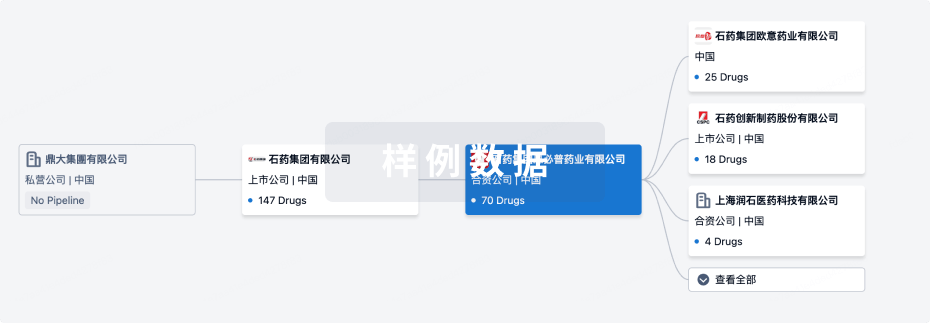
组织架构
使用我们的机构树数据加速您的研究。
登录
或
管线布局
2026年10月25日管线快照
管线布局中药物为当前组织机构及其子机构作为药物机构进行统计,早期临床1期并入临床1期,临床1/2期并入临床2期,临床2/3期并入临床3期
药物发现
9
33
临床前
临床1期
16
14
临床2期
临床3期
9
1
申请上市
批准上市
80
134
其他
登录后查看更多信息
当前项目
登录后查看更多信息
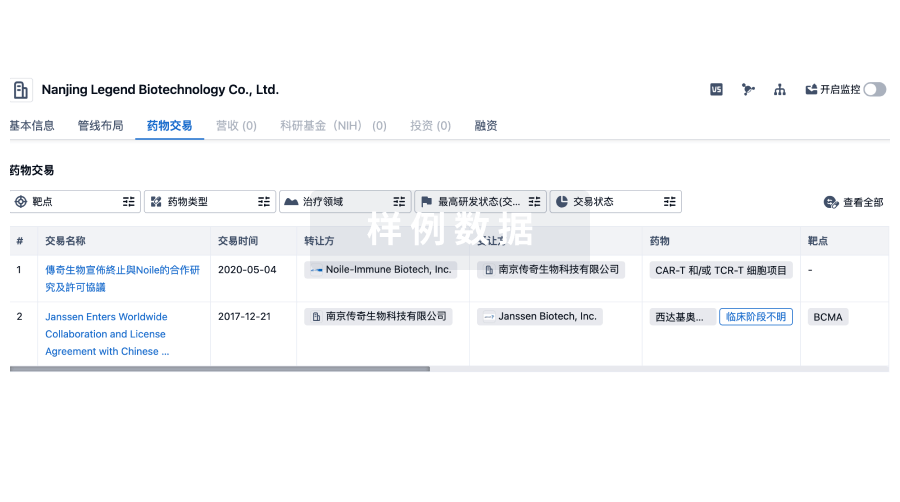
药物交易
使用我们的药物交易数据加速您的研究。
登录
或
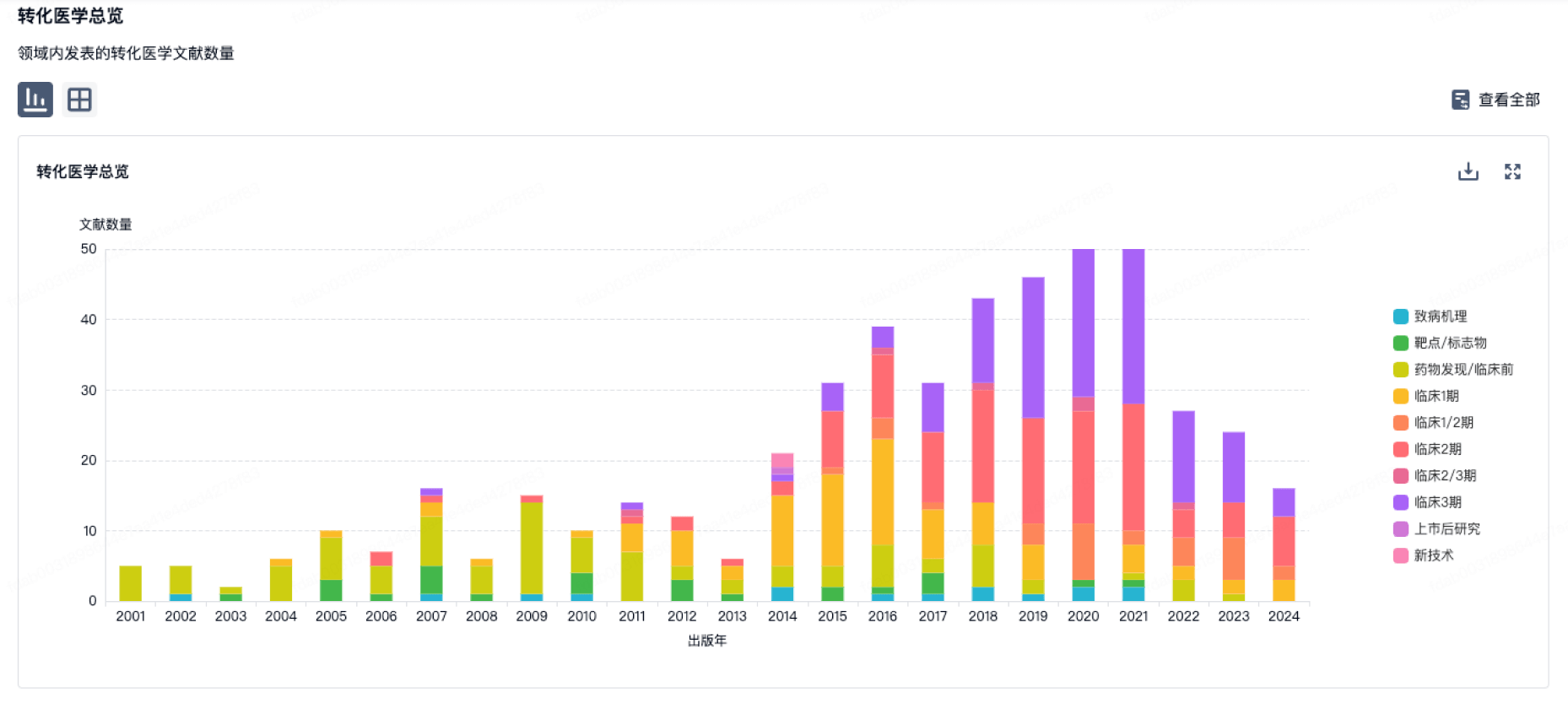
转化医学
使用我们的转化医学数据加速您的研究。
登录
或
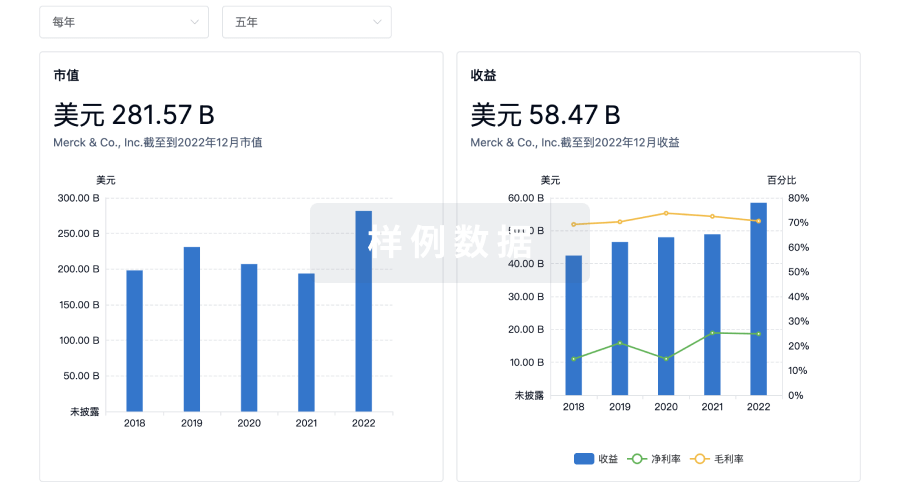
营收
使用 Synapse 探索超过 36 万个组织的财务状况。
登录
或
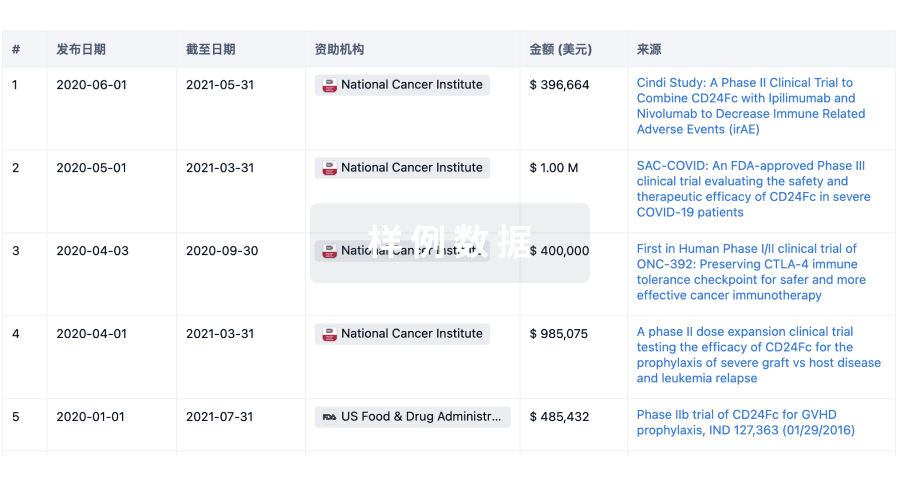
科研基金(NIH)
访问超过 200 万项资助和基金信息,以提升您的研究之旅。
登录
或
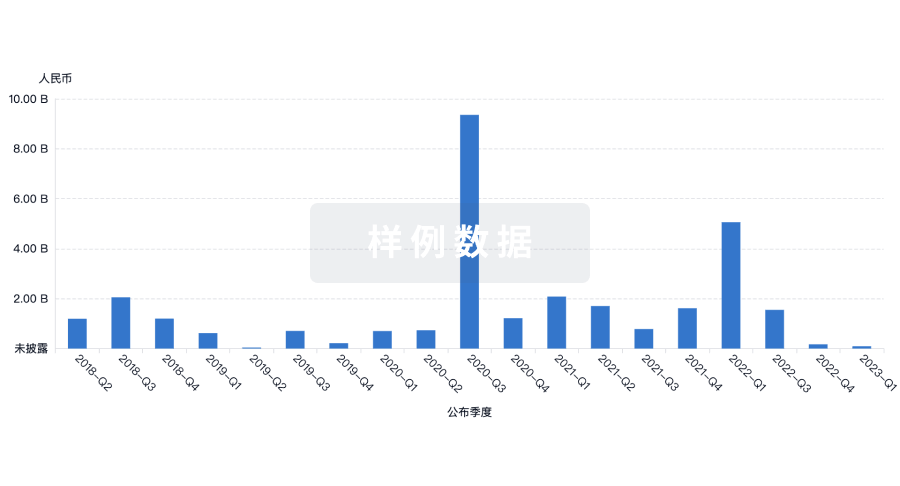
投资
深入了解从初创企业到成熟企业的最新公司投资动态。
登录
或
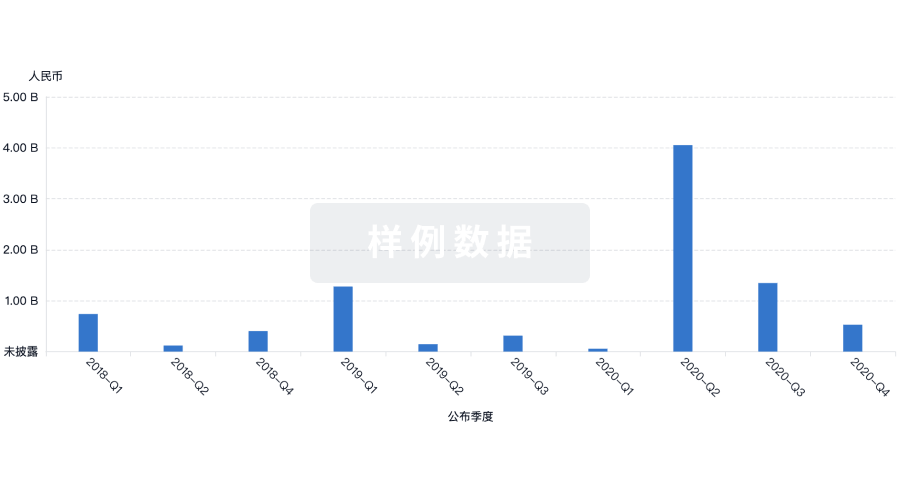
融资
发掘融资趋势以验证和推进您的投资机会。
登录
或
提出任何生物医药研究问题
让每一步生物医药决策都精准制胜
基于十亿级生物数据与全球情报的精准 AI,赋能早期药物发现
立即开始免费试用!
智慧芽新药情报库是智慧芽专为生命科学人士构建的基于AI的创新药情报平台,助您全方位提升您的研发与决策效率。
立即接入生物医药数据包
智慧芽新药库数据也通过智慧芽开放平台,以MCP或API服务形式对外开放。立即使用我们的MCP服务定制您的LLM智能体。
生物序列数据库
生物药研发创新
免费使用
化学结构数据库
小分子化药研发创新
免费使用