预约演示
更新于:2026-11-17
Eisai Co., Ltd.
更新于:2026-11-17
概览
标签
肿瘤
其他疾病
神经系统疾病
小分子化药
单克隆抗体
化学药
疾病领域得分
一眼洞穿机构专注的疾病领域

技术平台
公司药物应用最多的技术
靶点
公司最常开发的靶点
关联
靶点 |
作用机制 |
在研机构 |
原研机构 |
在研适应症 |
非在研适应症 |
最高研发阶段 |
首次获批国家/地区 |
首次获批日期 |

靶点 |
作用机制 |
在研机构 |
原研机构 |
在研适应症 |
非在研适应症 |
最高研发阶段 |
首次获批国家/地区 |
首次获批日期 |
靶点 |
作用机制 |
在研机构 |
原研机构 |
在研适应症 |
非在研适应症 |
最高研发阶段 |
首次获批国家/地区 |
首次获批日期 |


NCT07781345
A Prospective Observational Registry Study to Evaluate the Use and Safety of LEQEMBI in Routine Clinical Practice
NCT07864623
A Postmarketing Study to Confirm Treatment Benefit and Fulfill Conditions Associated With Market Authorization in Canada for LEQEMBI (Lecanemab) Administered in Adult Patients With a Clinical Diagnosis of Mild Cognitive Impairment and Mild Dementia Due to Alzheimer's Disease (Early Alzheimer's Disease), Who Are Apolipoprotein Epsilon 4 (ApoE Epsilon 4) Noncarriers or Heterozygous Carriers With Confirmed Amyloid Pathology

NCT07869264
An Observational Registry Study to Evaluate the Use and Safety of LEQEMBI in Routine Clinical Practice in Taiwan
100 项与 Eisai Co., Ltd. 相关的临床结果
登录后查看更多信息
登录后查看更多信息
2027-01-01INTERNATIONAL JOURNAL OF PHARMACEUTICS
Simple heat-assisted method for mRNA loading into empty lipid nanoparticles enables robust in vitro and in vivo delivery
Article
作者: Kondo, Keita ; Hara, Shoki ; Kamiyama, Hiroshi ; Miyazaki, Takayuki ; Suzuki, Yuta ; Kubara, Kenji ; Moriya, Jun ; Ishihara, Hiroshi
mRNA-lipid nanoparticles (LNP) have emerged as a versatile modality, enabling diverse applications by changing encoded mRNA sequences. However, the conventional mRNA-LNP preparation process poses significant barriers to non-specialists because it requires specialized equipment and technical expertise. In this study, we aimed to report a simple post-encapsulation approach where mRNA is mixed with preformed empty LNP in solution to form mRNA-LNP for effective in vitro and in vivo delivery. Process optimization revealed that heating mRNA and empty LNP at 75°C and pH 4.0 achieved approximately 90% mRNA encapsulation while maintaining an LNP size of approximately 100 nm. The resulting post-encapsulated LNP were comprehensively compared with conventional LNP prepared via microfluidic mixing. Both LNP formulations exhibited over 90% cellular uptake and comparable concentration-dependent expression in vitro. The intravenous administration of post-encapsulated LNP in mice resulted in robust luciferase expression in the liver and spleen at 0.01 mg/kg, with no notable changes in serum chemistry at 1 and 3 mg/kg. However, the activity of the post-encapsulated LNP was slightly reduced compared with that of the conventional LNP. Sucrose density gradient centrifugation indicated that post-encapsulated mRNA-LNP formed heterogeneous populations with varying mRNA/lipid ratios, in contrast to conventional mRNA-LNP. These findings support a working hypothesis that this heterogeneity could contribute to the reduced in vivo activity. Our simple post-encapsulation method potentially could lower entry barriers for non-specialists in this field and accelerate RNA-LNP research through its compatibility with 96-well-format preparation.
2026-12-01INTERNATIONAL JOURNAL OF PHARMACEUTICS
Beyond solubility limits: end-to-end robust supersaturation for parenteral delivery via SBECD inclusion
Article
作者: Kojima, Hiroharu ; Ishimoto, Hayato ; Hasebe, Takashi ; Ohori, Ryo ; Asai, Yumi ; Gotoda, Masaharu ; Suzuki, Takuya ; Ena, Eri ; Sato, Shinya ; Ishii, Naoki
Supersaturation induced by a pH shift in combination with sulfobutylether-β-cyclodextrin (SBECD) is a specialized solubilization strategy that has been reported for only a limited number of drug-cyclodextrin systems. Although this approach shows promise for injectable formulations, the mechanism by which supersaturation is maintained under manufacturing- and administration-related stresses remains unclear. In the present study, using the perampanel-SBECD system as a model, we demonstrate that pH shift in the presence of SBECD generates a kinetically stabilized supersaturated state that is maintained throughout the full process, from manufacturing operations to intravenous administration. Phase-solubility analysis showed pH-dependent inclusion complexation, with binding constants of 246.3 M-1 at pH 2 and 3916.7 M-1 at pH 7, indicating stronger hydrophobic association at neutral pH. The supersaturated solutions exhibited excellent physical stability during freeze-thaw cycling, high-shear mixing, lyophilization and reconstitution, dilution in infusion fluids, and 0.2 μm in-line filtration, without visible precipitation or notable drug loss. Molecular docking simulations and nuclear Overhauser effect spectroscopy suggested that inclusion complexes persisted under both acidic and neutral conditions, with electrostatic interactions contributing at acidic pH and hydrophobic interactions predominating at neutral pH. These findings provide a mechanistic basis for the stable supersaturation state in drug-cyclodextrin systems and support the feasibility of applying this strategy to injectable formulations.
2026-12-01INTERNATIONAL JOURNAL OF ANTIMICROBIAL AGENTS
Evaluation of vancomycin bolus/standard and continuous infusion on nephrotoxicity in a rat model
Article
作者: Rhodes, Nathaniel J ; Scheetz, Marc H ; Valdez, Kimberly ; Chang, Jack ; Marianski, Sylwia ; Melicor, Renz Paulo ; Pais, Gwendolyn M ; Liu, Jiajun ; Schoech, Lauren ; Jeantet, Colin
OBJECTIVES:
Vancomycin continuous infusion (CI) has been associated with lower nephrotoxicity. This study compared a 3-min bolus/standard infusion comparator (SI) with 24-h CI in a validated rat model.
METHODS:
Male Sprague-Dawley rats (n = 14) received a target total dose of 150 mg/kg as a 3-min intravenous bolus followed by a 24-h saline infusion (SI, n = 7) or as an initial loading administration followed by continuous infusion to 24 h (CI, n = 7). Urine and serial plasma samples were collected, and terminal whole-kidney homogenates were assayed for vancomycin.
RESULTS:
Day 1 urine output increased from baseline in SI animals (19.4 vs 8.9 mL/24 h; P < 0.001) but not in CI animals (12.4 vs 10.1 mL/24 h; P = 0.446). Urinary KIM-1 and clusterin excretion increased on Day 1 in SI compared with baseline and CI (both P < 0.001). Median AUC0-24h was 354.1 mg·h/L (IQR, 277.1-427.0) with SI and 379.9 mg·h/L (IQR, 337.7-500.9) with CI (exact Wilcoxon W = 28; P = 0.710). Whole-kidney vancomycin concentrations were numerically higher with SI (88.02 ± 85.12 vs 27.97 ± 18.74 µg/g; P = 0.11). Urinary KIM-1 showed a four-parameter sigmoidal relationship with whole-kidney vancomycin concentration (R² = 0.62).
CONCLUSIONS:
Continuous infusion was associated with lower biomarker-defined renal tubular stress and lower whole-kidney drug accumulation without a detectable difference in total systemic AUC0-24h.
100 项与 Eisai Co., Ltd. 相关的药物交易
登录后查看更多信息
100 项与 Eisai Co., Ltd. 相关的转化医学
登录后查看更多信息
组织架构
使用我们的机构树数据加速您的研究。
登录
或
管线布局
2026年11月18日管线快照
管线布局中药物为当前组织机构及其子机构作为药物机构进行统计,早期临床1期并入临床1期,临床1/2期并入临床2期,临床2/3期并入临床3期
药物发现
5
45
临床前
临床1期
9
9
临床2期
临床3期
4
1
申请上市
批准上市
84
193
其他
登录后查看更多信息
当前项目
登录后查看更多信息
药物交易
使用我们的药物交易数据加速您的研究。
登录
或
转化医学
使用我们的转化医学数据加速您的研究。
登录
或
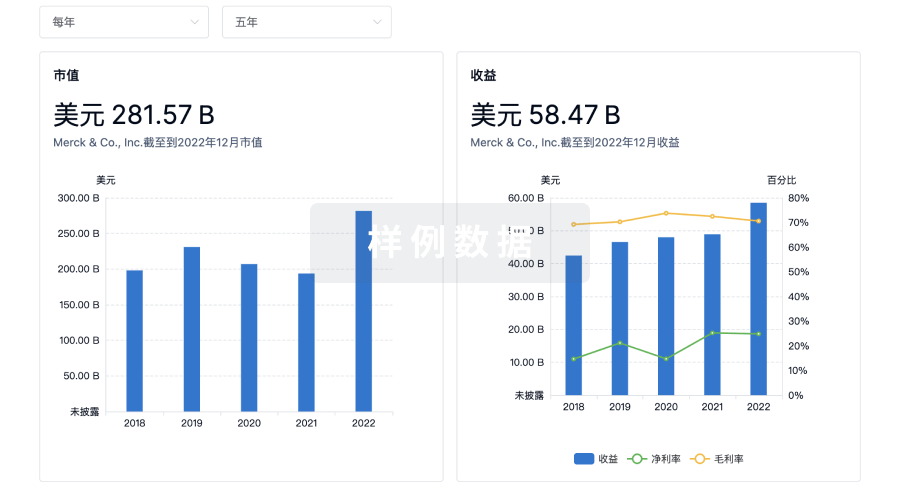
营收
使用 Synapse 探索超过 36 万个组织的财务状况。
登录
或
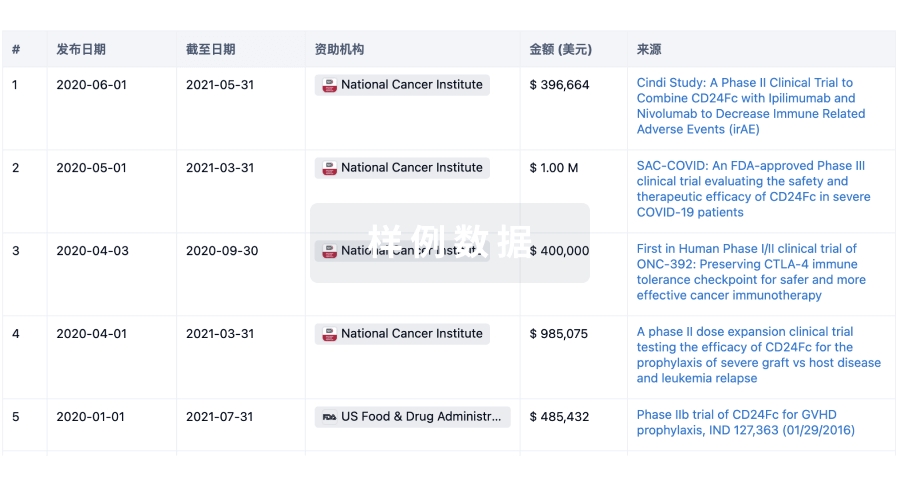
科研基金(NIH)
访问超过 200 万项资助和基金信息,以提升您的研究之旅。
登录
或
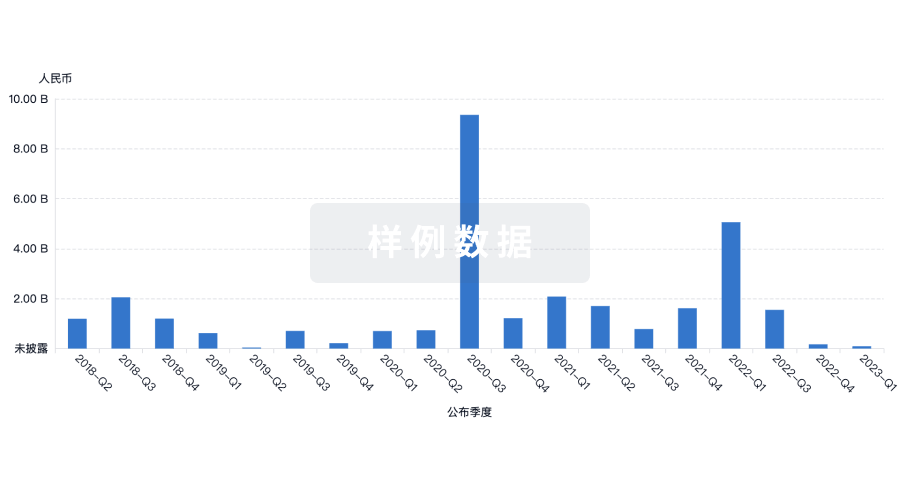
投资
深入了解从初创企业到成熟企业的最新公司投资动态。
登录
或
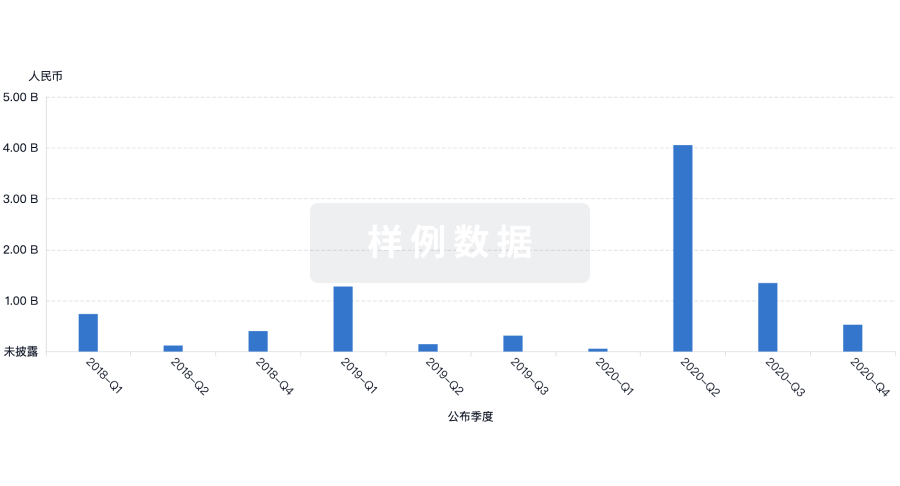
融资
发掘融资趋势以验证和推进您的投资机会。
登录
或
提出任何生物医药研究问题
让每一步生物医药决策都精准制胜
基于十亿级生物数据与全球情报的精准 AI,赋能早期药物发现
立即开始免费试用!
智慧芽新药情报库是智慧芽专为生命科学人士构建的基于AI的创新药情报平台,助您全方位提升您的研发与决策效率。
立即接入生物医药数据包
智慧芽新药库数据也通过智慧芽开放平台,以MCP或API服务形式对外开放。立即使用我们的MCP服务定制您的LLM智能体。
生物序列数据库
生物药研发创新
免费使用
化学结构数据库
小分子化药研发创新
免费使用