预约演示
更新于:2026-11-18

Chongqing Yao Pharmaceutical Co., Ltd.
更新于:2026-11-18
概览
标签
其他疾病
肿瘤
消化系统疾病
小分子化药
化学药
疾病领域得分
一眼洞穿机构专注的疾病领域

暂无数据
技术平台
公司药物应用最多的技术
暂无数据
靶点
公司最常开发的靶点
暂无数据
| 排名前五的药物类型 | 数量 |
|---|---|
| 小分子化药 | 15 |
| 未知 | 4 |
| 化学药 | 1 |
关联
20
项与 重庆药友制药有限责任公司 相关的药物靶点 |
作用机制 MAO-B抑制剂 |
在研机构 |
非在研适应症 |
最高研发阶段批准上市 |
首次获批国家/地区 欧盟 [+4] |
首次获批日期2005-02-21 |

靶点- |
作用机制- |
在研机构 |
非在研适应症- |
最高研发阶段批准上市 |
首次获批国家/地区 日本 |
首次获批日期1991-10-04 |

靶点- |
作用机制- |
在研机构 |
原研机构 |
在研适应症 |
非在研适应症- |
最高研发阶段批准上市 |
首次获批国家/地区 中国 |
首次获批日期1990-01-01 |

114
项与 重庆药友制药有限责任公司 相关的临床试验CTR20261202
丁二磺酸腺苷蛋氨酸肠溶片人体生物等效性研究
主要目的:本试验为预试验,旨在研究空腹和餐后状态下单次口服重庆药友制药有限责任公司研制、生产的丁二磺酸腺苷蛋氨酸肠溶片〔0.5 g(以C15H23N6O5S+计)〕的药代动力学特征;以ABBOTT LABORATORIES (M) SDN. BHD持证、ABBVIE S.R.L.生产的丁二磺酸腺苷蛋氨酸肠溶片〔思美泰®,0.5 g(以C15H23N6O5S+计)〕为参比制剂,比较两制剂中药动学参数Cmax、AUC0-t、AUC0-∞,为正式试验的开展提供参考。次要目的:观察受试制剂和参比制剂在健康研究参与者中的安全性。
开始日期2026-09-26 |
申办/合作机构 |
CTR20262917
盐酸丁螺环酮片空腹生物等效性试验
主要目的:
比较空腹给药条件下受试制剂重庆药友制药有限责任公司提供的盐酸丁螺环酮片(规格:10 mg)与参比制剂Teva Pharmaceuticals USA, Inc.持证的盐酸丁螺环酮片(规格:10 mg)在中国健康人群吸收程度和吸收速度的差异,评价两制剂的生物等效性。
次要目的:
评价空腹条件下,受试制剂与参比制剂在中国健康参与者体内的安全性。
开始日期2026-08-17 |
申办/合作机构 |
CTR20262360
氯氮平口腔崩解片单中心、随机、开放、两制剂、两周期、两序列交叉稳态设计的人体生物等效性研究
主要研究目的
研究稳态条件下口服湖南洞庭药业股份有限公司生产的氯氮平口腔崩解片(0.1 g*1片)的药代动力学特征;以Barr Laboratories Inc持证,Teva Pharmaceuticals USA, Inc.生产的氯氮平口腔崩解片(100 mg*1片)为参比制剂,比较两制剂中药动学参数Cmax,ss、AUC0-τ,ss,评价两制剂的人体生物等效性。
次要研究目的
观察受试制剂氯氮平口腔崩解片和参比制剂氯氮平口腔崩解片在试验参与者中的安全性。
开始日期2026-07-20 |
申办/合作机构 |

100 项与 重庆药友制药有限责任公司 相关的临床结果
登录后查看更多信息
0 项与 重庆药友制药有限责任公司 相关的专利(医药)
登录后查看更多信息
4
项与 重庆药友制药有限责任公司 相关的文献(医药)2019-01-01·Pharmacology4区 · 医学
Comparative Pharmacokinetic Study of Mangiferin in Normal and Alloxan-Induced Diabetic Rats after Oral and Intravenous Administration by UPLC-MS/MS
4区 · 医学
Article
作者: Wang, Lan ; Peng, Jun ; Han, Wen-Li ; Han, Mei-Na ; Pan, Yong-Quan ; Gu, Peng-Cheng ; Shang, Jing-Chuan
Backgrounds: Diabetes mellitus (DM)-induced morphological and/or functional complications may alter the pharmacokinetic profiles of mangiferin. This study aims to compare pharmacokinetic profiles of mangiferin in normal and alloxan-induced diabetic rats after oral and intravenous administration. Methods: Mangiferin was administered orally (10 mg/kg) and intravenously (2 mg/kg) to normal and alloxan-induced diabetic Sprague-Dawley (SD) rats (n = 8). Blood samples were collected at different time points post-dose. Mangiferin and esculentoside (internal standard) were analyzed by Waters Acquity ultra-performance liquid chromatography system and TSQ Quantum Ultra triple quadrupole mass spectrometer (UPLC-MS/MS). Results: Mangiferin in normal and alloxan-induced diabetic rats experienced serious first-pass effect, which resulted in 1.71 and 0.80% of oral bioavailability respectively. Meanwhile, mangiferin was predominantly restricted to blood but not extensively distributed to organ tissues after intravenous administration. Compared with normal rats, the diabetic condition induced 53.26 and 50.90% decreases in Cmax and AUC0–t, respectively, for mangiferin after oral administration, and 63.08% decreases in Cmax after intravenous administration. Conclusions: Compared to normal rats, pharmacokinetic parameters of mangiferin were altered in diabetic condition induced by alloxan. The findings might help to provide useful evidence for modeling of diabetic rats and the clinical applications of mangiferin.
2014-04-01·Bioorganic & medicinal chemistry letters4区 · 医学
Design, synthesis, and biological evaluation of dihydroartemisinin–fluoroquinolone conjugates as a novel type of potential antitubercular agents
4区 · 医学
Article
作者: Xu, Xing-Ran ; He, Zhi-Qin ; Jiang, Li ; Liu, Jian ; Lei, Huang-Shu ; Peng, Xin-Mei ; Zhou, Cheng-He ; Zou, Yan-Ye ; Chen, Li ; Zhou, Fu-Wei ; Fan, Li ; Liu, Cai-Ping ; Yang, Da-Cheng
Tuberculosis remains a global public health problem in recent years. To develop novel type of potential antitubercular agents, twelve novel dihydroartemisinin-fluoroquinolone (DHA-FQ) conjugates (three types of molecules) were gradually designed and conveniently synthesized. All the newly synthesized conjugates were well characterized and evaluated against different Mycobacterium tuberculosis strains in vitro. The screening results showed that five DHA-FQ conjugates were active toward M. tuberculosis H37Rv, and compound 3a exhibited the strongest inhibitory activity (MIC=0.0625 μg/mL), which was comparable to the positive control Moxifloxacin and even stronger than Ofloxacin. Conjugates 2a and 3a also displayed comparable activities against various clinically isolated sensitive and resistant M. tuberculosis strains (MIC=0.125-16 μg/mL) to Moxifloxacin. All target compounds possessed selective anti-M. tuberculosis ability. Preliminary structure-activity relationship demonstrated that short linker between DHA and FQ was favorable for strong antitubercular activity. This study provides a new clue for the development of novel antitubercular lead molecules.
2003-05-01·Yao xue xue bao = Acta pharmaceutica Sinica
Effects of sodium magnesium fructose diphosphate on free calcium concentration and nitric oxide synthase activity of ischemic synaptosome.
Article
作者: Zeng, Fan-xin ; Zhou, Qi-xin ; Dong, Zhi
AIM:
To study the effects of sodium magnesium fructose diphosphate (SMFD) on free calcium concentration and nitric oxide synthase activity of ischemic synaptosome, so as to explore the protective mechanisms of SMFD on cerebral ischemia.
METHODS:
The synaptosomes from normal rat brain were prepared by phase partition and cultured with oxygen-glucose deprivation to establish ischemic synaptosome model. The intrasynaptosomal free calcium concentration and nitric oxide synthase activity were detected separately after the synaptosomes were co-incubated with SMFD (1.3 mmol.L-1) or fructose-1, 6-diphosphate (FDP, 4.0 mmol.L-1) for 60 min.
RESULTS:
SMFD decreased the free calcium concentration and reduced the activity of nitric oxide synthase (NOS) of ischemic synaptosomes. Its effects were more powerful than those of FDP.
CONCLUSION:
SMFD may protect neurons from ischemic injury by preventing intracellular Ca2+ overload and inhibiting the activity of nitric oxide synthase.
1,229
项与 重庆药友制药有限责任公司 相关的新闻(医药)2026-11-16
·人民网
当前,国内创新药产业正加速从跟随式改良向源头创新转型,抗体药物赛道尤为突出。作为重庆本土企业,重庆智翔金泰生物制药股份有限公司(以下简称:智翔金泰)聚焦自身免疫性疾病、感染性疾病和肿瘤三大领域,持续开发单克隆抗体、双特异性抗体和多特异性抗体药物,攻坚新靶点、新分子、新工艺,逐步打通从靶点发现到商业化的全链条,原研抗体药物逐步进入收获期。
10月底,重庆智翔金泰生物制药股份有限公司发布了三季度报告,一款已上市产品依靠自主销售持续放量,一款核心产品通过区域授权兑现价值,两条路径共同支撑公司第三季度实现盈利。这份财报向好信号的背后,是公司长期坚持全链条自主创新的成果沉淀。
源头破局:深耕研发底色
创新药的价值根基,始于源头创新。智翔金泰多年持续投入研发,2023-2025年累计研发投入达17.03亿元。目前,公司搭建起六大自主核心抗体技术平台,形成“5大新药发现平台+1大产业化工艺平台”的闭环创新体系,以临床未满足需求为导向、以患者获益为目标,加速推动创新生物药项目研发。
“公司坚持源头创新、打造自主创新生物药技术平台,既是长期竞争力的来源,也是全球伙伴信任我们的理由。”智翔金泰董事长、总经理、首席科学官刘志刚说。
研发中心实验室。智翔金泰供图
基于这些技术平台,智翔金泰可每年滚动实现2-3项有竞争力且差异化的产品完成发现研究并进入临床前开发阶段,持续在自身免疫、感染性疾病、肿瘤三大赛道输出差异化品种。赛立奇单抗、斯乐韦米单抗、纬利妥米单抗等重磅品种,均源自智翔金泰自主研发技术平台:赛立奇单抗是国产首款获批上市全人源抗IL-17A单抗;斯乐韦米单抗为全球首款获批上市的狂犬病被动免疫双抗;纬利妥米单抗是国产首款获批上市的抗CD3×BCMA双抗。持续落地的管线成果,验证了自主研发技术平台的可靠、高效,源源不断为管线储备新分子,支撑公司长期创新迭代,形成“发现一个、推进一个、收获一个”的正向研发循环。
智造筑基:打通产研转化
生物医药产业是重庆市“33618”现代制造业集群体系中,创新打造的六大千亿级特色优势产业集群之一。智翔金泰持续夯实产业化底座,将实验室里的创新分子,依靠稳定、合规、可控的产业化能力,转化为可供给患者的药品。
抗体产业化一期。智翔金泰供图
位于重庆国际生物城的抗体产业化基地一期,于2019年建设完成,智翔金泰成为全市首个获得生产许可证的单抗类药物研发生产企业。据智翔金泰副总经理戴力介绍,该基地已建成24400L生物发酵产能,原液生产线自动化运行,生产、质控、仓储全流程数字化采集、全程可追溯,参照中国NMPA、美国FDA和欧盟EMA的GMP标准建设,实现生物药生产精细化管控,完成从传统生物制造向智造模式的跃迁。基地二期项目正在有序推进,建成后将新增27000L生物发酵产能,进一步放大规模化生产能力,为后续产品商业化放量和海外供应预留充足产能空间。
从实验室小试、工艺开发、中试放大,到商业化生产,智翔金泰打通了研发与生产之间的转化堵点,持续推进抗体产业化基地数字化转型升级,加强创新抗体药物商业化供给能力,让更多创新分子高效、稳定落地量产。
开放出海:链接全球创新
根植重庆、面向全球,智翔金泰坚持自主创新为根基、开放创新为路径,依托自有技术平台链接全球产业资源,打造“自主研发+全球授权合作”并行的发展模式,让“重庆造”创新抗体走向国际市场。
公司持续推进海内外权益授权、联合开发。此前GR1803注射液与海外药企达成大中华区以外权益授权,交易总额最高达7.12亿美元,成为重庆生物药出海交易第一单,验证了本土抗体技术获得国际认可。今年5月,智翔金泰与复星医药控股子公司重庆药友制药有限责任公司就纬利妥米单抗注射液达成大中华区独占授权合作,依托复星医药成熟的商业化体系,亦将提升这一创新疗法在中国的可及性,为广大中国患者带来新的治疗希望。
“我们不是简单地把权益卖出去,而是希望找到真正理解产品价值、愿意持续投入资源、在细分领域有专业化能力的伙伴。合作方的战略方向与我们的产品定位是否匹配,决定了这段合作能不能走得远。”刘志刚说。
未来,智翔金泰将继续积极拓展全球合作,持续加速创新产品的市场渗透与全球化布局,将中国创新药的创新价值转化为全球患者的临床获益。
价值兑现:迈入收获周期
创新药企的成长是长期主义的长跑,前期高强度研发投入,正逐步进入管线兑现期。目前,智翔金泰自主研发的16款在研产品精准覆盖自身免疫性疾病、感染性疾病、肿瘤三大高潜力赛道,分层落地、梯队完整。
智翔金泰已上市产品矩阵持续丰富:赛立奇单抗注射液两大适应症获批上市,并成功纳入国家医保目录,2026年持续放量;斯乐韦米单抗、纬利妥米单抗先后获批上市;另有多款产品处于上市审评阶段,多款在研产品正在临床推进中。
据智翔金泰董事、副总经理、董事会秘书李春生介绍,近期,公司发布了2026年第三季度报告,第三季度实现营业收入约6.25亿元,同比增长285.23%;归母净利润约3.10亿元,带动前三季度归母净亏损收窄至约638.35万元。
财报中营收增长、减亏向好,是来自产品销售收入与海外授权收益的双重贡献,智翔金泰也构建起“研发投入—管线产出—商业回报—再创新”的良性循环。
从实验室里从零开始的源头基础研究,到智能工厂体系下稳定可控的规模化量产;从立足重庆、面向全球的开放协同,到多款新药接连获批上市、逐步实现商业化落地,智翔金泰以研发创新与商业化运营双轮驱动,蹚出了一条国产抗体药自主创新的特色发展之路。
未来,该公司将继续深耕抗体创新赛道,持续迭代核心技术平台,加快推进在研管线临床进度与全球化布局,依托智能制造底座,推出更多高质量、高可及性的创新生物药,服务国内患者,持续向世界展现中国生物医药的创新力量。(刘敏)
(责编:秦洁、刘政宁)
2026-11-15
写给还在做减重、RAS 和 ADC 的同行,也写给坐在谈判桌这一侧的人
写于 2026 年 11 月 14 日,数据截至当日。主要出处放在文末,正文里只随手提到,不逐句加注。从财报附注说起
11 月 3 日辉瑞发三季报,我把管线更新那几页来回翻了两遍。七条临床项目被划掉,减重和 KRAS 各占一块,当天圈子里就有人写"辉瑞撤退了"。我第一反应也差不多。
翻到财务附注的时候停了一下。同一个季度里,还有一笔 6.5 亿美元的收购在研研发费用,是付给信达生物的首付款。两行字挨着,一笔是砍掉自己养了多年的早期分子,一笔是拿现金去买别人已经推进到临床的项目。把它们分开看,是两件事;并在一起看,才像一句话。
后来我把这句话想了几天,觉得"撤退"这个词用轻了,也用偏了。辉瑞没有离开减重,也没有离开肿瘤。它换的是获取分子的办法:原来自己从靶点开始养,现在更愿意在别人跑到一定阶段时付钱进场。2025 年到 2026 年,它从三生、信达、先为达、药友手里都买过东西,其中信达这笔就记在砍管线这份财报里。所谓"中国被抢的赛道",买方名单上其实坐着辉瑞自己。
这个差别听着像文字游戏,落到实验室和 BD 桌上却很实在。要是把它读成"靶点被证伪",下一步就是砍自己的管线;读成"自研早期的投入产出比被判负,而买方的预算还在涨",要改的则是立项门槛和条款。我这些天跟几位同行聊,发现前一种读法反而更常见,大概因为它更省事。那七条到底是怎么没的
先把名单摆出来,省得后面绕。辉瑞披露的是自 8 月 4 日以来终止七项开发计划,两项 II 期、五项 I 期。
编号
靶点/机制
适应症
阶段
披露的原因
PF-07868489
抗 BMP9 抗体
肺动脉高压
II 期
商业决定,非疗效或安全性
PF-06835375
抗 CXCR5 抗体
免疫性血小板减少症
II 期
商业决定
PF-06835375
抗 CXCR5 抗体
狼疮
I 期
同上,同一分子另一适应症
PF-07999415
机制未公开的生物药
肥胖
I 期
未披露
PF-08654696
GIPR 激动剂(原 MET-034i)
慢性体重管理
I 期
未披露,单用及联合的 I 期项目终止
PF-07934040
KRAS 抑制剂
晚期实体瘤
I 期
战略性商业原因
PF-07985045
KRAS 抑制剂
晚期实体瘤
I 期
战略性商业原因
第一次看这张表,最该留意的其实是"一次性"三个字站不住。PF-07985045 在 2026 年 5 月就按商业原因停了,只是二季报里还挂在活跃栏;PF-07934040 七月就停止招募,离原定入组目标差得远。三季报做的是把它们从管线表里正式移走。做竞品跟踪的人对这种时点差大概都有体会:财报是记账的日子,管线表是改状态的日子,临床登记上"停止招募"才是离真实决定最近的日子。三个日子混成一个,就会以为对手是突然转向,也会把自己还剩多少窗口算错。
再往前翻,这条线还要长。2025 年 4 月,自研口服小分子 danuglipron 因肝酶升高停掉;2026 年二季度一次性停了四项——Metsera 带来的口服 GLP-1 MET-224o、已经进到 II 期的 GIPR 拮抗剂 PF-07976016、I 期的 MC4R 拮抗剂、和 Nxera 合作的肾病项目。加上三季度的七条,2026 年公开能查到的清理在十一条以上。所以这不是某个下午的决断,是三个季度里按同一把尺子反复量过的结果。那把尺子大概只有一句话:这个分子还有没有可能进前三。
那笔被反复引用的减值也得摆回原位。前三季度累计 43.25 亿美元,其中约 38 亿来自 sigvotatug vedotin,5.25 亿来自早年因安全性撤市的 Oxbryta。但 38 亿不是三季度记的:6 月 22 日 SigVie-002 顶线失败,当月就在 Q2 计提了,当时非现金减值总额约 43 亿。把"43.25 亿减值"和"七项终止"并列成同一季度的事,是不少内部材料的写法,评审时被人指出来并不冤。数字本身没错,会计期间错了。三处容易看错的地方
这段写得琐碎一点,因为这三个坑我自己都差点踩进去。
头一个是分子归属。被停的是 GIPR 激动剂 PF-08654696 单用以及它和 berobenatide 联用的 I 期项目;berobenatide(PF-08653944,原 MET-097i)没被砍,恰恰相反,它是辉瑞现在减重管线唯一的主干。这个分子是超长效、完全偏向型的 GLP-1 受体激动剂,脂质化的 exendin-4 类似物,先每周滴定、之后可以一个月打一针。VESPER-3 在 28 周月度维持下报过 12.3% 的安慰剂校正减重;辉瑞 2026 年铺了十项 III 期,VESPER-4 三千五百多例、VESPER-5 一千多例糖尿病、VESPER-6 是每月维持的关键研究,还有 OSA、从司美或替尔泊肽换药、中国和日本各自的每周与每月研究,目标 2028 年首次获批。
Metsera 那笔收购是 2025 年 9 月宣布、11 月 13 日完成的,每股 65.60 美元现金,企业价值约 70 亿,另加最高每股 20.65 美元的或有价值权,媒体习惯按最高约 100 亿讲。CVR 挂的三个里程碑里就包括月度给药 MET-097i 单药获 FDA 批准;辉瑞自己也说了,这笔交易到 2030 年前都会摊薄利润。把这些信息叠起来再看"退出减重",就知道走的是分支、留的是主干。判断反了,后面全反。
第二个是刚才说过的会计时点,不重复。
第三个有点技术性,但我觉得最要紧:那两款 KRAS 资产究竟是泛 KRAS 还是选择性 KRAS 抑制剂,各家说法对不上。辉瑞自己的演示文稿和 Insight 写的是 selective KRAS inhibitors,ClinicalTrials.gov 里 PF-07934040 的登记写 pan-KRAS,智慧芽和 ApexOnco 也按泛 KRAS 讲,而且后者直说这两个分子到底差在哪儿并不清楚。我没有替谁下结论的凭据,只能把分歧摆着。
但由此想到一件事:我们数竞品的时候太容易按名字分桶了。pan-KRAS、pan-RAS(ON) 三元复合物分子胶、突变选择性 G12D、G12C、PROTAC、tADC,是六条不同的路,各自的成药难点、毒性谱、耐药机制都不一样,混成"KRAS 赛道有 N 家"这个数,拿去立项会直接误导。这跟看制剂时不能因为写着"控释"就认定是渗透泵、写着"双释"就认定是双层片,是同一种谨慎。名字是给人看的,机制才是给开发用的。关于 GIPR,我们可能把它想简单了
做代谢的人大概都被这个靶点绕进去过。替尔泊肽把 GIPR 激活,安进的 MariTide 把同一个受体堵住,两边临床试验都减重,看着像药理学自己跟自己打架。人类遗传学还给了一记反手:携带 GIPR 功能缺失变异的人体重偏低,这支持拮抗;可把 GIP 激动加到 GLP-1 上,头对头又确实赢过单用。前些年行业里流行的解释是"功能性拮抗"——长期给激动剂把受体弄脱敏了,激动剂用着用着就变拮抗剂。听着整齐,一直没被直接证明。
剑桥 Wellcome-MRC 代谢科学研究所今年 7 月 24 日在Nature Metabolism发了篇小鼠工作,把两条路拆开了:激动剂的抑食作用走脑干最后区,拮抗剂带来的额外减重走下丘脑,下丘脑的 GIPR 信号平时像踩着脑干饱腹反应的刹车,堵住它等于松刹车。研究还顺带发现,阻断 GIPR 会让小鼠对胰淀素类药物更敏感。
我第一遍读完觉得漂亮,第二遍回过味来:这是敲基因的小鼠,受体从发育期起就在特定脑区永久没了,和成年人一个月打一针、药物还得看能不能过血脑屏障、到那儿分布多少,完全不是一回事。论文也没给临床给药规则,更没证明哪个联合方案在人体更安全。它给的是一张地图,不是处方。
可这张地图对辉瑞的处境解释力很强。既然两条回路不同,激动和拮抗就不是同一个产品的两种用法,而是两个独立开发项目,各自要回答剂量、滴定期的胃肠道耐受、联合伙伴、人群选择。辉瑞两边都押,等于拿两份预算去买一个还没定型的机制,而 berobenatide 那十项 III 期已经把资源占满了。Q2 砍掉已到 II 期的拮抗剂,Q3 砍掉 I 期的激动剂,三个月里两个方向一起收,读成组合管理比读成科学否定要合理得多。
有意思的是,同一时间中国这边卖得最好的口服代谢资产之一,正是 GLP-1/GIP 双激动剂。恒瑞 9 月 29 日把 HRS-1596 的大中华区外权益给诺和诺德,首付 3 亿、总额最高 26 亿,标的还在 I 期/IND 阶段。买方看上的不是"GIP 这条机制被验证了",是"每周一次口服"这个同时解决打针和每天吃药两个麻烦的给药方式。同一个靶点,一边被清仓,一边被付三亿美元首付,看起来矛盾,其实两边谈的根本不是一回事:一个在算组合里还放不放得下,一个在买依从性上的差异化。KRAS 那边,是别人先把标准写好了
8 月 26 日 FDA 批了 Revolution Medicines 的 RASONQUE(daraxonrasib,RMC-6236),用于既往至少一线系统治疗、或不适合多药联合的成人转移性胰腺腺癌。我后来把批准函找出来看过,NDA 220910,是全球第一个获批的 RAS(ON) 多选择性抑制剂,而且不需要伴随诊断。RASolute 302 里中位 OS 13.2 个月对化疗 6.7 个月,HR 0.40,mPFS 7.2 对 3.6,ORR 30% 对 11%。30 天供应的批发采购价 39,800 美元,上市前五周卖了 1.98 亿、覆盖约五千例病人。
把辉瑞那两款分子的时间线并排放:2024 年进 I 期,2026 年 5 月和 7 月先后停掉。它们要撞上的,是一个已经获批、III 期把 OS 翻了一倍、连伴随诊断都不需要的首发产品。到这一步,问题早就不是"能不能做出来",而是能不能头对头赢、能不能进一线、能不能覆盖更多亚型同时把野生型 RAS 抑制带来的皮疹和口腔炎压住、能不能对付获得性耐药。今年《Cell》上那项研究分析 40 位用过 daraxonrasib 的病人配对样本,18 例查出复发性获得性改变,RAS Y64 会削弱三元复合物形成,Y71 和一部分低活性 BRAF 突变能让 RAS-RAF 重新接上。赛道没有关门,只是门槛被抬到了另一个高度。
所以辉瑞清空 KRAS 之后发言人还说"致力于为 RAS 突变患者寻找新疗法",我倒不觉得是客套。ApexOnco 数了一下,它组合里已经没有别的 KRAS 或 RAS 抑制剂了,评论里那句"这个洞大概得靠交易来填",对国内做 BD 的人比任何行业综述都值得划出来。一个刚把自己的早期分子清干净、手里又握着信达十二个项目合作框架的买方,接下来会看什么,不难猜。
国内这边的密度也得说清楚,不然容易误判成"没人做了"。泛 KRAS 有加科思 JAB-23E73,2026 年 7 月启动联合吉西他滨加白蛋白紫杉醇一线胰腺癌的 Ib/III 期,I 期在预测有效剂量范围内 13 例可评估胰腺癌里 ORR 38.5%;正大天晴 TQB3205 今年拿了中美临床许可。泛 RAS(ON) 分子胶那一档,劲方 GFH276、先声 SIM0532、贝达 BPI-572270、奥赛康 AN9025 多在 I/II 期,百济的 BG-85738 主打脑穿透,8 月注册了全球 I 期。G12D 选择性这一档,劲方 GFH375 是全球最早进 III 期注册的口服 G12D 之一,胰腺癌和 NSCLC 两项都开了;恒瑞 HRS-4642 的 III 期 n=588。G12C 已经有四款国产上市,不必再挤。这是公开能查到的下限,不公示登记号的企业还会漏掉,真做立项时得自己一条条回 CDE 和药物临床试验登记平台补齐。38 亿美元买到的一个阴性结果
sigvotatug vedotin 值得单独讲,因为它的失败方式和"疗效不够"不是一回事。
这个分子靶向整合素 β6,mc-vc 可裂解连接子偶联 MMAE,DAR 4,原代号 SGN-B6A/PF-08046047,来自 2023 年 12 月那笔 430 亿美元的 Seagen 收购。2024 年 ASCO 报 I 期的时候,非鳞 NSCLC 确认 ORR 19.5%,没用过紫杉烷的亚组能到 32.5%,于是跳过 II 期直接上 III 期全人群 OS。2026 年 6 月 SigVie-002 顶线没达到改善 OS 的主要终点,只在仅接受过一线系统治疗的亚组里看到 OS 和 PFS 的获益趋势。
最让我在意的不是 OS,是那句探索性分析:没找到 ITGB6 表达水平和治疗反应之间的明确关系。做 ADC 的人都知道这意味着什么——你没法拿表达量把响应人群挑出来。一个没有病人富集逻辑的 ADC,等于把 III 期押在全人群一个很弱的信号上,而 OS 又是最不给人留余地的终点。中间缺的那一步其实很朴素:先在前瞻性研究里证明表达量真能分层响应,再决定要不要往注册研究走。
同一笔收购里,Padcev 三季度卖了 7.20 亿美元、按固定汇率涨 55%。一个减值 38 亿,一个高增长,所以"ADC 平台不行"这种结论下不得。问题落在单个资产的靶点—人群—终点这条链上,不在技术路线。
国内恰好还有人在这条链上走。科伦博泰的 SKB105(CR-003)是 ITGB6 ADC,拓扑异构酶 I 载荷,Kthiol 不可逆偶联,今年 1 月拿到 CDE 临床批件,受理号 CXSL2500930;2025 年 12 月和 Crescent 做了个互换,授出大中华区外权益收 8,000 万美元首付加最高 12.5 亿里程碑,同时付 2,000 万美元首付换回 CR-001 那款 PD-1×VEGF 四价双抗的大中华权益。康宁杰瑞的 JSKN-022 走的是 ITGB6×ITGB8×PDL1 多靶点,I 期,NCT07292402 在招,另一个 ChiCTR2500110741 挂着暂停。
这些项目的公开立项理由,多半还是"ITGB6 在多种实体瘤高表达、正常组织低表达"。这句话没错,但辉瑞花了 38 亿美元买到的答案恰恰是:高表达不等于高响应。我不觉得这些项目因此就该停,倒觉得它们比同行多了一份别人替它们付过费的资料——只要把"响应靠什么分层"这个问题,从 II 期之后挪到 II 期之前。
顺带说个老毛病。亚组数据好看的时候,人最容易高估自己。I 期那个 32.5% 的 ORR 来自没用过紫杉烷的亚组,SigVie-002 失败后看到的 OS 和 PFS 趋势,也只出现在仅接受过一线系统治疗的患者里。亚组不是结论,是下一轮假设,尤其当它没写进预设分层、样本又小的时候。这些年看方案,我常问一句:这个亚组是统计分析计划里事先定好的,还是数据出来之后找出来的?答案不一样,整个 III 期该怎么算胜率也不一样。辉瑞跳过 II 期那一步,跳掉的不只是时间,还有一次把亚组变成假设、再把它证伪或者坐实的机会。中国这边在卖什么
9 月底那四十八小时,圈子里全是"61.3 亿美元"。我把公告找出来算了一遍首付比例,算完心情和看标题时不太一样。
公告
标的
买方
首付
潜在总额
首付占比
2025-12-21
加科思 JAB-23E73,泛 KRAS
阿斯利康
1 亿美元
20.15 亿
约 5.0%
2026-09-28
思璞锐 SPR2015,口服 KRAS G12D(ON) 分子胶
默沙东
4 亿美元
21.3 亿
约 18.8%
2026-09-29
恒瑞 HRS-1596,每周一次口服 GLP-1/GIP
诺和诺德
3 亿美元
26 亿
约 11.5%
2026-09-29
Summit 战略股权投资
阿斯利康
20 亿美元
—
不是授权交易
加科思那笔的公告年份有出入,经济参考报记 2025 年 12 月,北京经开区 2026 年 1 月的稿子写"今年首笔 BD",以港交所公告编号为准更稳妥。阿斯利康给 Summit 的 20 亿是入股,买的是依沃西联合自家 CLDN18.2 ADC 等联用研究的入口和公司股价,不是买一条管线,把它跟前三笔并排说成"筹码",风险敞口就混了。
四笔定价的理由各不相同,我觉得这比"MNC 在抢中国资产"有用得多。加科思卖的是时间差:泛 KRAS 里已有中美同步 I 期、也看到了早期活性信号,王印祥在沟通会上讲过,5% 的首付占比在小分子抗肿瘤药 3%—8% 的惯例里算中间偏上。思璞锐卖的是可选性,公司 2024 年底才成立,SPR2015 还没进过人体,官方也没公开完整临床前数据,4 亿美元首付被媒体称作临床前资产的纪录——这个"纪录"我没找到一手交易文件或买方公告确认,姑且当媒体口径。恒瑞卖的是给药频次。阿斯利康买的是 HARMONi-2 更新 OS 之后的联合用药入口。
没有一笔的定价理由是"辉瑞退出了所以靶点便宜"。把一次采购行为读成一次科学背书,是国内立项材料里挺常见的一个跳步。61.3 亿美元里,现金有多少
医药魔方的口径,2026 年上半年中国创新药对外授权总额 997 亿美元,对应首付款近 50 亿,约 5%;另有统计给到约 240 笔、1,063 亿美元、首付约 70 亿,比例差不多。SRS Acquiom 那组分阶段兑现率我记了很久:临床前里程碑约 55%,III 期降到 12%,商业化只剩约 5%。Locust Walk 的刘辰在十一月那场会上说得更直接,过去三十年药企引进的项目里,85% 到 90% 最终没能兑现全部里程碑;2025 年的退货率在 40% 上下。
所以"20 亿美元"这四个字,落到现金流量表上通常是另一个数量级。做 BD 的同事比我清楚,我每次看到标题还是会愣一下。还有一层:麦肯锡的口径,全球前十 MNC 里源自中国的授权交易占比,从 2023 年的 15% 升到 2026 上半年约 50%;靶点到 IND 我们快 2 到 3 倍、成本是人家三分之一到二分之一,入组快 2 到 5 倍、单例成本至少低一半。这些是真本事,但买方预算是个相对稳定的池子,份额上升是存量再分配,不是需求无限扩容。当另一家给出一个更快、更便宜、数据更干净的分子,份额会走。
石药那款 CLDN18.2 ADC 我一直拿来提醒自己:EO-3021 国内 I 期 ORR 约 47%,美国 I 期 22.2%,2025 年 3 月被合作方终止。跨区域数据不一致这件事,在签约时是一行附注,在里程碑到期时就是全部理由。
支付端今年也在变。11 月 14 日医保局和人社部在苏州发布 2026 年版双目录,基本医保新增 107 种、里头 51 个 1 类创新药,调出 34 种,净增 78 个编号,总数 3,331;商保目录 12 款参与协商全部成功,总数到 28 种,两个 2025 年的商保品种进了基本医保,2027 年 1 月 1 日执行。官方还给了个数:截至 10 月底,2025 版商保目录那 18 种药已在 1,710 家机构配备、近 3 万人次用药、拉动销售约 6 亿元,配备机构数比纳入前增约 140%。这意味着留在手里的中国权益不再是"以后再说"的尾货,而是有放量曲线可测的资产。只谈海外首付的交易里,这一块常常被顺手让掉。如果我还坐在立项会上
下面这些不是建议清单,是我这几周反复在心里过的几个问题。真要写成制度,各家的处境不一样,照抄没用。
最先想问的还是那句:这个靶点上全球第一个药获批、并且把 III 期 OS 翻倍的时候,我们手里这个分子还剩什么可卖?辉瑞那两款 2024 年进 I 期的时候,这个问题还不急;到今年 8 月 RASONQUE 批出来,答案基本就没了。难的是这类问题得在开题时问,不能等别人批了再补。我见过太多立项书把"我们进度也不慢"当差异化写,那不是差异化,是排队位置。
然后是竞品怎么数。按机制分桶,别按名字,前面讲过了。同一条路径上临床家数三家以上、首发产品又已获批的桶,我大概不会再同意新开一个跟随分子,除非能在安全窗、一线、脑转移或者耐药覆盖上写出一个可测量的指标。写不出指标就别立——挑不出来比硬选一个强,这句话说起来轻松,真到会上要顶住"别人都在做"的压力,不容易。
再就是那个表达量的问题。凡是以"靶点高表达"为主要卖点的项目,我会想在启动注册研究之前先看到三样东西:一个可重复的定量方法,一份表达量和响应前瞻相关的证据,以及表达阴性的人群怎么处理。少一样,就先别往 III 期走。这三样听着基础,可一旦 I 期亚组数据好看、投资人又在催,最容易被跳过的就是它们。
还有一层,年轻团队不太爱听,我这些年却越来越在意:分子之外的事。超长效月制剂听着是给药频次的胜利,落到手里是注射体积、皮下耐受、长期稳定性和批间一致性;berobenatide 是脂质化的 exendin-4 类似物,不是人源 GLP-1,一个月一针之后一旦出现恶心呕吐,血药浓度没法像周制剂那样很快撤下来,滴定期怎么设计就成了安全性问题,不只是舒适性问题。口服小分子那头是另一组麻烦,danuglipron 栽在肝酶升高,辉瑞两代自研口服 GLP-1 都停在这类信号上,国内三家报产品种的长期肝安全性也还需要时间攒数据。这些不写在靶点故事里,却常常决定一个项目能不能活到上市之后。立项会上讲这些最不讨喜,可真走到 III 期和 CMC,最贵的往往是它们。
按这套尺子量下来,我自己会这么排:口服小分子 GLP-1 减重再新开跟随,不立——礼来奥氟格列隆 11 月 12 日已在华获批,国产 VCT220、HRS-7535、卡维列隆三家排队,先发窗口关了;没有主干却想同时做 GIPR 激动和拮抗,不立;泛 KRAS 无头对头差异的跟随,不立;已进集采的低价普药做改良,不立。有每周一次口服数据、有超长效主干、有 G12D 注册研究在跑的,可以往下走,但各自得先解掉长期肝安全性、停药反弹、与泛 RAS 的联用定位这些具体问题。真正让我觉得还值得投的,只有泛 RAS 留下的那几块可测量的空白——耐药、脑转移、一线。九格里就这一格,不算保守,是把辉瑞那七条真读懂之后该有的样子。
当然,被我划掉的方向里肯定有错杀的。同一笔 430 亿收购里能长出 Padcev,也能长出 38 亿减值,事前谁也没把握分得清。谈判桌上我会在意的几件事
这些话我说得没底气,毕竟我不是做交易的,只是看过几份条款、也见过合作黄掉之后的烂摊子。
首付占比先算,再谈总额,低于 5% 的框架协议我心里按期权估值,不当收入看。里程碑要一条条写清触发事件、由谁判定、用哪套数据口径、有分歧怎么办。合作方自己管线里如果有竞品,得写明白它优先时我们这个项目怎么处置——这一条我最在意,因为辉瑞这次刚好演示过一遍:Q3 清完自己的 KRAS,公开说仍致力于 RAS 新疗法,组合里却已无同类分子。假设谁这时把泛 KRAS 授给它,半年后它通过收购拿到一个更快的泛 RAS 分子,原来那个项目的推进优先级会怎样?不是抬杠,是这个季度已经发生过一次的动作模式。条款里不写,首付就是全部收入。
再就是别把组织能力一起卖掉。能留共同开发、共同商业化权的尽量留,退货之后的权益回转、数据交付、已发生费用归属都提前写。跨区域数据一致性自己先在尽调材料里给个解释框架,别等美方 I 期数字出来再补。首付款确认时点要进财务模型,中国生物制药那笔 70 亿美元交易的 3.58 亿首付从 2027 年起入账,直接改写两年的收入节奏,这种时点差年报上很扎眼。反向交易也得会做,权益回购、区域互换、平台互换都能谈,科伦和 Crescent 那份互换、Vivoryon 从先声收回中国权益、百奥泰花 5,000 万买回 BAT1706,都是现成的样子。
有一条跟研发直接相关,还是想说:王印祥十月在决策者峰会上讲,不少港股 Biotech 估值低、再融资难,有时临床数据刚出来就急着把权益卖掉。融资约束会把签字时点推到数据最不充分、议价最弱的地方。这事 BD 部门解决不了,得董事会和实验室一起认。减重、RAS、ADC,眼下各自卡在哪
减重这边,辉瑞把资源压到月度给药和胰淀素联合,说明竞争轴已经从"减百分之多少"挪到给药频次、耐受性和长期维持。国内这边挤在口服和价格两端:11 月 12 日礼来奥氟格列隆获 NMPA 批准,是国内首个口服 GLP-1 减重药;闻泰 VCT220 七月首家报产,恒瑞 HRS-7535 九月受理、III 期 180 mg 组 44 周平均减重 9.5%,华东卡维列隆 11 月 13 日受理、52 周最高剂量组 12.2%;注射端玛仕度肽、瑞普泊肽、奥莱泊肽都在报产;司美格鲁肽核心化合物专利到期后,十余家递了仿制申请。替尔泊肽进医保后 10 mg 从 1,758 元降到约 324 元,FDA 又在 11 月 9 日要求全部 GLP-1 类药物说明书加 NAION 风险提示。IQVIA 给的中国减重药全渠道规模是 2025 年 141 亿元、2026 年预计 178 亿元。
三家国产报产比的其实是"谁先批、谁便宜",恰恰是最容易被集采和谈判压平的维度。还能做出可测差异的,我看只剩维持期反弹、长期肝安全性、以及院外随访续方的真实依从性这三处。礼来口服药自费价 149 到 349 美元、保险覆盖低至 25 美元,中国定价还没公布,这个变量出来之后,很多测算要重做。
RAS 这边,RASONQUE 年费用超过 47 万美元,把二线胰腺癌 OS 写到了 13.2 个月还不需要伴随诊断,后来者得在一线、脑转移、耐药覆盖或安全窗上拿出能比较的数据。加科思今年上半年收入 7.31 亿元、净利 6.01 亿元,首次盈利,阿斯利康那 1 亿美元首付三月到账——授权收入能把一家 Biotech 从亏损里拉出来,也能让下一轮融资的叙事变得过于顺滑。辉瑞清场留下的不是空位,是一张更难的卷子。
ADC 那边反倒最简单:把靶点叙事换成可测量叙事。表达检测方法能不能重复、连接子载荷在同靶点有没有验证过、II 期是随机还是单臂 ORR、III 期主要终点是 OS 还是替代终点、入组人群经治到多深——每少一项,立项表上就多一条待核。这些话不新鲜,只是 38 亿美元买回来的,总该比从前更当真一点。几句没把握的话
写到这儿,其实没什么结论可以给。
有一件事我倒是越来越不信:把 MNC 砍项目直接当作科学结论。被砍的两项 II 期,披露原因都写明是商业决定而非疗效或安全性;两项 KRAS 也是战略性商业原因。同期辉瑞前三季度研发费用 83.15 亿美元、同比增 15%,全年营收指引还上调到 620—640 亿。一家这个体量的公司,停掉一个 2028 年才读出、又跟主干没协同的 II 期,是再常规不过的动作。我们这边却常常一看到"退出"两个字,就跟着改自己的管线表。
另一件是那些漂亮数字。997 亿美元、85% 到 90% 兑现不了全部里程碑、III 期里程碑 12% 的兑现率,这些数摆在一起,说的是同一件事:早期研发的风险正在往供给方挪。谁能把风险定价写进条款、把差异化写进数据,谁才拿到下一轮的分工位置。这话听着像总结,我其实也嫌它太整齐了,可暂时想不出更准的说法。
还得留几句给自己的疏漏。七项终止我是靠财报的二手转述和 Fierce Biotech、FirstWord 交叉着看的,没直接读管线页 PDF 原件,各项目的精确决策日期和内部依据都没查到;berobenatide 那十项 III 期的登记号和入组数来自整理稿,没逐个回 ClinicalTrials.gov 核,"2028 年获批"是公司目标不是监管承诺;ITGB6 表达与疗效无关这句,我看到的是整理过的探索性分析描述,没读全文,统计方法和 cutoff 都不清楚;国内竞品家数是公开可检索的下限,没逐项目跑受理号和 CTR,也没跑专利 FTO 和集采中选价。这些缺口不补上,上面所有判断都只是筛选级的。
做药这件事,说到底还是概率。辉瑞 2023 年那笔 430 亿里,既长出了减值 38 亿的 sigvotatug vedotin,也长出了涨 55% 的 Padcev,同一套流程事前未必分得开。我这份复盘里划掉的方向,可能藏着被错杀的好分子;唯一给正面意见的那一格,也许下一份 III 期数据出来就关窗了。
唯一比较确定的,是个很小的习惯:下回再看见"某 MNC 退出某赛道"这种标题,先去翻它的财务附注,别急着动自己的管线表。主要资料来源
辉瑞 2026 年 Q3 财报与业绩电话会、2026 年 Q2 财报相关披露、向 SEC 提交的文件,以及 2025-11-13 完成收购 Metsera 的新闻稿;FirstWord Pharma 与 Fierce Biotech 2026 年 11 月的管线变动报道;ApexOnco 关于两款 KRAS 资产的分析;Insight 数据库 2026-11-10 周报、智慧芽新药情报与 ByDrug 医药魔方 11 月初的梳理;经济参考网 2026-08-31、中国医药创新促进会关于 SigVie-002 与 Q2 减值的报道;观察者网 2026-11-07 关于辉瑞在华交易与财务数据的整理;Revolution Medicines 2026-08-26 新闻稿及 Form 8-K、FDA 批准函 NDA 220910;Nature Metabolism2026-07-24 剑桥团队 GIPR 研究;Cell2026 年 daraxonrasib 耐药研究(经智慧芽转引);国家医保局 2026-11-14 双目录发布文件及新华社、中新网现场报道;各公司公告(恒瑞 2026-09-29、科伦药业 2026-001、北京经开区 2026-01-07、中国经济新闻网关于思璞锐的报道);时代财经 2026-11-12、东方财富 2026-11-13 关于口服 GLP-1 国内申报格局的报道;第一财经 2026-11-06、证券时报 2026-11 关于出海交易结构与首付款比例的报道,含医药魔方、麦肯锡、SRS Acquiom、Locust Walk 的被引数据。
数据截至 2026-11-14。文中金额与登记号以企业公告和监管文件为准,媒体口径已另行标明;竞争家数为公开可检索下限。本文为行业讨论,不构成投资、监管或交易决策依据。English EditionStarting with a footnote
When Pfizer posted its third-quarter results on 3 November, I read the pipeline-update pages twice. Seven clinical programmes crossed out, with obesity and KRAS taking most of the space. By that afternoon the word "retreat" was everywhere. My own first reaction was much the same.
Then I got to the financial footnotes and stopped. In the same quarter there was a $650 million acquired in-process R&D charge — the upfront to Innovent Biologics. Two entries side by side: one for dropping early molecules the company had raised itself, one for paying cash to step into someone else's clinical-stage work. Read separately, they are two unrelated lines. Read together, they say something.
I have been turning that over for a couple of weeks, and "retreat" now feels both too small and slightly off-target. Pfizer has not left obesity, and it has not left oncology. What changed is how it obtains molecules. It used to raise them from the target stage; it now prefers to pay its way in once somebody else has carried them into the clinic. Between 2025 and 2026 it bought from 3SBio, Innovent, Sciwind and Yaopharm — and the Innovent payment sits in the very filing that contains the cuts. Pfizer is on the buy side of those "fought-over Chinese targets".
That may sound like a quibble over wording, but it lands quite differently at the bench and at the BD table. Read the cuts as "the target was invalidated" and the next move is to cut your own pipeline. Read them as "the return on internal early discovery was judged insufficient while buyer budgets are still rising" and what needs changing is your approval threshold and your term sheet. Talking to colleagues lately, I have found the first reading is the more common one — probably because it is less work.What actually happened to those seven
The list first, so the rest does not have to circle back. Pfizer disclosed seven discontinued development programmes since 4 August: two Phase II, five Phase I.
Code
Target / mechanism
Indication
Stage
Disclosed reason
PF-07868489
anti-BMP9 antibody
Pulmonary arterial hypertension
Ph II
Business decision, not efficacy or safety
PF-06835375
anti-CXCR5 antibody
Immune thrombocytopenia
Ph II
Business decision
PF-06835375
anti-CXCR5 antibody
Lupus
Ph I
Same molecule, separate indication
PF-07999415
Biologic, undisclosed mechanism
Obesity
Ph I
Not disclosed
PF-08654696
GIPR agonist (formerly MET-034i)
Chronic weight management
Ph I
Not disclosed; Ph I alone and in combination stopped
PF-07934040
KRAS inhibitor
Advanced solid tumours
Ph I
Strategic commercial reasons
PF-07985045
KRAS inhibitor
Advanced solid tumours
Ph I
Strategic commercial reasons
The first thing I would flag is that "one-off" does not survive contact with the dates. PF-07985045 was stopped for business reasons in May 2026 but still appeared as active in the Q2 tables; PF-07934040 stopped recruiting in July, well short of its target. Q3 is when they were formally removed. Anyone who tracks competitors knows these three clocks: the filing is when it is recorded, the pipeline chart is when the status changes, and "enrolment halted" on a registry is closest to the actual decision. Collapse them into one and you will believe a competitor turned overnight — and misjudge how much runway you have left.
The line starts earlier still. Danuglipron, the in-house oral small-molecule GLP-1, went in April 2025 over liver enzyme elevations. Q2 2026 removed four programmes: Metsera's oral GLP-1 MET-224o, the Phase II GIPR antagonist PF-07976016, a Phase I MC4R antagonist and the Nxera-partnered renal asset. With Q3, more than eleven identifiable cuts in 2026. This was not an afternoon's decision; it was the same ruler applied over three quarters, and the ruler probably had one mark on it: can this still be top-three.
The impairment needs putting back in its own period too. The nine-month total was $4.325 billion — roughly $3.8 billion from sigvotatug vedotin and $525 million from Oxbryta, withdrawn earlier over safety. But the $3.8 billion was booked in Q2, after SigVie-002 failed on 22 June; non-cash impairments that quarter were about $4.3 billion. Placing "the $4.325 billion impairment" beside "the seven terminations" as events of the same quarter is a common shorthand in internal decks, and it deserves to be challenged. The numbers are right; the accounting period is not.Three places I nearly misread
This section is fussy, because I nearly stepped into all three.
The first is which molecule was actually dropped. What stopped was the Phase I programme for the GIPR agonist PF-08654696, alone and with berobenatide. Berobenatide (PF-08653944, formerly MET-097i) was not cut — it is the single trunk of Pfizer's obesity pipeline. It is an ultra-long-acting, fully biased GLP-1 receptor agonist, a lipidated exendin-4 analogue, dosed weekly during titration and then monthly. VESPER-3 reported 12.3% placebo-adjusted weight loss at 28 weeks under monthly maintenance. Pfizer laid out ten Phase III starts in 2026: VESPER-4 with 3,578 participants, VESPER-5 with 1,078 in type 2 diabetes, VESPER-6 as the pivotal monthly-maintenance study, plus OSA trials, a switch study from semaglutide or tirzepatide, and dedicated weekly and monthly trials in China and Japan. First approvals targeted from 2028.
Metsera was announced in September 2025 and closed on 13 November 2025 at $65.60 a share in cash — enterprise value around $7.0 billion — plus a contingent value right of up to $20.65 a share, widely reported as up to about $10 billion. One of the three CVR milestones is FDA approval of monthly MET-097i monotherapy, and Pfizer said the deal would dilute earnings through 2030. Put all of that next to "Pfizer exits obesity" and it becomes clear that branches went and the trunk stayed. Get that backwards and everything downstream is wrong.
The second is the accounting period, already covered.
The third is technical, and to me the most interesting. Nobody agrees on whether those two KRAS assets are pan-KRAS or selective KRAS inhibitors. Pfizer's own deck and Insight say "selective KRAS inhibitors"; the ClinicalTrials.gov entry for PF-07934040 says pan-KRAS; Synapse and ApexOnco use the pan-KRAS label, and the latter notes plainly that the difference between the two molecules is unclear. I have no basis to settle it, so I leave the disagreement on the table.
But it reminded me how easily we bucket competitors by name. Pan-KRAS, pan-RAS(ON) ternary-complex molecular glues, mutation-selective G12D, G12C, PROTACs, tADCs — six different roads, each with its own chemistry problem, toxicity spectrum and resistance biology. Rolling them into "N companies in KRAS" produces a number that will mislead a project-approval committee. It is the same caution as refusing to infer an osmotic pump from the word "controlled-release", or a bilayer tablet from "double release". Names are for readers; mechanisms are for developers.On GIPR, we may have made it too simple
Anyone who has worked in metabolism has been tangled up by this receptor. Tirzepatide activates GIPR; Amgen's MariTide blocks it; both produce substantial weight loss in the clinic. It looks like a bug in pharmacology. Human genetics added a backhand: people carrying loss-of-function GIPR variants tend to weigh less, which argues for antagonism — yet adding GIP agonism to GLP-1 clearly beats GLP-1 alone head-to-head. The field's tidy explanation for years was "functional antagonism": chronic agonist exposure desensitises and internalises the receptor until an agonist behaves like an antagonist. Neat, never directly demonstrated.
On 24 July this year a Cambridge Wellcome-MRC Institute of Metabolic Science team published a mouse study inNature Metabolismthat splits the two routes. Agonist-driven appetite suppression runs through the area postrema in the brainstem; antagonist-driven additional weight loss runs through the hypothalamus, where GIPR signalling appears to brake brainstem satiety circuits. Blocking GIPR also made the mice more sensitive to an amylin drug.
I thought it was elegant on the first read. On the second I remembered these are engineered mice, with the receptor deleted from a specific brain region from development onward — a very different thing from an adult receiving a monthly injection, with all the questions about blood–brain barrier penetration and regional distribution that implies. The paper offers no clinical dosing rule and does not show that any combination is safer or more effective in people. It is a map, not a prescription.
As a map, though, it explains Pfizer's position rather well. If the circuits differ, agonism and antagonism are not two uses of one product but two independent programmes, each needing its own dose, titration tolerability, combination partner and population logic. Pfizer was funding both while ten Phase III studies for berobenatide were consuming the budget. Cutting the Phase II antagonist in Q2 and the Phase I agonist in Q3, withdrawing from both directions within three months, reads far more like portfolio management than scientific rejection.
There is a nice irony in the timing. One of the best-selling Chinese metabolic assets of that same period is a GLP-1/GIP dual agonist: on 29 September Hengrui licensed ex-Greater-China rights to HRS-1596 to Novo Nordisk for a $300 million upfront and up to $2.6 billion, with the molecule still at Phase I / IND stage. What the buyer priced was not "GIP has been validated" but "once-weekly oral" — a single property that removes both injections and daily pills. The same target, cleared out on one side and paid $300 million on the other. Not a contradiction at all: one side was deciding what still fits in a portfolio, the other was buying an adherence advantage.In KRAS, somebody else wrote the standard first
On 26 August the FDA approved Revolution Medicines' RASONQUE (daraxonrasib, RMC-6236) for adults with metastatic pancreatic adenocarcinoma after at least one prior systemic therapy, or ineligible for multiagent therapy. I later pulled the approval letter, NDA 220910: the first approved RAS(ON) multi-selective inhibitor, with no companion diagnostic required. In RASolute 302, median OS was 13.2 months against 6.7 for chemotherapy (HR 0.40), mPFS 7.2 against 3.6, ORR 30% against 11%. Wholesale acquisition cost is $39,800 for 30 days; the first five weeks brought in $198 million across roughly 5,000 patients.
Now set Pfizer's two molecules beside that. Phase I in 2024; stopped in May and July 2026. What they ran into was an approved first-in-class product that had doubled Phase III OS and did not even need a companion diagnostic. At that point the question is no longer whether you can make the molecule — it is whether you can win head-to-head, move into first line, cover more isoforms while keeping wild-type RAS toxicity (the rash, the stomatitis) in check, and deal with acquired resistance. A 2026Cellstudy of paired samples from 40 daraxonrasib-treated patients found recurrent acquired alterations in 18: RAS Y64 weakens ternary-complex formation, while Y71 and certain low-activity BRAF mutations restore RAS–RAF signalling. The field did not close; the bar simply moved.
So when a Pfizer spokesperson said after Q3 that the company remained committed to new therapies for RAS-mutant patients, I did not take it as boilerplate. ApexOnco counted no other KRAS or RAS inhibitor left in the portfolio and observed that the hole "may need to be filled with a deal". For anyone doing BD in China, that sentence is worth more than most sector reviews. A buyer that has just cleared its own early molecules and is already holding a twelve-programme framework with Innovent is not hard to read.
Nor is the field empty on our side. In pan-KRAS, Jacobio's JAB-23E73 started a Ib/III first-line pancreatic combination with gemcitabine and nab-paclitaxel in July 2026, after a Phase I signal of 38.5% ORR across 13 evaluable pancreatic cancer patients at predicted active doses; Sino Biopharm's TQB3205 received US and China IND clearance this year. In pan-RAS(ON) molecular glues, GenFleet GFH276, Simcere SIM0532, Betta BPI-572270 and Aosaikang AN9025 sit mostly in Phase I/II, with BeiGene's brain-penetrant BG-85738 registering a global Phase I in August. In selective G12D, GenFleet GFH375 is among the first oral inhibitors into registrational Phase III, with both pancreatic and NSCLC studies open, and Hengrui's HRS-4642 is in Phase III with n=588. Four domestic G12C inhibitors are already marketed. These are searchable lower bounds — companies that do not publish registration numbers get missed, and any real screening exercise has to go back to the CDE and trial registry line by line.What $3.8 billion bought was a negative result
Sigvotatug vedotin deserves its own page, because the way it failed is not the same as "not efficacious enough".
It targets integrin beta-6, with a protease-cleavable mc-vc linker conjugated to MMAE at DAR 4, formerly SGN-B6A / PF-08046047, out of the $43 billion Seagen acquisition in December 2023. At ASCO 2024 the Phase I data showed confirmed ORR of 19.5% in non-squamous NSCLC and 32.5% in the taxane-naïve subgroup; Phase II was skipped and a Phase III all-comer OS study launched. On 22 June 2026 SigVie-002 missed its primary OS endpoint, with only a trend in the subgroup that had received one prior line.
What stays with me is not the OS result but the exploratory analysis: no clear relationship between ITGB6 expression and response. Anyone who has built an ADC knows what that means — you cannot use expression to enrich for responders. An ADC without an enrichment logic is betting a Phase III OS endpoint on a faint all-comer signal, and OS is the least forgiving endpoint there is. The missing step was mundane: show prospectively that expression stratifies response before committing to a registrational study.
From the same acquisition, Padcev posted Q3 sales of $720 million, up 55% at constant exchange rates. One asset written down by $3.8 billion, one growing fast — which is why "the ADC platform failed" is not a conclusion available to us. The problem sits in the target–population–endpoint chain of a single asset.
There are still people walking that chain in China. Kelun-Biotech's SKB105 (CR-003) is an ITGB6 ADC with a topoisomerase I payload and Kthiol irreversible conjugation; it received CDE IND clearance in January 2026 under acceptance number CXSL2500930. In December 2025 Kelun and Crescent Biopharma arranged a swap: ex-Greater-China rights out for an $80 million upfront and up to $1.25 billion in milestones, and a $20 million upfront back for Greater China rights to CR-001, a tetravalent PD-1×VEGF bispecific. Alphamab's JSKN-022 takes a multi-target ITGB6×ITGB8×PDL1 route, in Phase I under NCT07292402, with ChiCTR2500110741 listed as suspended.
The public rationale for these programmes is mostly that ITGB6 is highly expressed across solid tumours and low or absent in normal tissue. True — but the answer Pfizer paid $3.8 billion for is that high expression is not high response. I would not stop these programmes because of it. I would say they have been handed a piece of data somebody else paid for, provided they move the question "what stratifies response" from after Phase II to before it.
One old habit is worth naming. A good-looking subgroup is when people most overestimate themselves. The 32.5% ORR came from the taxane-naïve subgroup; the OS and PFS trends after SigVie-002 failed appeared only in patients who had received one prior line. A subgroup is not a conclusion, it is the next hypothesis — especially when it was not pre-specified and the sample is small. When I read protocols these days I usually ask one question: was this subgroup written into the statistical analysis plan beforehand, or found after the data arrived? The answer changes how you compute the odds for the whole Phase III. Skipping Phase II cost Pfizer more than time; it cost one chance to turn a subgroup into a hypothesis and then confirm or kill it.What China was selling
For forty-eight hours at the end of September the number everywhere was "$6.13 billion". I pulled the announcements and worked out the upfront shares; the mood changes a little when you do.
Announced
Asset
Buyer
Upfront
Headline total
Upfront share
21 Dec 2025
Jacobio JAB-23E73, pan-KRAS
AstraZeneca
$100m
$2.015bn
~5.0%
28 Sep 2026
SciBrunch SPR2015, oral KRAS G12D(ON) glue
MSD
$400m
$2.13bn
~18.8%
29 Sep 2026
Hengrui HRS-1596, once-weekly oral GLP-1/GIP
Novo Nordisk
$300m
$2.6bn
~11.5%
29 Sep 2026
Summit, strategic equity investment
AstraZeneca
$2bn
—
Not a licensing deal
The Jacobio announcement year is inconsistent across sources — December 2025 in Economic Information Daily, "this year's first BD" in a Beijing E-Town piece dated 7 January 2026; the HKEX announcement number is the thing to anchor on. And AstraZeneca's $2 billion into Summit is equity: it buys an entry point for ivonescimab combinations with AZ's CLDN18.2 ADC, plus exposure to the share price, not a pipeline. Grouping it with the other three as "chips on the table" muddles two quite different exposures.
The pricing logic differs in every case, which I find considerably more useful than "MNCs are scrambling for Chinese assets". Jacobio sold a time advantage — parallel US/China Phase I with early activity in pan-KRAS; Wang Yinxiang noted at the briefing that 5% sits in the upper-middle of the 3–8% norm for small-molecule oncology deals. SciBrunch sold optionality: founded in late 2024, SPR2015 never dosed in humans, full preclinical data unpublished, and the "record preclinical upfront" label comes from media citing PharmCube rather than a primary transaction document or buyer announcement I could find. Hengrui sold a dosing cadence. AstraZeneca bought a combination entry point after the updated HARMONi-2 OS.
Not one was priced on "Pfizer exited, therefore the target is cheap". Reading a procurement decision as scientific endorsement is a shortcut I keep seeing in project memos.How much of $6.13 billion is cash
PharmCube puts H1 2026 Chinese out-licensing at $99.7 billion total against nearly $5 billion in upfronts, about 5%. Another dataset gives roughly 240 deals, $106.3 billion and about $7 billion upfront — the same proportion. The SRS Acquiom realisation rates have stayed with me: roughly 55% for preclinical milestones, 12% at Phase III, 5% at commercialisation. At a November conference, Locust Walk's Liu Chen put it more bluntly: 85–90% of in-licensed projects over the past thirty years never realise all their milestones, and 2025 return rates ran around 40%.
So "$2 billion" usually arrives on the cash flow statement in a different order of magnitude. BD colleagues know this better than I do; I still blink at the headline every time. There is a second layer. McKinsey's numbers put the share of in-licensed deals originating from China among the top ten pharma companies at about 15% in 2023 and roughly 50% in H1 2026; target-to-IND two to three times faster at one-third to one-half the cost, enrolment two to five times faster, per-patient costs at least 50% lower. Those are real capabilities. But buyer budgets are a fairly stable pool, so a rising share is redistribution rather than endlessly expanding demand. When another team offers a faster, cheaper molecule with cleaner data, share moves.
I keep CSPC's CLDN18.2 ADC in mind as a corrective: EO-3021 produced about 47% ORR in a China Phase I, 22.2% in a US Phase I, and was terminated by the partner in March 2025. Cross-regional inconsistency is a footnote at signing and the whole reason when a milestone comes due.
The payment side changed this week as well. On 14 November the NHSA and the Ministry of Human Resources and Social Security released the 2026 NRDL and Commercial Health Insurance Innovative Drug List in Suzhou: 107 additions to basic insurance, 51 of them Class 1 innovative drugs, 34 removals, a net gain of 78 numbers to 3,331 drugs; all 12 commercial-list negotiations succeeded, bringing that list to 28, with two 2025 commercial-list products moved into basic insurance, effective 1 January 2027. The agency also reported that by end-October the 18 drugs on the 2025 commercial list were stocked in 1,710 institutions and pharmacies, used across nearly 30,000 patient-episodes, generating about RMB 600 million in sales, with stocking institutions up roughly 140%. Retained China rights are no longer a vague residual but an asset with a measurable uptake curve — and in deals that discuss only ex-China upfronts, that piece is often given away without being priced.If I were still sitting on the approval committee
These are not recommendations so much as the questions I have been going over for the past few weeks. Turned into rules, they would need to be rewritten for each company's situation.
The one I would ask first is still this: when the global first-in-class product in this target is approved and doubles Phase III OS, what is left to sell about our molecule? For Pfizer's two KRAS assets, entering Phase I in 2024, that question was not urgent; by August this year the answer was essentially nothing. The difficulty is that it has to be asked at project start, not retrofitted after someone else's approval. I have seen too many proposals where "our progress is also competitive" stands in for differentiation. That is a queue position, not a differentiation.
Then, how competitors are counted. Bucket by mechanism, not by name, as above. On a path with three or more clinical entrants and an approved first-in-class product, I would be reluctant to open another follower unless there is a measurable index in safety window, first-line use, brain metastases or resistance coverage. If no index can be written, do not start. Declining to pick is better than forcing a pick — easy to say, harder in a room where somebody points out that everyone else is doing it.
Then the expression question. For any project whose main claim is high target expression, I would want three things before a registrational study: a reproducible quantitative assay, prospective evidence that expression stratifies response, and a plan for the expression-negative population. Basic, yes — and precisely what gets skipped when a Phase I subgroup looks good and investors are calling.
There is one more layer that younger teams do not enjoy hearing and that I have come to care about more over the years: everything outside the molecule. A monthly ultra-long-acting injection sounds like a victory of dosing frequency; in practice it is injection volume, subcutaneous tolerability, long-term stability and batch-to-batch consistency. Berobenatide is a lipidated exendin-4 analogue, not human GLP-1, and once a monthly dose causes nausea or vomiting the exposure cannot be withdrawn quickly the way a weekly can — so the titration schedule becomes a safety question, not merely a comfort one. Oral small molecules carry a different set of problems: danuglipron stopped over liver enzyme elevations, both of Pfizer's in-house oral GLP-1 generations died on that class of signal, and the three domestic NDAs still need time to accumulate long-term hepatic safety. None of this appears in a target story, and any of it can decide whether a project survives past approval. It is the least welcome item in an approval meeting, and often the most expensive one by Phase III and CMC.
By that ruler: a new oral small-molecule GLP-1 follower, no — Lilly's orforglipron was approved in China on 12 November, with VCT220, HRS-7535 and conveglipron queued behind it, and the first-mover window is shut. A two-way GIPR agonist/antagonist layout with no trunk, no. A pan-KRAS follower without head-to-head differentiation, no. A me-too improvement on a low-price generic already in central procurement, no. Programmes with once-weekly oral data, an ultra-long-acting trunk or a G12D registrational study can proceed, each with a specific problem still to solve — long-term hepatic safety, weight regain after withdrawal, positioning against pan-RAS. The only direction I would actively want to fund is the measurable space pan-RAS has left open: resistance, brain metastases, first line. One cell out of nine. That is not caution for its own sake; it is what reading those seven cuts properly looks like.
And yes, there are probably good molecules among the ones I would cross out. The same $43 billion acquisition produced both Padcev and a $3.8 billion write-down; nobody could reliably separate them in advance.A few things I would watch at the negotiating table
I say this with less confidence — I am not a deal person, I have just read a few term sheets and watched the aftermath when collaborations came apart.
Compute the upfront share before discussing the headline; I mentally price sub-5% frameworks as options rather than revenue. Write each milestone with its trigger, its adjudicator, the data definition and a dispute path. If the partner has a competing asset in its own pipeline, say what happens to ours when theirs takes priority. That last one matters most to me, because Pfizer just demonstrated the pattern: Q3 cleared its KRAS molecules, publicly reaffirmed commitment to RAS, and had nothing else in the class. Imagine licensing a pan-KRAS asset to that buyer at that moment, and six months later it acquires a faster pan-RAS molecule. What happens to your programme's priority? Not a hypothetical — it is the behaviour of this very quarter. Without the clause, the upfront is the whole revenue.
Do not sell the organisational capability along with the asset. Keep co-development and co-commercialisation rights where you can, and settle rights reversion, data handover and treatment of sunk costs before signing. Bring your own explanation of cross-regional data consistency to diligence rather than waiting for the US Phase I number. Model the upfront recognition date explicitly: Sino Biopharm's $358 million upfront from the $7 billion Boehringer deal starts booking in 2027, which reshapes two years of revenue timing, and that kind of gap is very visible in an annual report. Learn reverse deals too — buybacks, territory swaps, platform exchanges. The Kelun–Crescent swap, Vivoryon regaining China rights from Simcere, Bio-Thera paying RMB 50 million to recover BAT1706 are all usable templates.
One point belongs to R&D as much as BD. Wang Yinxiang said in October that many Hong Kong-listed biotechs, with low valuations and weak refinancing, sometimes sell rights as soon as early data appear. Financing pressure pushes the signing date to the moment of weakest data and weakest leverage. A BD department cannot fix that; the board and the lab have to recognise it together.Where obesity, RAS and ADCs each stand just now
In obesity, Pfizer concentrating on monthly dosing and amylin combinations says the competitive axis has moved from percentage weight loss to dosing frequency, tolerability and long-term maintenance. China is crowded into oral formulations and price. Orforglipron won NMPA approval on 12 November as the country's first oral GLP-1 weight-management drug; VCT220 filed first in July, HRS-7535 was accepted in September with 9.5% mean weight loss at 44 weeks in the 180 mg Phase III arm, and Huadong's conveglipron was accepted on 13 November with 12.2% at 52 weeks in the highest-dose arm. On injections, mazdutide, Hengrui's and Hansoh's assets are filed; with semaglutide's core compound patent expired, more than ten domestic companies have filed generics. Tirzepatide fell from RMB 1,758 to about RMB 324 for the 10 mg presentation after entering insurance, and on 9 November the FDA required all GLP-1 receptor agonists to add NAION risk to Warnings and Precautions. IQVIA puts China's all-channel weight-loss drug market at RMB 14.1 billion in 2025 and RMB 17.8 billion in 2026.
The three domestic NDAs are competing on who gets approved first and who is cheaper — exactly the axis that procurement and insurance negotiation flatten. As far as I can see, the measurable differentiators left are maintenance-phase regain, long-term hepatic safety, and real-world adherence in out-of-hospital follow-up and repeat prescribing. Lilly's oral drug lists at US$149–349 self-pay and US$25 for insured patients; its China price is not out yet, and a lot of models will need redoing when it is.
In RAS, RASONQUE costs over US$470,000 a year, has written second-line pancreatic OS at 13.2 months without a companion diagnostic, and leaves later molecules needing comparable data in first line, brain metastases, resistance coverage or safety window. Jacobio reported H1 2026 revenue of RMB 731 million and net profit of RMB 601 million — its first profit — with AstraZeneca's $100 million upfront arriving in March. Licensing income can pull a biotech out of loss, and can also make the next financing story a little too smooth. Pfizer's clearing left not an empty seat but a harder exam.
For ADCs the answer is simplest: replace a target narrative with a measurable one. Is the expression assay reproducible, has the linker-payload been validated on comparable targets, was Phase II randomised rather than single-arm ORR, is the Phase III primary endpoint OS or a surrogate, how heavily pretreated is the population. Every missing item is one more line of "to verify". None of this is new; it is just that somebody has now paid $3.8 billion for it, and we might take it a little more seriously than before.A few things I am not sure about
There is no real conclusion to offer here.
One thing I increasingly distrust is treating an MNC's programme cuts as a scientific verdict. Both discontinued Phase II assets were explicitly attributed to business decisions rather than efficacy or safety; both KRAS terminations were strategic commercial reasons. Over the same nine months Pfizer spent $8.315 billion on R&D, up 15%, and raised full-year revenue guidance to $62–64 billion. For a company that size, stopping a Phase II asset that will not read out until 2028 and has no synergy with the core franchise is routine. And yet the moment the word "exit" appears, we tend to go and edit our own pipeline chart.
The other is the beautiful numbers. $99.7 billion, 85–90% never realising all milestones, 12% Phase III milestone realisation — together they say the same thing: early-stage risk is moving onto the supply side, and the next division of labour goes to whoever can price that risk into a term sheet and write differentiation into the data. I distrust how tidy that sentence is, but I cannot find a more accurate one just now.
I should leave room for my own gaps. The seven cuts come from secondary accounts of the filing cross-checked against Fierce Biotech and FirstWord; I did not read the original pipeline-page PDF, and exact decision dates and internal rationales are unavailable. The ten berobenatide Phase III registration numbers and enrolments come from a compiled monograph, not a study-by-study registry check, and "first approval 2028" is a company target, not a regulatory commitment. The claim that ITGB6 expression did not correlate with response comes from a summarised description of an exploratory analysis; I have not read the full text, and the statistical method and cut-offs are unknown. Domestic competitor counts are public-search lower bounds — no project-by-project acceptance-number or CTR check, no patent FTO review, no check of central-procurement prices. Until those are filled in, everything above is screening-level.
This business runs on probabilities. One $43 billion acquisition produced both a $3.8 billion impairment and a product growing 55%; the same process, applied beforehand, might not have told them apart. There may be a wrongly killed molecule among the directions I crossed out, and the one cell I favoured may close with the next Phase III readout.
The only thing I am fairly confident about is a small habit. Next time a headline says a big pharma company has exited a field, read the financial footnotes first. Leave your own pipeline chart alone until you have.Sources
Pfizer Q3 2026 results and earnings call, Q2 2026 disclosures, SEC filings, and the 13 November 2025 Metsera completion release; FirstWord Pharma and Fierce Biotech coverage of the November pipeline changes; ApexOnco on the two KRAS assets; Insight database weekly (10 November 2026), Synapse and ByDrug reviews from early November; Economic Information Daily (31 August 2026) and PhIRDA on SigVie-002 and the Q2 impairment; Guancha (7 November 2026) on Pfizer's China transactions and financials; Revolution Medicines press release and Form 8-K (26 August 2026) and FDA approval letter NDA 220910; the Cambridge GIPR study inNature Metabolism(24 July 2026); the 2026Celldaraxonrasib resistance study as cited by Synapse; NHSA's 14 November 2026 dual-list release and Xinhua / China News Service reporting; company announcements (Hengrui, 29 September 2026; Kelun, announcement 2026-001; Beijing E-Town, 7 January 2026; China Economic Times on SciBrunch); Times Finance (12 November 2026) and Eastmoney (13 November 2026) on the domestic oral GLP-1 filing queue; Yicai (6 November 2026) and Securities Times (November 2026) on out-licensing structures and upfront shares, including cited PharmCube, McKinsey, SRS Acquiom and Locust Walk data.
Data cut-off 14 November 2026. Amounts and registration numbers follow company announcements and regulatory documents; media-only figures are labelled as such. Competitor counts are public-search lower bounds. This is industry discussion, not investment, regulatory or transaction advice.
2026-11-12
·华龙网
第1眼TV-华龙网讯(记者 董进)当前,国内创新药产业正加速从跟随式改良向源头创新转型,抗体药物赛道尤为突出。11月10日,记者从重庆智翔金泰生物制药股份有限公司(以下简称:智翔金泰)获悉,该企业聚焦自身免疫性疾病、感染性疾病和肿瘤三大领域,持续开发单克隆抗体、双特异性抗体和多特异性抗体药物,攻坚新靶点、新分子、新工艺,逐步打通从靶点发现到商业化的全链条,原研抗体药物逐步进入收获期。重庆智翔金泰生物制药股份有限公司。受访者供图该企业三季度报告显示,一款已上市产品依靠自主销售持续放量,一款核心产品通过区域授权兑现价值,两条路径共同支撑公司第三季度实现盈利。坚持源头创新 打造自主创新生物药技术平台创新药的价值根基,始于源头创新。据了解,智翔金泰多年持续投入研发,2023—2025年累计研发投入达17.03亿元。目前,公司搭建起六大自主核心抗体技术平台,形成“5大新药发现平台+1大产业化工艺平台”的闭环创新体系,以临床未满足需求为导向、以患者获益为目标,加速推动创新生物药项目研发。“公司坚持源头创新、打造自主创新生物药技术平台,既是长期竞争力的来源,也是全球伙伴信任我们的理由”。智翔金泰董事长、总经理、首席科学官刘志刚说。基于这些技术平台,智翔金泰可每年滚动实现2-3项有竞争力且差异化的产品完成发现研究并进入临床前开发阶段,持续在自身免疫、感染性疾病、肿瘤三大赛道输出差异化品种。研发中心实验室。第1眼TV-华龙网记者 李文科 摄与此同时,智翔金泰还持续夯实产业化底座,将实验室里的创新分子,依靠稳定、合规、可控的产业化能力,转化为可供给患者的药品。位于重庆国际生物城的抗体产业化基地一期,于2019年建设完成,智翔金泰成为全市首个获得生产许可证的单抗类药物研发生产企业。据智翔金泰副总经理戴力介绍,该基地已建成24400L生物发酵产能,原液生产线自动化运行,生产、质控、仓储全流程数字化采集、全程可追溯,参照中国NMPA、美国FDA和欧盟EMA的GMP标准建设,实现生物药生产精细化管控,完成从传统生物制造向智造模式的跃迁。基地二期项目正在有序推进,建成后将新增27000L生物发酵产能,进一步放大规模化生产能力,为后续产品商业化放量和海外供应预留充足产能空间。打造“自主研发+全球授权合作”并行的发展模式根植重庆、面向全球,智翔金泰坚持自主创新为根基、开放创新为路径,依托自有技术平台链接全球产业资源,打造“自主研发+全球授权合作”并行的发展模式,让“重庆造”创新抗体走向国际市场。公司持续推进海内外权益授权、联合开发。此前GR1803注射液与海外药企达成大中华区以外权益授权,交易总额最高达7.12亿美元,成为重庆生物药出海交易第一单,验证了本土抗体技术获得国际认可。智能工厂稳定可控的规模化生产。受访者供图今年5月,智翔金泰与复星医药控股子公司重庆药友制药有限责任公司就纬利妥米单抗注射液达成大中华区独占授权合作,依托复星医药成熟的商业化体系,亦将提升这一创新疗法在中国的可及性,为广大中国患者带来新的治疗希望。“我们不是简单地把权益卖出去,而是希望找到真正理解产品价值、愿意持续投入资源、在细分领域有专业化能力的伙伴。合作方的战略方向与我们的产品定位是否匹配,决定了这段合作能不能走得远。”刘志刚说。目前,智翔金泰自主研发的16款在研产品精准覆盖自身免疫性疾病、感染性疾病、肿瘤三大高潜力赛道,分层落地、梯队完整。智翔金泰已上市产品矩阵持续丰富:赛立奇单抗注射液两大适应症获批上市,并成功纳入国家医保目录,2026年持续放量;斯乐韦米单抗、纬利妥米单抗先后获批上市;另有多款产品处于上市审评阶段,多款在研产品正在临床推进中。赛立奇单抗注射液成功纳入国家医保目录。受访者供图据智翔金泰董事、副总经理、董事会秘书李春生介绍,近期,公司发布了2026年第三季度报告,第三季度实现营业收入约6.25亿元,同比增长285.23%;归母净利润约3.10亿元,带动前三季度归母净亏损收窄至约638.35万元。财报中营收增长、减亏向好,是来自产品销售收入与海外授权收益的双重贡献,智翔金泰也构建起“研发投入—管线产出—商业回报—再创新”的良性循环。从实验室里“从0到1”的源头探索,到智能工厂稳定可控的规模化生产;从重庆出发的全球化开放合作,再到新药陆续上市、商业化价值兑现,智翔金泰凭借研发创新与商业化双轮驱动,走出一条国产抗体药自主创新的特色路径。
100 项与 重庆药友制药有限责任公司 相关的药物交易
登录后查看更多信息
100 项与 重庆药友制药有限责任公司 相关的转化医学
登录后查看更多信息
组织架构
使用我们的机构树数据加速您的研究。
登录
或
管线布局
2026年11月19日管线快照
管线布局中药物为当前组织机构及其子机构作为药物机构进行统计,早期临床1期并入临床1期,临床1/2期并入临床2期,临床2/3期并入临床3期
药物发现
1
7
临床前
临床1期
3
9
批准上市
其他
1
登录后查看更多信息
当前项目
| 药物(靶点) | 适应症 | 全球最高研发状态 |
|---|---|---|
奥谷胱甘肽 | 肝病 更多 | 批准上市 |
格隆溴铵 ( mAChRs ) | 十二指肠溃疡 更多 | 批准上市 |
盐酸氯米帕明 ( NET x SERT ) | 抑郁症 更多 | 批准上市 |
盐酸替扎尼定 ( ADRA2 ) | 肌肉痉挛 更多 | 批准上市 |
劳拉西泮 ( GABAA receptor ) | 焦虑症 更多 | 批准上市 |
登录后查看更多信息
药物交易
使用我们的药物交易数据加速您的研究。
登录
或
转化医学
使用我们的转化医学数据加速您的研究。
登录
或
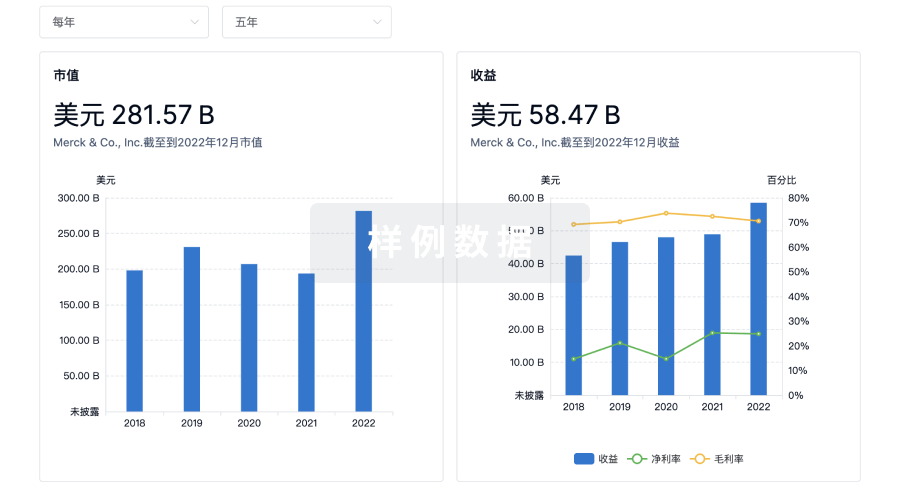
营收
使用 Synapse 探索超过 36 万个组织的财务状况。
登录
或
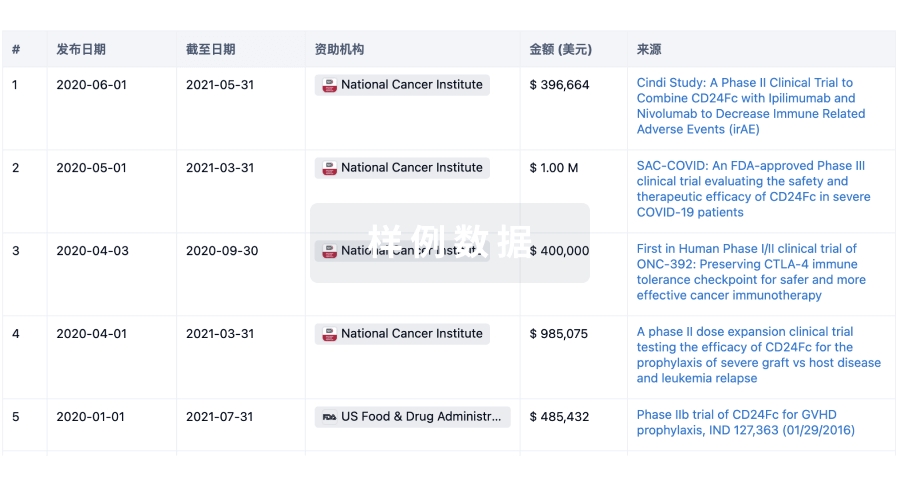
科研基金(NIH)
访问超过 200 万项资助和基金信息,以提升您的研究之旅。
登录
或
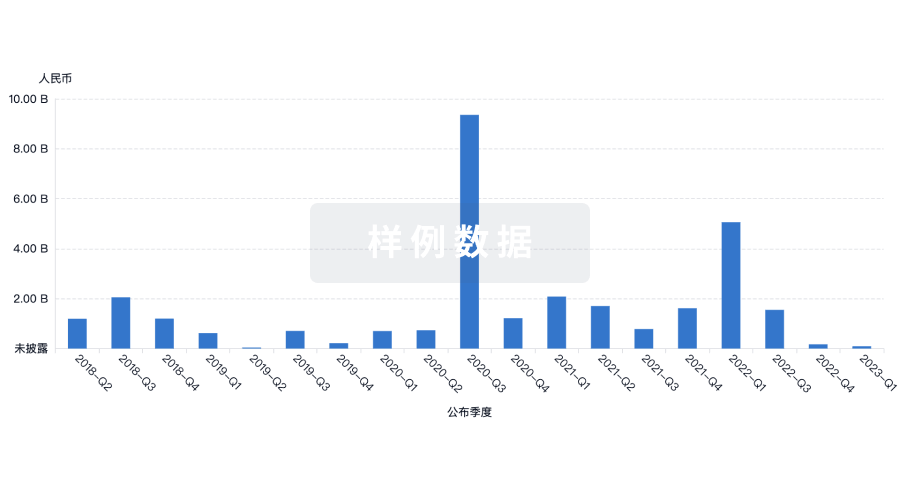
投资
深入了解从初创企业到成熟企业的最新公司投资动态。
登录
或
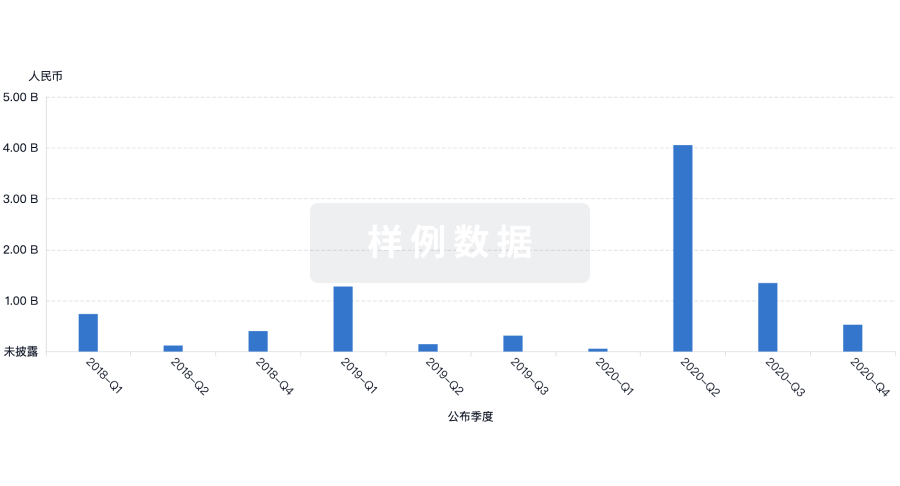
融资
发掘融资趋势以验证和推进您的投资机会。
登录
或
提出任何生物医药研究问题
让每一步生物医药决策都精准制胜
基于十亿级生物数据与全球情报的精准 AI,赋能早期药物发现
立即开始免费试用!
智慧芽新药情报库是智慧芽专为生命科学人士构建的基于AI的创新药情报平台,助您全方位提升您的研发与决策效率。
立即接入生物医药数据包
智慧芽新药库数据也通过智慧芽开放平台,以MCP或API服务形式对外开放。立即使用我们的MCP服务定制您的LLM智能体。
生物序列数据库
生物药研发创新
免费使用
化学结构数据库
小分子化药研发创新
免费使用