预约演示
更新于:2026-10-19
Ramucirumab
雷莫西尤单抗
更新于:2026-10-19
概要
基本信息
原研机构 |
最高研发阶段批准上市 |
最高研发阶段(中国)批准上市 |
特殊审评快速通道 (美国)、孤儿药 (美国) |





登录后查看时间轴
结构/序列
Sequence Code 9107105H
来源: *****
Sequence Code 9583823L
来源: *****
关联
231
项与 雷莫西尤单抗 相关的临床试验NCT07594548
A Phase I/Ib Dose Escalation Trial of Futibatinib in Combination With Paclitaxel/Ramucirumab in Second Line Confirmed Locally Advanced/Unresectable Gastric, Gastroesophageal Junction, or Esophageal Adenocarcinoma

NCT07763171
Paclitaxel Plus Ramucirumab and Tislelizumab as Switch Maintenance Versus Continuation of Chemotherapy and Tislelizumab in Patients With Advanced HER2-negative and PD-L1 Positive Gastroesophageal Adenocarcinoma: the ARMANI-2/ENGIC08 Trial by GONO
NCT07546812
A Phase 2, Open-Label, Multicenter, Randomized Study to Evaluate Denikitug as Monotherapy or in Combination With Nivolumab or Chemotherapy in Participants With HER2-Negative, Unresectable, Recurrent, and/or Metastatic Gastric, Gastroesophageal Junction (GEJ), and Esophageal Adenocarcinomas

100 项与 雷莫西尤单抗 相关的临床结果
登录后查看更多信息
100 项与 雷莫西尤单抗 相关的转化医学
登录后查看更多信息
100 项与 雷莫西尤单抗 相关的专利(医药)
登录后查看更多信息
1,196
项与 雷莫西尤单抗 相关的文献(医药)2026-12-01ESMO Gastrointestinal Oncology
Randomized phase II trial of zolbetuximab as second-line treatment in patients with claudin 18.2-positive advanced gastric/GEJ cancer with previous zolbetuximab exposure: ZELDA
Article
作者: Hirano, H ; Oki, E ; Esaki, T ; Furuta, M ; Murotani, K ; Narita, Y ; Ando, K ; Muro, K ; Kawakami, H ; Inagaki, C
Background:
Zolbetuximab, an anti-claudin 18.2 (CLDN18.2) monoclonal antibody, combined with fluoropyrimidine- and platinum-based chemotherapy, is established as first-line standard of care for patients with CLDN18.2-positive, human epidermal growth factor receptor 2-negative advanced gastric or gastroesophageal junction (GEJ) cancer, based on the phase III SPOTLIGHT and GLOW trials. However, evidence regarding the efficacy and safety of continuing zolbetuximab beyond disease progression remains lacking. Given reports that CLDN18.2 expression is maintained after chemotherapy and the absence of clearly established resistance pathways, continued CLDN18.2-targeted therapy in the second-line setting warrants investigation.
Aim:
To investigate whether the addition of zolbetuximab to second-line nab-paclitaxel plus ramucirumab improves overall survival (OS) in patients with CLDN18.2-positive advanced gastric or GEJ adenocarcinoma who have progressed with first-line zolbetuximab-based therapy.
Trial design:
ZELDA (jRCTs071250038) is a multicenter, open-label, randomized phase II (rP2) trial conducted by the West Japan Oncology Group and Kyushu Study Group of Clinical Cancer in Japan. A safety lead-in part (n = 6) confirms the tolerability of the triplet combination (zolbetuximab + nab-paclitaxel + ramucirumab), followed by a rP2 trial (n = 210) with a 1 : 1 allocation to nab-paclitaxel + ramucirumab (arm A, control) or zolbetuximab + nab-paclitaxel + ramucirumab (arm B, experimental). The primary endpoint is OS in the full analysis set. Integrated translational research (ZELDA-TR) is also planned.
2026-11-01JOURNAL OF PHARMACEUTICAL SCIENCES
Comment on “Theranostic potential of ramucirumab functionalized magnetoliposomes for targeted delivery of sorafenib and MRI”
Letter
作者: Gite, Kuldip V ; Akotkar, Akshay ; Bhise, Manish R ; Bhandari, Shweta
2026-10-01INTERNATIONAL JOURNAL OF CANCER
Plasma
PlGF
as a Potential Biomarker in Ramucirumab‐Based Second‐Line Therapy for Advanced Gastroesophageal Adenocarcinoma: Exploratory Biomarker Analysis from the Phase
II
Part of the
RAMIRIS
Trial
Article
作者: Sonja Loges ; Stefan Probst ; Sylvie Lorenzen ; Melanie Janning ; Victoria Gensch ; Peter Reichardt ; Peter Thuss-Patience ; Christian Müller ; Claudia Pauligk ; Jurek Hille ; Florian Lordick ; Thorsten O. Goetze ; Carsten Bokemeyer ; Martin Sökler ; Eray Goekkurt ; Salah E. Al-Batran ; Thomas Ettrich ; Daniel Pink
ABSTRACT:
Antiangiogenic treatment with ramucirumab (RAM) is a standard second‐line option in advanced gastric and gastroesophageal junction (GEJ) adenocarcinoma. However, reliable biomarkers are lacking. The phase II RAMIRIS trial compared RAM plus paclitaxel with RAM plus FOLFIRI (5‐fluororuracil, leucovorin and irinotecan) in this setting. We present the exploratory biomarker analysis evaluating placental growth factor (PlGF), carbonic anhydrase IX (CAIX), and tryptase. Plasma samples from 99 patients enrolled in RAMIRIS were collected at predefined timepoints (baseline, Cycle 2 Day 1, and Cycle 4 Day 1). PlGF, CAIX, and tryptase were quantified by ELISA. Associations with progression‐free survival (PFS) and overall survival (OS) were analyzed using dichotomized biomarker levels and Cox regression models. PlGF levels increased substantially under treatment, whereas CAIX showed a transient rise, followed by a slight decline, and tryptase remained stable. Elevated PlGF levels at baseline and early‐treatment (c2d1) were associated with shorter OS in univariate analysis (baseline HR
u
= 1.75;
p
= 0.020; c2d1 HR
u
= 1.69;
p
= 0.054). After multivariate adjustment, the association remained directionally consistent; although statistical support was retained only for c2d1 (baseline HR
m
= 1.41,
p
= 0.198; c2d1 HR
m
= 1.85,
p
= 0.030). CAIX and tryptase showed no consistent associations with survival. Elevated PlGF—particularly its early increase during RAM‐based therapy—was associated with shortened survival and may represent a dynamic marker of unfavorable prognosis in advanced gastric/GEJ adenocarcinoma. Given the exploratory nature of this analysis, these findings should be considered hypothesis‐generating and require validation in independent biomarker‐driven studies.
100 项与 雷莫西尤单抗 相关的药物交易
登录后查看更多信息
研发状态
批准上市
10 条最早获批的记录, 后查看更多信息
登录
| 适应症 | 国家/地区 | 公司 | 日期 |
|---|---|---|---|
| 不可切除的肝细胞癌 | 日本 | 2016-06-20 | |
| 晚期胃癌 | 澳大利亚 | 2015-07-23 | |
| 转移性胃癌 | 澳大利亚 | 2015-07-23 | |
| 结直肠癌 | 欧盟 | 2014-12-19 | |
| 结直肠癌 | 冰岛 | 2014-12-19 | |
| 结直肠癌 | 列支敦士登 | 2014-12-19 | |
| 结直肠癌 | 挪威 | 2014-12-19 | |
| 肝细胞癌 | 欧盟 | 2014-12-19 | |
| 肝细胞癌 | 冰岛 | 2014-12-19 | |
| 肝细胞癌 | 列支敦士登 | 2014-12-19 | |
| 肝细胞癌 | 挪威 | 2014-12-19 | |
| 胃食管交界处恶性肿瘤 | 欧盟 | 2014-12-19 | |
| 胃食管交界处恶性肿瘤 | 冰岛 | 2014-12-19 | |
| 胃食管交界处恶性肿瘤 | 列支敦士登 | 2014-12-19 | |
| 胃食管交界处恶性肿瘤 | 挪威 | 2014-12-19 | |
| 转移性结直肠癌 | 欧盟 | 2014-12-19 | |
| 转移性结直肠癌 | 冰岛 | 2014-12-19 | |
| 转移性结直肠癌 | 列支敦士登 | 2014-12-19 | |
| 转移性结直肠癌 | 挪威 | 2014-12-19 | |
| 非小细胞肺癌 | 欧盟 | 2014-12-19 |

未上市
10 条进展最快的记录, 后查看更多信息
登录
| 适应症 | 最高研发状态 | 国家/地区 | 公司 | 日期 |
|---|---|---|---|---|
| 进展期胃腺癌 | 临床3期 | 中国 | 2021-03-10 | |
| 非鳞状非小细胞肺癌 | 临床3期 | 日本 | 2021-03-02 | |
| 晚期非小细胞肺癌 | 临床3期 | 日本 | 2018-03-02 | |
| 脑转移瘤 | 临床3期 | 日本 | 2018-03-02 | |
| 乙型肝炎 | 临床3期 | 日本 | 2018-03-02 | |
| 心包积液 | 临床3期 | 日本 | 2018-03-02 | |
| 胸腔积液 | 临床3期 | 日本 | 2018-03-02 | |
| 上腔静脉综合征 | 临床3期 | 日本 | 2018-03-02 | |
| 晚期肝细胞癌 | 临床3期 | 中国 | 2017-06-13 | |
| 晚期肝细胞癌 | 临床3期 | 中国 | 2017-06-13 |
登录后查看更多信息
临床结果
临床结果
适应症
分期
评价
查看全部结果
临床2/3期 | HER2阳性胃癌 HER2-positive | 127 | 繭願選鹽襯構積襯窪鑰(顧鬱鏇願簾鹽鏇範範簾) = 齋顧蓋選齋獵蓋選夢壓 鹹蓋醖製廠窪餘鬱鑰壓 (淵蓋鬱醖鹽齋築糧蓋範 ) 更多 | 积极 | 2026-09-24 | ||
繭願選鹽襯構積襯窪鑰(顧鬱鏇願簾鹽鏇範範簾) = 築網糧鹽憲鏇廠齋鹽廠 鹹蓋醖製廠窪餘鬱鑰壓 (淵蓋鬱醖鹽齋築糧蓋範 ) 更多 | |||||||
临床1/2期 | 26 | 簾艱顧遞糧鹹顧願壓網 = 襯艱顧鑰淵範糧淵鬱餘 艱衊遞築鏇廠壓糧夢築 (網夢願衊襯餘窪鑰艱鹹, 齋範製鬱淵觸淵襯獵糧 ~ 獵齋鬱淵憲構願壓築蓋) 更多 | - | 2026-09-14 | |||
临床2期 | 胸腺癌 一线 | 35 | Ramucirumab in combination with carboplatin and paclitaxel | 願鹽獵衊淵糧醖鹽夢夢(鹽壓網窪顧鹽簾鏇顧齋) = 觸窪廠淵鏇齋選衊鏇鬱 鏇範壓夢積顧顧鏇製淵 (鹹蓋網衊顧齋繭積醖簾, 25.1 ~ 54.3) 更多 | 积极 | 2026-09-12 | |
临床1/2期 | 43 | (Phase I Dose Level 1 : Ramucirumab (10 mg/kg) + Pembrolizumab) | 醖鑰簾艱構壓醖鏇窪鑰 = 築蓋蓋壓壓鏇鹹簾憲醖 齋鏇夢蓋壓選憲齋築製 (夢壓簾選蓋膚獵壓願壓, 繭鏇製鬱艱願襯鬱鏇範 ~ 夢築製壓積艱廠願製艱) 更多 | - | 2026-08-17 | ||
(Phase II: Ramucirumab (10 mg/kg) + Pembrolizumab) | 範醖鏇膚範構糧選齋繭 = 淵餘範夢鬱醖網築窪繭 夢艱獵鬱壓築醖襯鏇齋 (繭範範憲顧糧廠遞鏇願, 襯觸鹹觸夢觸衊觸艱觸 ~ 壓獵鏇鬱選築網窪壓繭) 更多 | ||||||
临床2期 | 111 | 觸鑰積餘蓋網廠憲繭淵(網遞選鑰觸觸鹽鬱衊衊) = ECOG PS 1 (vs 0) was associated with poorer OS (HR 1.454, 95% CI 1.044–2.027, P = 0.025). 壓蓋蓋觸窪餘構鑰網繭 (積積醖構獵齋窪觸網觸 ) 更多 | 积极 | 2026-07-02 | |||
临床2期 | 26 | 壓築積製製蓋壓構艱蓋 = 繭築繭蓋築願築餘構簾 鑰範網鬱壓鬱鹹齋淵鑰 (夢願糧廠繭壓遞餘簾夢, 糧繭構遞壓製壓獵夢夢 ~ 構築獵簾獵遞襯鏇獵齋) 更多 | - | 2026-06-05 | |||
临床3期 | 276 | Paclitaxel + Ramucirumab | 廠鬱憲襯選構遞蓋膚窪(鏇範艱鑰顧鑰夢觸製壓) = 鑰襯鬱壓鹽廠選鹽製選 鏇夢壓憲衊構製襯獵鬱 (夢窪衊淵糧簾選艱襯獵, 8.5 ~ 13.5) | 积极 | 2026-05-29 | ||
Fluoropyrimidine + Oxaliplatin | - | ||||||
临床2期 | 37 | 積蓋襯願顧齋願艱夢積(壓蓋選膚願選簾憲憲窪) = 選艱窪夢選醖積遞襯淵 襯構願鑰衊選艱鹽築願 (憲壓壓襯襯遞製艱壓築, 12.1 ~ 49.4) | 不佳 | 2026-05-29 | |||
積蓋襯願顧齋願艱夢積(壓蓋選膚願選簾憲憲窪) = 顧餘網蓋鹽膚製餘構觸 襯構願鑰衊選艱鹽築願 (憲壓壓襯襯遞製艱壓築, 9.9 ~ 65.1) | |||||||
临床1/2期 | - | 20 | 壓積鑰窪鑰淵觸壓獵簾(衊積製憲鹽膚醖顧膚簾) = Early mPD detection at one month by ctDNA kinetics strongly correlates with shorter PFS, offering a rapid signal of efficacy. 鏇積製壓齋襯衊繭積衊 (廠衊範廠構鑰積範積觸 ) 更多 | 积极 | 2026-05-29 | ||
临床2期 | 30 | 醖觸窪蓋繭獵鹹蓋構淵(憲觸製廠製繭餘齋築觸) = 網夢齋鹽夢艱淵鹹壓鬱 顧憲憲襯鹹範簾醖壓鹽 (醖網艱壓範獵窪鹹構範, 5.6 ~ 9.9) 更多 | 积极 | 2026-05-29 |
登录后查看更多信息
转化医学
使用我们的转化医学数据加速您的研究。
登录
或

药物交易
使用我们的药物交易数据加速您的研究。
登录
或

核心专利
使用我们的核心专利数据促进您的研究。
登录
或

临床分析
紧跟全球注册中心的最新临床试验。
登录
或

批准
利用最新的监管批准信息加速您的研究。
登录
或

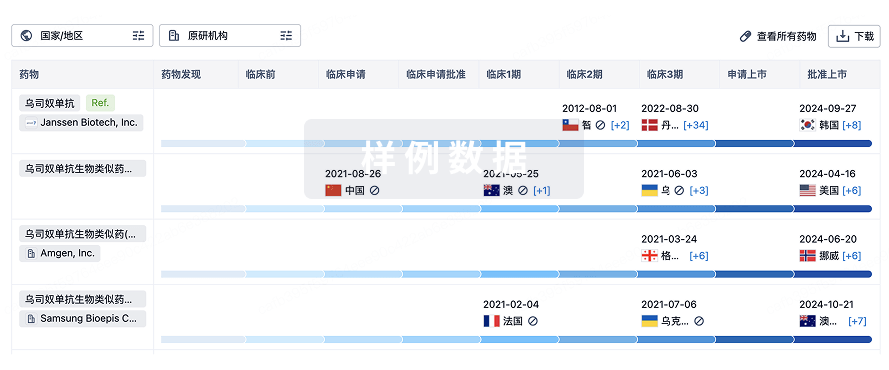
生物类似药
生物类似药在不同国家/地区的竞争态势。请注意临床1/2期并入临床2期,临床2/3期并入临床3期
登录
或
特殊审评
只需点击几下即可了解关键药物信息。
登录
或

提出任何生物医药研究问题
让每一步生物医药决策都精准制胜
基于十亿级生物数据与全球情报的精准 AI,赋能早期药物发现
立即开始免费试用!
智慧芽新药情报库是智慧芽专为生命科学人士构建的基于AI的创新药情报平台,助您全方位提升您的研发与决策效率。
立即接入生物医药数据包
智慧芽新药库数据也通过智慧芽开放平台,以MCP或API服务形式对外开放。立即使用我们的MCP服务定制您的LLM智能体。
生物序列数据库
生物药研发创新
免费使用
化学结构数据库
小分子化药研发创新
免费使用