预约演示
更新于:2026-06-11

Gilead Sciences, Inc.
更新于:2026-06-11
概览
标签
肿瘤
消化系统疾病
免疫系统疾病
小分子化药
ADC
单克隆抗体
疾病领域得分
一眼洞穿机构专注的疾病领域

技术平台
公司药物应用最多的技术
靶点
公司最常开发的靶点
关联
靶点 |
作用机制 |
在研机构 |
原研机构 |
在研适应症 |
非在研适应症 |
最高研发阶段 |
首次获批国家/地区 |
首次获批日期 |

靶点 |
作用机制 |
在研机构 |
原研机构 |
在研适应症 |
非在研适应症 |
最高研发阶段 |
首次获批国家/地区 |
首次获批日期 |
靶点 |
作用机制 |
在研机构 |
原研机构 |
在研适应症 |
非在研适应症 |
最高研发阶段 |
首次获批国家/地区 |
首次获批日期 |


NCT07474558
SCALp Cooling for pReventing aLopecia With nEw anTibody-drug Conjugates

NCT07560046
Combating Related Epidemics in HCV Through Simplified Testing and Treatment. A Cluster Randomized Trial of Point-of-care Hepatitis C Testing and Treatment Among Key Populations

NCT07479797
A Phase 3, Randomized, Open-Label, Multicenter Study Evaluating the Efficacy of KITE-753 Versus Axicabtagene Ciloleucel in Participants With Relapsed or Refractory Large B-Cell Lymphoma After First-Line Therapy

100 项与 Gilead Sciences, Inc. 相关的临床结果
登录后查看更多信息
登录后查看更多信息
2026-06-01INTERNATIONAL JOURNAL OF GYNECOLOGICAL CANCER
A randomized, phase III study of sacituzumab govitecan versus treatment of the physician’s choice in patients with endometrial cancer after platinum-based chemotherapy and immunotherapy: the ASCENT-GYN-01 study (GOG-3104/ENGOT-en26/APGOT-EN2)
Article
作者: Woelber, Linn ; Bartoletti, Michele ; Makker, Vicky ; Myers, Tashanna ; You, Benoit ; Ma, Long ; Cibula, David ; Corr, Bradley ; Colombo, Nicoletta ; Komatsubara, Kimberly ; Mallen, Adrianne ; Cloven, Noelle ; Gien, Lilian T ; Tan, David S P ; Mocci, Simonetta ; Eskander, Ramez N ; Guerra, Eva ; Zagouri, Flora ; Hasegawa, Kosei
BACKGROUND:
Patients with recurrent or metastatic endometrial cancer who have progressed on or after platinum-based chemotherapy and PD-(L)1 inhibitor therapy have limited treatment options and a poor prognosis. Sacituzumab govitecan is a trophoblast cell-surface antigen 2-directed antibody-drug conjugate approved for certain types of breast cancer. In the phase II TROPiCS-03 trial, sacituzumab govitecan demonstrated encouraging efficacy and manageable safety in heavily pretreated patients with advanced or metastatic endometrial cancer.
PRIMARY OBJECTIVE(S):
The ASCENT-GYN-01 trial aims to assess the efficacy and safety of sacituzumab govitecan versus treatment of the physician's choice in patients with endometrial cancer who have received platinum-based chemotherapy and PD-(L)1 inhibitor therapy. The primary objective is to compare the effect of sacituzumab govitecan versus treatment of the physician's choice on progression-free survival, assessed by blinded independent central review, and on overall survival.
STUDY HYPOTHESIS:
Patients with pretreated recurrent or persistent endometrial cancer will have improved progression-free survival and overall survival with sacituzumab govitecan compared with treatment of the physician's choice.
TRIAL DESIGN:
ASCENT-GYN-01 (ClinicalTrials.gov identifier NCT06486441) is a randomized, open-label, global phase III study. Patients will be randomized in a 1:1 ratio to receive sacituzumab govitecan or treatment of the physician's choice (doxorubicin or paclitaxel).
MAJOR INCLUSION/EXCLUSION CRITERIA:
Patients aged 18 years and older with documented evidence of recurrent or persistent endometrial cancer (endometrial carcinoma or carcinosarcoma) will be enrolled. Up to 3 prior lines of systemic therapy for endometrial cancer are allowed, including platinum-based chemotherapy and PD-(L)1 inhibitor therapy, either in combination or separately. Key exclusion criteria include uterine leiomyosarcoma or endometrial stromal sarcomas and prior treatment with a trophoblast cell-surface antigen 2-directed antibody-drug conjugate or topoisomerase I inhibitor.
PRIMARY ENDPOINT(S):
Dual primary endpoints are progression-free survival assessed by blinded independent central review and overall survival.
SAMPLE SIZE:
Approximately 640 patients.
ESTIMATED DATES FOR COMPLETING ACCRUAL AND PRESENTING RESULTS:
June 2029.
TRIAL REGISTRATION:
NCT06486441; GOG-3104; ENGOT-en26; APGOT-EN2.
2026-05-01ADVANCES IN THERAPY
Systematic Literature Review and Meta-Analysis of INSTI-Based Antiretroviral Therapy Single- Versus Multiple-Tablet Regimens for the Treatment of HIV
Review
作者: Haloski, Kristen ; Chen, Megan ; Dudzic, Mirella ; Christoph, Mary J ; Zachry, Woodie ; Tuzil, Jan ; Park, Seojin ; Lach, Krzysztof ; Mordi, Uche
INTRODUCTION:
Antiretroviral single-tablet regimens (STRs) have several advantages over multiple-tablet regimens (MTRs), including increased adherence and improved treatment satisfaction for people with HIV (PWH). This analysis has systematically reviewed and compared STRs and MTRs in adult PWH receiving integrase strand transfer inhibitor (INSTI)-based regimens.
METHODS:
MEDLINE and Embase databases were searched on November 28, 2023, to identify studies published from 2013 to 2023 that evaluated INSTI-based STRs compared with ≥ 1 INSTI-based MTRs. Study quality was assessed based on the University of York Centre for Reviews and Dissemination guidelines. Pairwise meta-analyses were conducted to provide pooled relative estimates for key clinical outcomes.
RESULTS:
Twenty-five publications were included in the quantitative syntheses. STRs were associated with improved adherence based on 3 retrospective studies [rate ratio (RR) = 1.64 (95% confidence interval: 1.46-1.83)] but there was no difference in adherence in the 1 randomized controlled trial (RCT) that assessed adherence [RR = 1.02 (0.77-1.35)], though, due to blinding, both STR and MTR groups took multiple pills. STRs were associated with higher persistence than MTRs based on 7 retrospective studies [RR = 1.33 (1.17-1.52)]. PWH treated with MTRs versus STRs were more likely to discontinue therapy in retrospective studies [hazard ratio = 1.62 (1.52-1.72), 6 studies] and prospective cohort studies [RR = 4.43 (1.62-12.09), 3 studies], but not within RCTs where there was no difference in discontinuation [RR = 0.83 (0.55-1.26), 4 trials]. Risk of virologic failure was comparable between STRs and MTRs in RCTs [RR = 1.00 (0.35-2.84), 5 trials] and retrospective studies [odds ratio = 1.30 (0.30-5.53), 5 studies].
CONCLUSION:
INSTI-based STRs were associated with improved adherence and persistence, and lower discontinuation rates compared with INSTI-based MTRs in observational, real-world studies, whereas no differences in adherence or discontinuation were seen in RCTs. Neither RCTs nor real-world studies showed any difference in virologic failure for STRs and MTRs. STRs are a potential tool for supporting adherence and persistence in real-world settings.
REGISTRATION:
PROSPERO number CRD42024525515.
2026-05-01AIDS PATIENT CARE AND STDS
Lenacapavir-Containing Antiretroviral Therapy in the OPERA Cohort: Patterns of Use and Treatment Outcomes
Article
作者: Brunet, Laurence ; Hsu, Ricky K. ; Fusco, Jennifer S. ; Mounzer, Karam ; Wohlfeiler, Michael B. ; Dunn, Keith ; Fusco, Gregory P. ; Lackey, Philip C. ; Sension, Michael G.
Lenacapavir (LEN), a twice-yearly injectable long-acting capsid inhibitor used in combination with an optimized background regimen, is indicated for heavily treatment-experienced adults with multi-drug-resistant HIV-1 infection. From the US Observational Pharmaco-Epidemiology Research & Analysis (OPERA) cohort, 116 adults with HIV with ≥1 set of LEN injections were included [baseline viral load (VL) <200 copies/mL = 74; ≥200 copies/mL = 42]. Many (56%) simplified their regimen at LEN initiation and/or later, and 31% maintained all the antiretrovirals (ARVs) from their prior regimen throughout LEN use. Among those with a baseline VL <200 copies/mL, the cumulative probability (Kaplan–Meier) of maintaining suppression to <200 copies/mL was 92% [95% confidence interval (CI): 80, 96]. Among those with a baseline VL ≥200 copies/mL, the cumulative probability of achieving suppression was 73% (95% CI: 59, 86). Among 78 individuals who received ≥2 sets of LEN injections, 82% received all sets of injections on time or early (≤28 weeks after the prior set) and 18% received ≥1 set late (>28 weeks after the prior set). The median delay was 11 days past the injection window (interquartile range: 4, 118). At study end, 91% remained on a LEN-containing regimen. In this cohort representative of routine clinical care in the United States, factors other than virologic control may be driving the decision to start LEN (e.g., safety, tolerability, resistance, simplification). Most people experienced favorable virologic outcomes and good adherence to LEN, which may serve as an effective option for those who could benefit from a long-acting injectable agent from a novel ARV class.
2026-06-10
·氨基观察
免疫疗法细胞疗法临床结果并购信使RNA
2026-06-10
并购临床3期财报临床结果
100 项与 Gilead Sciences, Inc. 相关的药物交易
登录后查看更多信息
100 项与 Gilead Sciences, Inc. 相关的转化医学
登录后查看更多信息
组织架构
使用我们的机构树数据加速您的研究。
登录
或
管线布局
2026年10月19日管线快照
管线布局中药物为当前组织机构及其子机构作为药物机构进行统计,早期临床1期并入临床1期,临床1/2期并入临床2期,临床2/3期并入临床3期
药物发现
18
78
临床前
临床1期
34
24
临床2期
临床3期
8
2
申请上市
批准上市
31
256
其他
登录后查看更多信息
当前项目
登录后查看更多信息
药物交易
使用我们的药物交易数据加速您的研究。
登录
或
转化医学
使用我们的转化医学数据加速您的研究。
登录
或
营收
使用 Synapse 探索超过 36 万个组织的财务状况。
登录
或
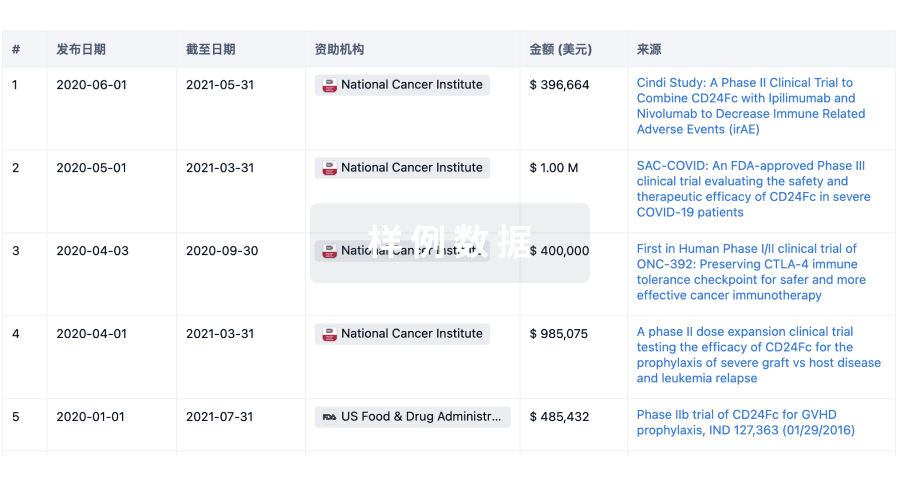
科研基金(NIH)
访问超过 200 万项资助和基金信息,以提升您的研究之旅。
登录
或
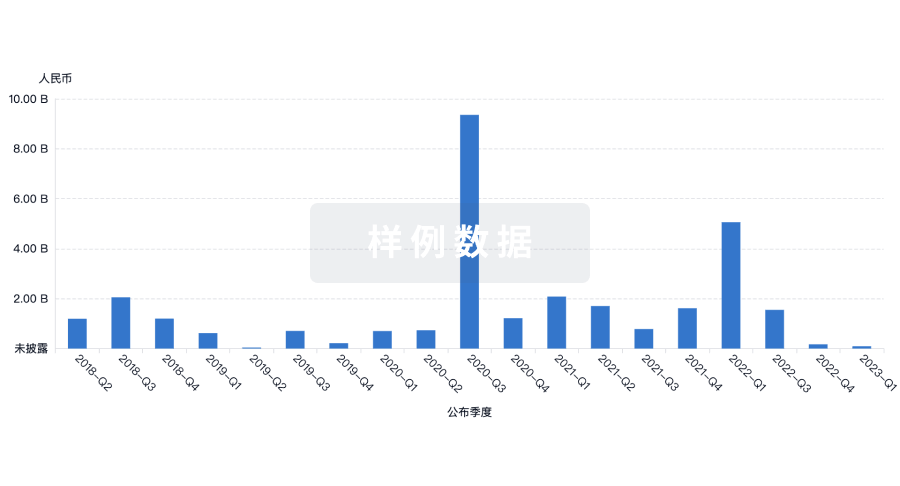
投资
深入了解从初创企业到成熟企业的最新公司投资动态。
登录
或
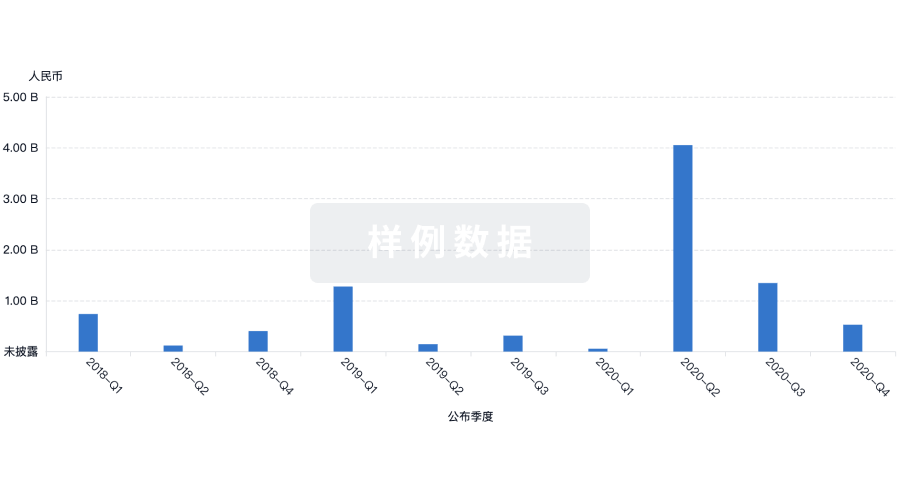
融资
发掘融资趋势以验证和推进您的投资机会。
登录
或
提出任何生物医药研究问题
让每一步生物医药决策都精准制胜
基于十亿级生物数据与全球情报的精准 AI,赋能早期药物发现
立即开始免费试用!
智慧芽新药情报库是智慧芽专为生命科学人士构建的基于AI的创新药情报平台,助您全方位提升您的研发与决策效率。
立即接入生物医药数据包
智慧芽新药库数据也通过智慧芽开放平台,以MCP或API服务形式对外开放。立即使用我们的MCP服务定制您的LLM智能体。
生物序列数据库
生物药研发创新
免费使用
化学结构数据库
小分子化药研发创新
免费使用