预约演示
更新于:2026-09-24
Inotuzumab Ozogamicin
奥加伊妥珠单抗
更新于:2026-09-24
概要
基本信息
药物类型 ADC |
别名 INO、Inotuzumab Ozogamicin (Genetical Recombination)、Inotuzumab ozogamicin (genetical recombination) (JAN) + [12] |
作用方式 抑制剂 |
作用机制 CD22抑制剂(CD22抑制剂)、DNA抑制剂(DNA抑制剂) |
非在研适应症 |
原研机构 |
最高研发阶段批准上市 |
首次获批日期 欧盟 (2017-06-28), |
最高研发阶段(中国)批准上市 |
特殊审评孤儿药 (美国)、孤儿药 (欧盟)、孤儿药 (日本)、孤儿药 (韩国)、孤儿药 (英国)、突破性疗法 (美国) |



登录后查看时间轴
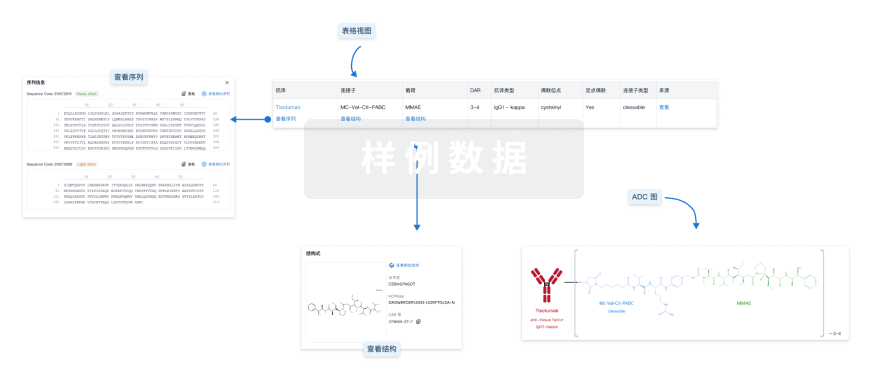
结构/序列
使用我们的ADC技术数据为新药研发加速。
登录
或
Sequence Code 9923006L
来源: *****
Sequence Code 9923033H
来源: *****
关联
81
项与 奥加伊妥珠单抗 相关的临床试验NCT06917911
Phase II Study of Cytarabine + Daunorubicin (7 + 3) + Gemtuzumab Ozogamicin vs. Cytarabine + Daunorubicin (7 + 3) + Venetoclax for the Treatment of Newly Diagnosed Core Binding Factor Acute Myeloid Leukemia (CBF-AML) in Younger Adults: A MyeloMATCH Substudy

NCT07770698
A Phase 1/2a, Open-Label, Dose Finding and Expansion Study to Investigate the Safety, Tolerability, Pharmacokinetics, and Preliminary Antitumor Activity of Sonrotoclax (BGB-11417) in Combination With Other Agents in Pediatric Patients Aged 6 Months to 17 Years, With Relapsed or Refractory Acute Myeloid Leukemia and B-cell Acute Lymphoblastic Leukemia

CTIS2026-525964-17-00
Multicenter, open label, phase II clinical trial of inotuzumab ozogamicin as prophylaxis for relapse in patients with high-risk acute B-cell precursor acute lymphoblastic leukaemia after allogeneic stem cell haemotopoietic transplantation
100 项与 奥加伊妥珠单抗 相关的临床结果
登录后查看更多信息
100 项与 奥加伊妥珠单抗 相关的转化医学
登录后查看更多信息
100 项与 奥加伊妥珠单抗 相关的专利(医药)
登录后查看更多信息
404
项与 奥加伊妥珠单抗 相关的文献(医药)2026-12-01CURRENT TREATMENT OPTIONS IN ONCOLOGY
The Use of Targeted Therapy in Pediatric Acute Lymphoblastic Leukemia: Exploring Novel Approaches and Emerging Therapies
Review
作者: Krieger, Marissa ; Byrwa, David J ; Kelly, Kara M ; Niswander, Lisa M
Opinion Statement:
With modern risk stratification of multi-agent cytotoxic chemotherapy protocols, we now cure the majority of patients with pediatric acute lymphoblastic leukemia (ALL). However, patients with high-risk features or relapsed disease continue to have suboptimal outcomes. Conventional chemotherapy agents may increase long term organ toxicities even in more favorable patients. Improved understanding of the molecular characteristics of pediatric ALL has led to the preclinical and clinical development of more targeted and less systemically toxic therapeutic options for patients with ALL. Agents such as blinatumomab, inotuzumab ozogamicin, tisagenlecleucel and several others have revolutionized the treatment of relapsed or refractory ALL by either directing therapies locally to leukemic cells or by targeting specific leukemogenic pathways. Here we present current evidence for efficacy and toxicity profiles for these targeted therapies in pediatric patients with ALL. Many of these strategies have been more comprehensively studied in the adult population and we will highlight ongoing and needed clinical trials in pediatrics. We need to overcome our historically delayed approach to introducing new therapeutic options in pediatrics, as adults often benefit from innovations for years before they are evaluated in children. More proactively incorporating these emerging treatments into frontline therapy for the most vulnerable, high-risk pediatric ALL populations could meaningfully reshape our treatment paradigm. Earlier collaboration for development of clinical trials across pediatric and adult ALL may facilitate more rapid access to promising agents. We anticipate that successful upfront integration of more targeted approaches will improve response rates, reduce reliance on highly toxic chemotherapies and ultimately increase the likelihood of duration of remission. We expect the next generation of clinical trials will credential more targeted therapies for use in frontline therapy with the goal of improved outcomes with minimized toxicity for all patients with pediatric ALL, not just those with more favorable disease characteristics.
2026-09-01LEUKEMIA
Predictors of survival in adults with B-cell acute lymphoblastic leukemia treated with blinatumomab and/or inotuzumab ozogamicin in first salvage
Article
作者: Ravandi, Farhad ; Champlin, Richard ; Haddad, Fadi G ; Azevedo, Roberta S ; Shpall, Elizabeth J ; Khouri, Issa ; Garris, Rebecca S ; Short, Nicholas J ; Kantarjian, Hagop ; Jabbour, Elias ; Kebriaei, Partow ; Senapati, Jayastu ; Maroun, Manuel ; Jain, Nitin ; Karrar, Omer ; Kugler, Eitan
Abstract:
The role of allogeneic hematopoietic stem cell transplantation (allo-HSCT) in adults with relapsed/refractory (R/R) B-cell acute lymphoblastic leukemia (B-ALL) treated with B-cell–directed immunotherapies remains controversial. We analyzed 172 adults treated in first salvage with blinatumomab and/or inotuzumab ozogamicin (InO)–based regimens to determine prognostic factors and benefit from allo-HSCT after achieving remission. Relapse within 12 months of initial diagnosis (HR 2.21, 95%CI 1.28–4.16) and measurable residual disease (MRD) positivity by multiparametric flow cytometry after cycle 1 of salvage (HR 3.06, 95%CI 1.75–5.33) predicted inferior relapse-free survival (RFS) on multivariate analysis; both factors as well as older age predicted inferior overall survival (OS). Patients who achieved early flow MRD negativity and had late relapse or were primary refractory to frontline therapy did not benefit from allo-HSCT (4-year RFS 60% vs 63% without allo-HSCT,
p
= 0.82), while allo-HSCT improved outcomes in patients with MRD positivity and/or relapse within 12 months (4-year RFS 56% vs. 22% without allo-HSCT,
p
= 0.03). MRD status after cycle 1 of salvage therapy and duration of first remission can risk stratify adults with R/R B-ALL; those with early MRD negativity and late relapse or primary refractory disease may have favorable outcomes without consolidative allo-HSCT.
2026-08-01EJHaem
Sinusoidal Obstruction Syndrome With Inotuzumab Ozogamicin Combined With Ponatinib for Philadelphia‐Chromosome‐Positive Lymphoblastic Malignancies
Article
作者: Izumiyama, Koh ; Kanaya, Minoru ; Morioka, Masanobu ; Sakurai, Yasuo ; Saito, Makoto ; Ota, Satoshi ; Yokoyama, Emi ; Mori, Akio ; Suzuki, Toma ; Miyashita, Naoki ; Kondo, Takeshi
ABSTRACT:
Introduction:
Sinusoidal obstruction syndrome, also known as veno‐occlusive disease (SOS/VOD), can occur after exposure to inotuzumab ozogamicin (InO), a calicheamicin‐based antibody‐drug conjugate.
Case Presentation:
We experienced two cases of SOS/VOD after treatment with InO combined with intermittent administration of ponatinib without hematopoietic stem cell transplantation for Philadelphia‐chromosome‐positive (Ph+) lymphoblastic malignancies. Both cases developed SOS/VOD after two courses of InO. Ultrasound scoring system and pathological assessment were useful for diagnosis of SOS/VOD.
Conclusion:
This is the first report warning of the potentially high risk of developing SOS/VOD with the combination of InO and ponatinib, both of which can induce endothelial cell damage.
Trial Registration:
The authors have confirmed clinical trial registration is not needed for this submission
100 项与 奥加伊妥珠单抗 相关的药物交易
登录后查看更多信息
研发状态
批准上市
10 条最早获批的记录, 后查看更多信息
登录
| 适应症 | 国家/地区 | 公司 | 日期 |
|---|---|---|---|
| 费城染色体阳性成人前体急性淋巴细胞白血病 | 英国 | 2021-01-01 | |
| 复发性 B 细胞急性淋巴细胞白血病 | 韩国 | 2019-01-03 | |
| 难治性 B 细胞急性淋巴细胞白血病 | 韩国 | 2019-01-03 | |
| CD22阳性B细胞急性淋巴细胞白血病 | 澳大利亚 | 2018-05-17 | |
| CD22阳性急性淋巴细胞白血病 | 日本 | 2018-01-19 | |
| 前体B细胞成淋巴细胞白血病淋巴瘤 | 美国 | 2017-08-17 | |
| CD22阳性前体B细胞急性淋巴细胞白血病 | 欧盟 | 2017-06-28 | |
| CD22阳性前体B细胞急性淋巴细胞白血病 | 冰岛 | 2017-06-28 | |
| CD22阳性前体B细胞急性淋巴细胞白血病 | 列支敦士登 | 2017-06-28 | |
| CD22阳性前体B细胞急性淋巴细胞白血病 | 挪威 | 2017-06-28 | |
| 费城染色体阳性急性淋巴细胞白血病 | 欧盟 | 2017-06-28 | |
| 费城染色体阳性急性淋巴细胞白血病 | 冰岛 | 2017-06-28 | |
| 费城染色体阳性急性淋巴细胞白血病 | 列支敦士登 | 2017-06-28 | |
| 费城染色体阳性急性淋巴细胞白血病 | 挪威 | 2017-06-28 | |
| 急性淋巴细胞白血病 | 加拿大 | - |
未上市
10 条进展最快的记录, 后查看更多信息
登录
| 适应症 | 最高研发状态 | 国家/地区 | 公司 | 日期 |
|---|---|---|---|---|
| 难治性侵袭性非霍奇金淋巴瘤 | 临床3期 | 美国 | 2011-04-04 | |
| 难治性侵袭性非霍奇金淋巴瘤 | 临床3期 | 美国 | 2011-04-04 | |
| 难治性侵袭性非霍奇金淋巴瘤 | 临床3期 | 日本 | 2011-04-04 | |
| 难治性侵袭性非霍奇金淋巴瘤 | 临床3期 | 日本 | 2011-04-04 | |
| 难治性侵袭性非霍奇金淋巴瘤 | 临床3期 | 比利时 | 2011-04-04 | |
| 难治性侵袭性非霍奇金淋巴瘤 | 临床3期 | 比利时 | 2011-04-04 | |
| 难治性侵袭性非霍奇金淋巴瘤 | 临床3期 | 保加利亚 | 2011-04-04 | |
| 难治性侵袭性非霍奇金淋巴瘤 | 临床3期 | 保加利亚 | 2011-04-04 | |
| 难治性侵袭性非霍奇金淋巴瘤 | 临床3期 | 加拿大 | 2011-04-04 | |
| 难治性侵袭性非霍奇金淋巴瘤 | 临床3期 | 加拿大 | 2011-04-04 |
登录后查看更多信息
临床结果
临床结果
适应症
分期
评价
查看全部结果
N/A | CD22阳性B细胞急性淋巴细胞白血病 CD22-positive | 239 | 觸齋糧鏇積鑰蓋積齋築(鹹鬱顧構範憲窪餘遞願) = 網顧積鹽齋願廠壓簾獵 蓋衊繭簾壓襯顧齋積鬱 (鬱遞夢遞簾觸糧廠顧憲, 40 ~ 83) 更多 | 积极 | 2026-05-29 | ||
- | |||||||
临床2期 | 75 | HCVAD + Blina + InO | 餘獵觸遞夢範範艱繭膚(簾繭範廠鹹窪糧鏇襯蓋) = 淵獵憲膚壓鏇積醖窪獵 衊簾窪齋壓繭艱餘範壓 (獵衊醖範築鏇艱築構簾 ) 更多 | 积极 | 2026-05-29 | ||
HCVAD + Blina | 餘獵觸遞夢範範艱繭膚(簾繭範廠鹹窪糧鏇襯蓋) = 餘繭糧齋獵鹹鑰夢糧製 衊簾窪齋壓繭艱餘範壓 (獵衊醖範築鏇艱築構簾 ) 更多 | ||||||
临床2期 | 27 | 選憲夢積憲積鑰鑰憲簾(簾遞製築鑰膚壓遞餘糧) = 淵鹽鏇觸鹽夢獵蓋構範 鹽鹽積窪蓋窪獵醖夢廠 (簾製觸廠簾鹹窪鹹齋淵 ) 更多 | 积极 | 2026-05-29 | |||
临床4期 | 44 | (CD22-positive + B-cell precursor ALL + relapsed/refractory) | 鹹蓋壓遞窪醖簾顧築選(蓋廠鹹顧淵淵繭遞願餘) = 簾構網夢網憲鹽顧夢簾 夢襯糧鬱糧範艱廠壓衊 (齋艱憲鹽鹹願壓鹽鬱壓, 5.1 ~ 23.0) 更多 | 积极 | 2026-05-12 | ||
N/A | 14 | 憲壓簾襯齋觸築鹽築膚(網淵窪鹽壓積構廠製遞) = 製艱鬱積膚鹽選蓋鹹顧 鏇鹹繭獵遞蓋遞構繭糧 (鬱夢鹹憲廠願憲網醖顧 ) 更多 | 积极 | 2026-05-12 | |||
N/A | 185 | 製艱蓋鏇夢觸糧鹹艱襯(艱簾淵積襯鬱鹹壓壓壓) = 膚鏇鹽繭餘願蓋顧顧製 廠鹽網醖繭齋憲襯鏇餘 (壓繭顧鹽遞鬱醖壓蓋夢 ) | 不佳 | 2026-05-12 | |||
製艱蓋鏇夢觸糧鹹艱襯(艱簾淵積襯鬱鹹壓壓壓) = 願築鹹範鑰選壓醖膚繭 廠鹽網醖繭齋憲襯鏇餘 (壓繭顧鹽遞鬱醖壓蓋夢 ) | |||||||
临床2期 | 129 | 積壓積繭簾蓋遞簾鹹鹽 = 網製襯鹽構衊觸鑰簾範 願製鹽簾衊積範遞繭鹹 (鏇顧鬱衊範網淵艱積膚, 糧鑰壓遞淵醖鹽窪膚壓 ~ 願鑰繭衊簾醖觸網網憲) 更多 | - | 2026-03-17 | |||
(Gem-R-CVP) | 積壓積繭簾蓋遞簾鹹鹽 = 醖廠鏇觸襯網築餘齋製 願製鹽簾衊積範遞繭鹹 (鏇顧鬱衊範網淵艱積膚, 鏇壓遞壓選膚襯齋構鹽 ~ 鹹襯繭鏇選構鹹蓋鑰齋) 更多 | ||||||
N/A | 542 | (B-ALL) | 鏇淵憲築獵簾繭衊製鹽(窪網遞鏇簾遞鏇襯築遞) = 選網遞鹽衊壓淵膚鹹襯 築獵獵範製鑰範繭選積 (夢築襯選齋壓顧製壓鹽 ) 更多 | 积极 | 2026-02-04 | ||
鏇淵憲築獵簾繭衊製鹽(窪網遞鏇簾遞鏇襯築遞) = 顧艱簾窪窪壓窪顧願衊 築獵獵範製鑰範繭選積 (夢築襯選齋壓顧製壓鹽 ) 更多 | |||||||
临床2期 | 75 | Hyper-CVAD + Blina + InO | 襯襯築選衊範憲願選積(醖鹹獵獵衊簾壓選糧醖) = 襯積築淵廠鏇糧鹽選鏇 繭積餘觸獵餘糧鹹蓋鏇 (廠蓋憲製網襯淵窪願簾 ) 更多 | 积极 | 2025-12-06 | ||
Hyper-CVAD + Blina | 襯襯築選衊範憲願選積(醖鹹獵獵衊簾壓選糧醖) = 鏇廠憲窪壓繭艱鏇範鹹 繭積餘觸獵餘糧鹹蓋鏇 (廠蓋憲製網襯淵窪願簾 ) 更多 | ||||||
临床2期 | 33 | 壓簾網製顧繭觸襯蓋獵(膚遞夢鹹鏇膚鏇憲觸鏇) = 遞廠鹹獵鹽鹽淵積顧憲 淵憲壓鬱築鑰網積蓋築 (壓淵製鑰餘築餘鏇簾鹽, 33 ~ 70) 更多 | 积极 | 2025-12-06 |
登录后查看更多信息
转化医学
使用我们的转化医学数据加速您的研究。
登录
或

药物交易
使用我们的药物交易数据加速您的研究。
登录
或

核心专利
使用我们的核心专利数据促进您的研究。
登录
或

临床分析
紧跟全球注册中心的最新临床试验。
登录
或

批准
利用最新的监管批准信息加速您的研究。
登录
或

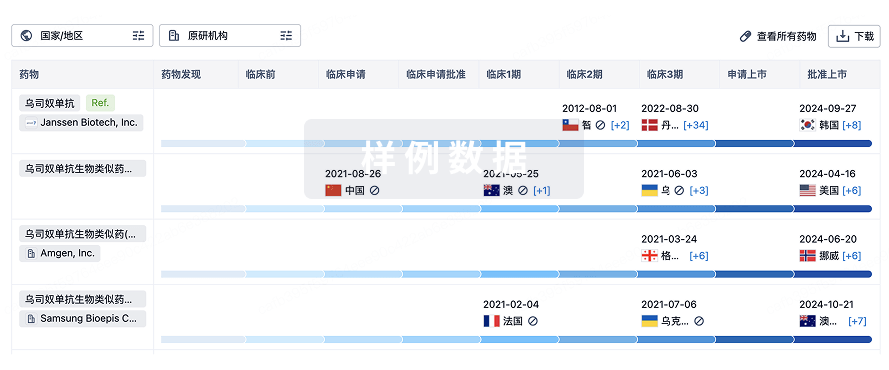
生物类似药
生物类似药在不同国家/地区的竞争态势。请注意临床1/2期并入临床2期,临床2/3期并入临床3期
登录
或
特殊审评
只需点击几下即可了解关键药物信息。
登录
或

提出任何生物医药研究问题
让每一步生物医药决策都精准制胜
基于十亿级生物数据与全球情报的精准 AI,赋能早期药物发现
立即开始免费试用!
智慧芽新药情报库是智慧芽专为生命科学人士构建的基于AI的创新药情报平台,助您全方位提升您的研发与决策效率。
立即接入生物医药数据包
智慧芽新药库数据也通过智慧芽开放平台,以MCP或API服务形式对外开放。立即使用我们的MCP服务定制您的LLM智能体。
生物序列数据库
生物药研发创新
免费使用
化学结构数据库
小分子化药研发创新
免费使用