预约演示
更新于:2026-09-10

Ono Pharmaceutical Co., Ltd.
更新于:2026-09-10
概览
标签
肿瘤
消化系统疾病
泌尿生殖系统疾病
单克隆抗体
小分子化药
双特异性T细胞结合器
疾病领域得分
一眼洞穿机构专注的疾病领域

技术平台
公司药物应用最多的技术
靶点
公司最常开发的靶点
关联
靶点 |
作用机制 |
在研机构 |
原研机构 |
在研适应症 |
非在研适应症 |
最高研发阶段 |
首次获批国家/地区 |
首次获批日期 |

靶点 |
作用机制 |
在研机构 |
原研机构 |
在研适应症 |
非在研适应症 |
最高研发阶段 |
首次获批国家/地区 |
首次获批日期 |
靶点 |
作用机制 |
在研机构 |
原研机构 |
在研适应症 |
非在研适应症 |
最高研发阶段 |
首次获批国家/地区 |
首次获批日期 |


JPRN-jRCT2031260479
DCC-3014-01:A phase 2, multicenter, open-label, non-controlled study to evaluate the efficacy, safety, and pharmacokinetics of DCC-3014 in Japanese subjects with Tenosynovial Giant Cell Tumor (TGCT)
JPRN-jRCT2011260036
ONO-4915-02: A Phase II multicenter, placebo-controlled, randomized, double-blind, parallel-group study in patients with primary Sjogren's disease to evaluate the efficacy and safety of subcutaneously administered ONO-4915
JPRN-UMIN000062637
Questionnaire study on wearing-off in patients with Parkinson's disease
100 项与 Ono Pharmaceutical Co., Ltd. 相关的临床结果
登录后查看更多信息
登录后查看更多信息
2026-05-01JOURNAL OF PHARMACOLOGICAL SCIENCES
Effect of ONO-6950, a novel dual cysteinyl leukotriene 1 and 2 receptor antagonist, in guinea pig models of allergic rhinitis
Article
作者: Sekioka, Tomohiko ; Kamiya, Akihiro ; Minami, Masabumi
This study evaluated the anti-rhinitic effects of ONO-6950, a novel dual antagonist of cysteinyl leukotriene 1 (CysLT1) and 2 (CysLT2) receptors, in guinea pig models of allergic rhinitis. First, in a conventional allergic rhinitis model without S-hexyl glutathione (S-hexyl GSH), both ONO-6950 (3 mg/kg, orally (p.o.)) and montelukast (0.3, 1, or 3 mg/kg, p.o.), a selective CysLT1 antagonist, significantly suppressed the increases in nasal airway resistance and inflammatory cell infiltration induced by ovalbumin (OVA) challenge, with comparable efficacy. Subsequently, in a model with S-hexyl GSH treatment to inhibit LTC4 metabolism and enhance CysLT2 receptor-mediated responses, ONO-6950 (0.3, 1, or 3 mg/kg, p.o.) dose-dependently and almost completely inhibited both immediate and late increases in nasal airway resistance and inflammatory cell infiltration, whereas montelukast showed only partial or negligible inhibition. These results indicate that ONO-6950 is effective against both CysLT1-and CysLT2-mediated rhinitic responses, and may offer a novel therapeutic option for patients with allergic rhinitis, particularly in cases refractory to CysLT1-selective antagonists.
2026-05-01IMMUNITY
Nonsense-mediated mRNA decay inhibition reshapes the cancer immunopeptidome
Article
作者: Litchfield, Kevin ; Reading, James L ; Bhamra, Amandeep ; Karagianni, Despoina ; Vlckova, Petra ; Simpson, Benjamin S ; Rodriguez-Justo, Manuel ; Weller, Chen ; Levy, Ronen ; Beattie, Gordon ; Castro, Andrea ; Shah, Mansi ; Carlton, Jeremy G ; Greenberg, Polina ; Sng, Christopher C T ; Surinova, Silvia ; Murai, Jun ; Vendramin, Roberto ; Pinder, Christopher L ; Zhao, Yue ; Dijkstra, Krijn K ; Cheung, Gordon Weng-Kit ; Ligammari, Lorena ; Qian, Danwen ; Swanton, Charles ; Lu, Wei-Ting ; Augustine, Marcellus ; Farriol-Duran, Roc ; Fu, Hongchang ; Fernandez Patel, Shanila ; Grönroos, Eva ; McGranahan, Nicholas ; Quezada, Sergio A ; Samuels, Yardena ; Galvez-Cancino, Felipe ; Thakkar, Krupa ; Bartok, Osnat
DNA mutations are a well-characterized source of neoepitopes in immunotherapy. Here, we examined the contribution of dysregulated RNA processing to neoantigen production. Leveraging multi-omics and checkpoint inhibitor (CPI) response data from >1,000 patients, we identified reduced activity of the nonsense-mediated mRNA decay (NMD) pathway kinase SMG1 as a predictor of improved CPI response. NMD inhibition through SMG1 targeting stabilized transcripts containing premature termination codons, most of which were of non-mutational origin. This reshaped the major histocompatibility complex class I (MHC class I)-bound immunopeptidome and increased neoantigen abundance to levels comparable to high mutation burden tumors. Functionally, NMD inhibition drove antigen-dependent T cell-mediated tumor cell killing in vitro, promoted activation of tissue-resident T cells in patient-derived models ex vivo, and improved CPI efficacy in vivo. Our findings establish NMD inhibition as a strategy to harness a previously inaccessible source of canonical and non-canonical neoantigens, with the potential to increase tumor immunogenicity across cancers.
2026-04-01Nature Chemical Biology
Highly specific intracellular ubiquitination of a small molecule
Article
作者: Roth, Jennifer A ; Maetani, Micah ; Kadoch, Cigall ; Bhadoria, Rohit ; de Matos Simoes, Ricardo ; Rees, Matthew G ; Mitchell, Dylan C ; Shirasaki, Ryosuke ; Viswanathan, Vasanthi ; Garcia-Rivera, Enrique M ; Schreiber, Stuart L ; Pulice, John L ; Matthews, Geoffrey M ; Gygi, Steven P ; Mitsiades, Constantine S ; Ostrem, Jonathan M L ; Chick, Joel M ; Misu, Ryosuke ; Li, Weicheng ; Knapp, John M
Abstract:
Ubiquitin is a small, highly conserved protein that acts as a posttranslational modification in eukaryotes. Ubiquitination of proteins frequently serves as a degradation signal, marking them for disposal by the proteasome. Here we report a novel small molecule from a diversity-oriented synthesis library, BRD1732, that is directly ubiquitinated in cells, resulting in dramatic accumulation of inactive ubiquitin monomers and polyubiquitin chains, which causes broad inhibition of the ubiquitin–proteasome system. Ubiquitination of BRD1732 and its associated cytotoxicity are stereospecific and dependent on two homologous E3 ubiquitin ligases, RNF19A and RNF19B, and their shared E2 conjugating enzyme, UBE2L3. Our finding opens the possibility for indirect ubiquitination of a target through a ubiquitinated bifunctional small molecule and more broadly raises the potential for posttranslational modification in
trans
.
100 项与 Ono Pharmaceutical Co., Ltd. 相关的药物交易
登录后查看更多信息
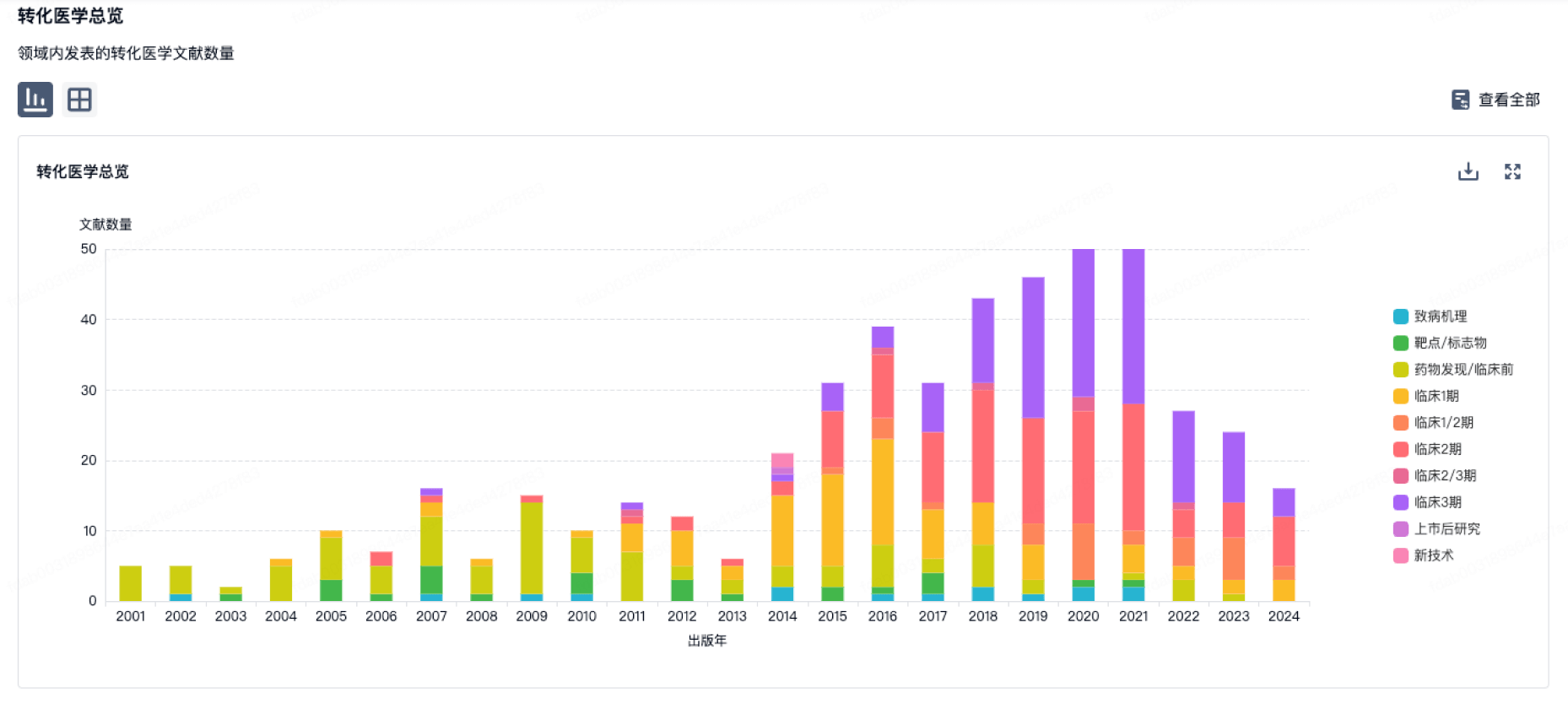
100 项与 Ono Pharmaceutical Co., Ltd. 相关的转化医学
登录后查看更多信息
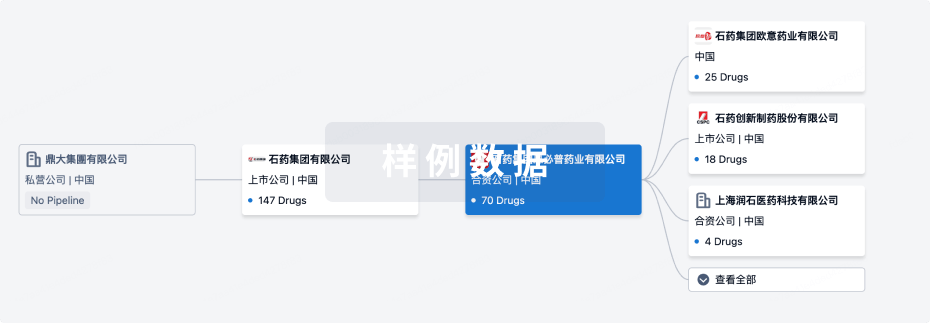
组织架构
使用我们的机构树数据加速您的研究。
登录
或
管线布局
2026年10月26日管线快照
管线布局中药物为当前组织机构及其子机构作为药物机构进行统计,早期临床1期并入临床1期,临床1/2期并入临床2期,临床2/3期并入临床3期
药物发现
19
33
临床前
临床1期
16
13
临床2期
临床3期
4
28
批准上市
其他
97
登录后查看更多信息
当前项目
登录后查看更多信息
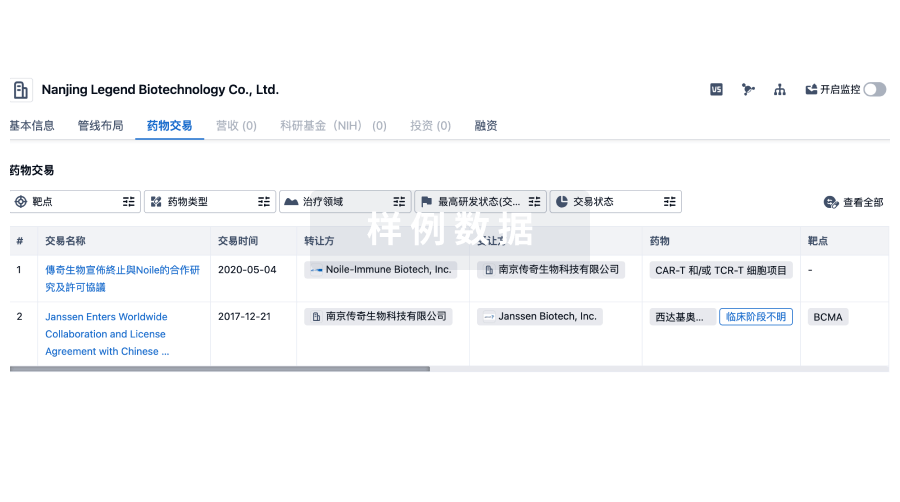
药物交易
使用我们的药物交易数据加速您的研究。
登录
或
转化医学
使用我们的转化医学数据加速您的研究。
登录
或
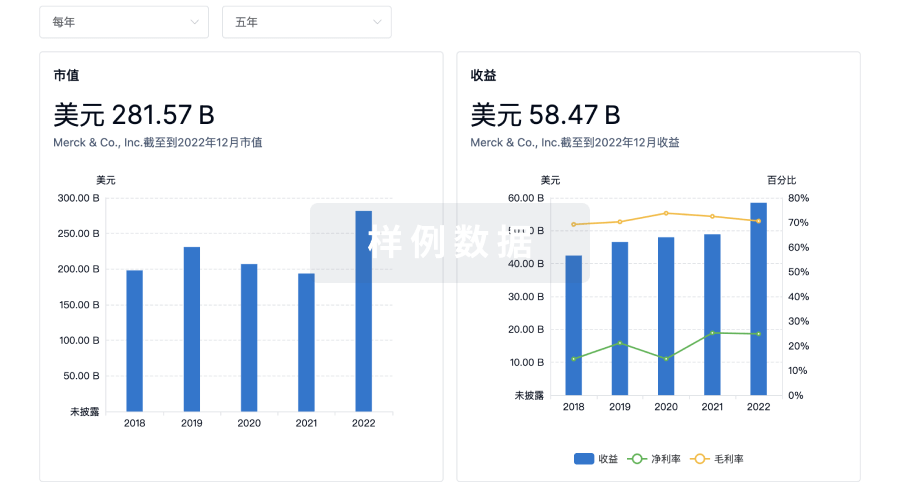
营收
使用 Synapse 探索超过 36 万个组织的财务状况。
登录
或
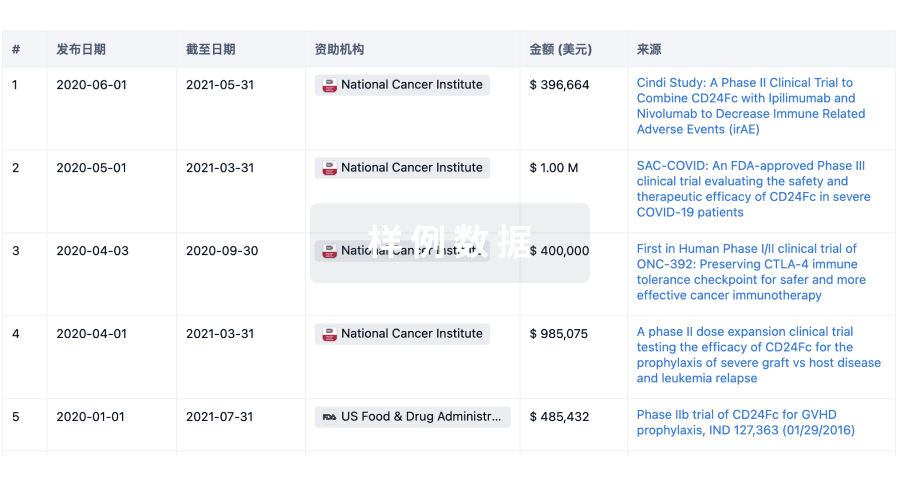
科研基金(NIH)
访问超过 200 万项资助和基金信息,以提升您的研究之旅。
登录
或
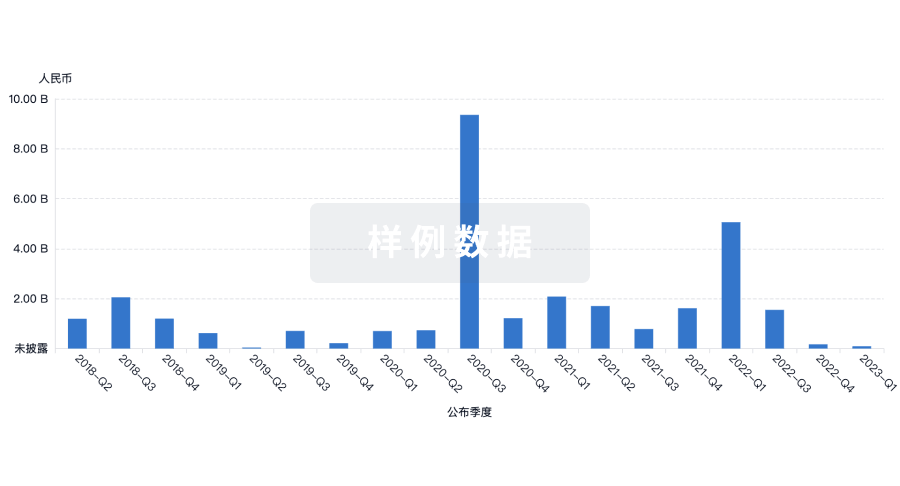
投资
深入了解从初创企业到成熟企业的最新公司投资动态。
登录
或
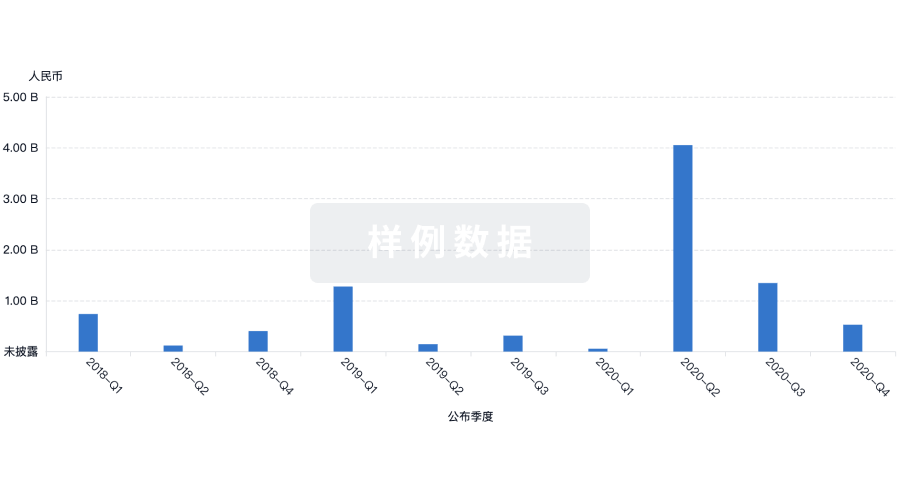
融资
发掘融资趋势以验证和推进您的投资机会。
登录
或
提出任何生物医药研究问题
让每一步生物医药决策都精准制胜
基于十亿级生物数据与全球情报的精准 AI,赋能早期药物发现
立即开始免费试用!
智慧芽新药情报库是智慧芽专为生命科学人士构建的基于AI的创新药情报平台,助您全方位提升您的研发与决策效率。
立即接入生物医药数据包
智慧芽新药库数据也通过智慧芽开放平台,以MCP或API服务形式对外开放。立即使用我们的MCP服务定制您的LLM智能体。
生物序列数据库
生物药研发创新
免费使用
化学结构数据库
小分子化药研发创新
免费使用