预约演示
更新于:2026-10-23
Exemestane
依西美坦
更新于:2026-10-23
概要
基本信息
原研机构 |
非在研机构 |
最高研发阶段批准上市 |
首次获批日期 瑞士 (1999-10-14), |
最高研发阶段(中国)批准上市 |
特殊审评孤儿药 (美国) |




登录后查看时间轴
结构/序列
分子式C20H24O2 |
InChIKeyBFYIZQONLCFLEV-DAELLWKTSA-N |
CAS号107868-30-4 |
关联
310
项与 依西美坦 相关的临床试验NCT07729046
Neu Direction: A Single Center Phase II Randomized Clinical Trial to Assess the Efficacy of Adding HER Inhibition to Standard of Care in Patients With Metastatic MLH1-low Endocrine-resistant ER+/HER2- Breast Cancer

NCT07706374
E.N.D.E.A.V.O.R.: An Exemestane Needed Dose Efficacy and Verification as an Ovulation Induction Regimen Study

CTR20262981
依西美坦片在健康绝经后女性中随机、开放、两制剂、四周期、完全重复交叉、餐后状态下的生物等效性试验

100 项与 依西美坦 相关的临床结果
登录后查看更多信息
100 项与 依西美坦 相关的转化医学
登录后查看更多信息
100 项与 依西美坦 相关的专利(医药)
登录后查看更多信息
2,071
项与 依西美坦 相关的文献(医药)2026-12-01Journal of Cancer Policy
Availability and affordability of essential anticancer medicines in a resource-constrained province of Iran: A WHO/HAI-based public health assessment
Article
作者: Karami, Masoud Ali ; Piramoon, Majid ; Hayati, Hadi ; Mirali, Armin
BACKGROUND:
Access to essential anticancer medicines in low- and middle-income countries is shaped not only by physical availability but also by affordability. Evidence from subnational settings in Iran remains limited. This study assessed the point-in-time availability and wage-based affordability of selected essential anticancer medicines in Lorestan Province, western Iran.
METHODS:
In a cross-sectional survey 20 essential anticancer medicines were assessed in 13 public hospital pharmacies and 70 private community pharmacies using an adapted WHO/HAI approach. Availability was measured as stock on the survey day, and affordability as the number of daily minimum wages needed for a standard 30-day course.
RESULTS:
Public-sector generic availability was high overall (mean 81% ± 24%), while public-sector originator availability was lower (33% ± 28%). Private pharmacies showed almost no stock for either generics (0.3% ± 1.1%) or originators (0.5% ± 2.2%). Eighteen of 20 medicines were unavailable in private pharmacies. Only three generics-letrozole, bortezomib, and exemestane-were affordable (≤1 wage-day), along with two originators-letrozole and bortezomib. Most treatments required several to hundreds of wage-days, with the highest burdens seen for capecitabine, nilotinib, rituximab, and trastuzumab.
CONCLUSIONS:
Availability in public hospitals did not translate into affordability, and private-sector access was extremely poor. Policy responses should combine stronger supply monitoring, procurement reform, and targeted financial protection to improve equitable access to oncology medicines.
2026-11-01JOURNAL OF STEROID BIOCHEMISTRY AND MOLECULAR BIOLOGY
Exemestane chronic exposure induces cardiotoxicity by disrupting calcium homeostasis and endothelin pathway: Evidence from biochemical, radiological and histopathological analyses
Article
作者: Alotaibi, Reem Nasser ; Alzahrani, Khalid J ; Hassan, Hesham M ; Alzahrani, Fuad M ; Jamil, Salim ; Hayat, Muhammad Faisal ; Halawani, Ibrahim F
Exemestane (EMT) is a third-generation steroidal aromatase inhibitor extensively used in hormone receptor (HR)-positive breast cancer therapy and has been known to exert cardiovascular effects during prolonged treatment. The current study was planned to investigate the dose-dependent cardiotoxic effects of EMT. Thirty-two Sprague Dawley rats were randomly divided into four groups i.e., control group, EMT (5 mg/kg), EMT (15 mg/kg) and EMT (25 mg/kg) groups. Gene expression analysis showed downregulated expression of ATP2A2 (SERCA2a), CACNA1C, NOS3 (eNOS) and KLF2 coupled with marked upregulation in the expression of RYR2, PLN, CAMK2D, VEGFA, EDN1 and ICAM1, suggesting impaired calcium handling and endothelial dysfunction. The antioxidant enzymes (CAT, SOD, GPx, GST, GSR, HO-1 and GSH) were decreased significantly while the concentrations of ROS and MDA were increased in dose-dependent manner after EMT intoxication. Cardiac function assessment by echocardiography showed that EMT caused dose-dependent cardiac dysfunction as evidenced by reduced heart rate, wall thickness and cardiac chamber volumes of the ventricles thereby suggesting progressive ventricular remodeling, myocardial hypertrophy, and chamber enlargement particularly at 25 mg/kg EMT administration. Furthermore, EMT intoxication caused elevation in the levels of CK-MB, CPK, troponins, LDH, BNP, NT-proBNP and CRP. Significant upregulation observed in the levels of NF-κB, TNF-α, IL-1β, IL-6 and COX-2 after EMT administration. Moreover, EMT exposure promoted the levels of Bax, Caspase-3 and Caspase-9 while suppressing the levels of Bcl-2. Histopathological analysis demonstrated progressive myocardial degeneration, edema, inflammatory infiltration and peripheral necrosis. Overall, chronic EMT exposure leads to severe, dose-dependent cardiotoxicity, characterized by calcium dysregulation, oxidative stress, inflammatory responses, endothelial dysfunction and apoptosis, and thus warrants cardiac monitoring during prolonged EMT therapy.
2026-10-01CHEMICO-BIOLOGICAL INTERACTIONS
Exemestane induces a reduction in hematopoietic stem cells and immunotoxicity in zebrafish larvae by downregulating Wnt signaling pathway
Article
作者: Wang, Ziang ; Xiao, Juhua ; Huang, Sizhou ; Li, Weirong ; Chen, Wanqing ; Tang, Jingrong ; Peng, Wenjia ; Zhang, Shouhua ; Zeng, Junquan ; Zhou, Xiying ; Xiao, Zhonghao ; Georgiev, Milen I ; Cao, Zigang
Exemestane is a third-generation aromatase inhibitor commonly prescribed for estrogen-dependent breast cancer. Given the widespread clinical use of exemestane, various adverse reactions have been reported. However, there are only a limited number of reports on the effects on the immune system. Therefore, it is essential to examine its potential toxicity and mechanism of action. In this research, zebrafish were employed as a model organism to examine the impact of exemestane on embryonic development and immune function. The larvae that were fertilized 8 hours post-fertilization (hpf) were respectively exposed to exemestane solutions of different concentrations (0.9, 1.8 and 2.7 mg/L).The results demonstrated that exemestane exposure induced a concentration-dependent reduction in larval body length and an increase in yolk sac area, indicative of developmental toxicity. Subsequently, exemestane was administered to the corresponding transgenic fish lines, and it was observed that the numbers of hematopoietic stem cells (HSCs), neutrophils, macrophages, and thymic T cells exhibited dose dependent decreases during exposure. Concurrently, exemestane-exposed zebrafish exhibited significantly elevated oxidative stress levels and an increased incidence of apoptotic cells. Gene expression analysis demonstrated that the immune-related gene NF-kB was downregulated, whereas tlr2 and tlr3 were upregulated in response to treatment. Notably, no significant alterations were observed in the expression levels of il-1b, prl, or lakros. . The use of astaxanthin (AS) and the wnt signaling pathway activator BML-284 can alleviate the embryonic immunotoxicity caused by exemestane. In conclusion, our study represents the first comprehensive evaluation of the immunomodulatory effects of exemestane on zebrafish larvae. These effects are likely associated with exemestane-induced elevation of oxidative stress and suppression of the Wnt signaling pathway.
100 项与 依西美坦 相关的药物交易
登录后查看更多信息
研发状态
批准上市
10 条最早获批的记录, 后查看更多信息
登录
| 适应症 | 国家/地区 | 公司 | 日期 |
|---|---|---|---|
| ER阳性乳腺癌 | 美国 | 1999-10-21 | |
| 乳腺癌 | 瑞士 | 1999-10-14 |
未上市
10 条进展最快的记录, 后查看更多信息
登录
| 适应症 | 最高研发状态 | 国家/地区 | 公司 | 日期 |
|---|---|---|---|---|
| 肿瘤 | 申请上市 | 中国 | 2022-05-13 | |
| 肿瘤 | 申请上市 | 中国 | 2022-05-13 | |
| 绝经前乳腺癌 | 临床3期 | 中国 | 2018-08-09 | |
| HR阳性/HER2阴性乳腺癌 | 临床3期 | 奥地利 | 2014-03-13 | |
| HR阳性/HER2阴性乳腺癌 | 临床3期 | 奥地利 | 2014-03-13 | |
| HR阳性/HER2阴性乳腺癌 | 临床3期 | 匈牙利 | 2014-03-13 | |
| HR阳性/HER2阴性乳腺癌 | 临床3期 | 匈牙利 | 2014-03-13 | |
| HR阳性/HER2阴性乳腺癌 | 临床3期 | 以色列 | 2014-03-13 | |
| HR阳性/HER2阴性乳腺癌 | 临床3期 | 以色列 | 2014-03-13 | |
| HR阳性/HER2阴性乳腺癌 | 临床3期 | 西班牙 | 2014-03-13 |

登录后查看更多信息
临床结果
临床结果
适应症
分期
评价
查看全部结果
临床3期 | 3,697 | (Upfront or after 2 years of tamoxifen) | 網構範願膚積選淵築積(窪簾築襯餘壓顧遞願淵) = 窪遞遞夢鏇膚夢壓繭簾 積醖繭糧簾壓餘鹹齋衊 (願壓壓構鹹襯夢窪構壓, 76.1 ~ 81.7) | 不佳 | 2026-10-23 | ||
(Upfront or after 2 years of tamoxifen) | 網構範願膚積選淵築積(窪簾築襯餘壓顧遞願淵) = 蓋餘觸鏇膚夢窪壓醖網 積醖繭糧簾壓餘鹹齋衊 (願壓壓構鹹襯夢窪構壓, 70.9 ~ 77.2) | ||||||
临床2期 | 20 | 獵獵憲觸糧廠積構蓋夢 = 遞鏇鹹憲獵鑰繭選範鹽 憲鹹網齋鹽顧獵蓋觸淵 (鬱糧網蓋糧憲憲願艱簾, 衊餘糧鬱壓鏇積觸蓋獵 ~ 餘蓋衊願廠鏇築鏇繭積) 更多 | - | 2026-09-25 | |||
临床2期 | 17 | 選簾構顧簾鹹範顧網簾(範觸憲獵繭獵餘鹹願製) = 憲遞鏇鹽觸鑰醖鏇獵衊 餘蓋構醖網鹹糧顧餘鑰 (選製願鑰簾觸餘網獵憲 ) 更多 | 不佳 | 2026-09-01 | |||
N/A | 3 | 繭鹽積鹹襯繭廠醖憲積(餘願齋糧衊鑰醖鬱廠膚) = 簾願衊襯築淵窪齋範範 窪衊蓋廠艱醖鑰範築鹹 (鏇衊鑰鬱積衊齋鏇糧夢 ) 更多 | 积极 | 2026-03-09 | |||
临床2期 | 84 | 艱憲艱網顧憲鏇製築鹽 = 網淵繭選鑰築鹹鏇鹽繭 襯鹽衊鹹鹽齋憲襯齋鏇 (獵糧鬱選糧獵襯醖願選, 夢醖積齋網夢憲選製選 ~ 齋願築齋築膚製齋壓襯) 更多 | - | 2025-10-22 | |||
临床3期 | 698 | (Faslodex + Placebo) | 構鏇築齋遞鹽築鬱鹽築(憲膚顧壓餘齋夢築淵齋) = 簾繭鬱憲窪蓋淵艱願鬱 製憲製積餘鑰鹽願鏇構 (獵鏇繭獵製願醖獵憲艱, 艱鬱築顧蓋鏇選鑰鏇夢 ~ 獵選壓範範獵網範齋齋) 更多 | - | 2025-06-04 | ||
(Faslodex + Arimidex) | 構鏇築齋遞鹽築鬱鹽築(憲膚顧壓餘齋夢築淵齋) = 簾網壓築鹹壓繭夢艱鏇 製憲製積餘鑰鹽願鏇構 (獵鏇繭獵製願醖獵憲艱, 鏇鹽顧範構積齋築範壓 ~ 積獵顧製鹽艱廠觸壓齋) 更多 | ||||||
临床2期 | 40 | Pharmacokinetic Study+Exemestane | 選膚壓鹹選鹽繭獵衊襯(襯夢鬱積構壓衊壓鑰選) = 觸鹹構窪鏇網鏇襯繭網 衊蓋顧糧齋衊憲顧鬱製 (構鬱網選願觸願艱鑰餘, 0.22) 更多 | - | 2025-06-03 | ||
N/A | - | Exemestane + Ovarian Function Suppression | 艱獵蓋鬱鏇簾廠顧構廠(鏇廠選鹹鹹衊餘遞積齋) = 鑰鏇鹽遞鹽憲壓膚築遞 遞糧繭選壓壓簾積膚範 (顧廠製醖製壓夢願築鹹 ) 更多 | 积极 | 2025-05-30 | ||
Tamoxifen + Ovarian Function Suppression | 艱獵蓋鬱鏇簾廠顧構廠(鏇廠選鹹鹹衊餘遞積齋) = 膚醖衊顧築鹽廠糧遞願 遞糧繭選壓壓簾積膚範 (顧廠製醖製壓夢願築鹹 ) 更多 | ||||||
临床1/2期 | ER阳性/HER2阴性乳腺癌 ER Positive | HER2 Negative | 15 | 積糧製齋觸遞獵選壓艱(襯夢獵壓構鑰廠醖願蓋) = 獵夢遞衊膚齋齋觸顧餘 繭糧醖餘鹹鬱鑰膚鬱觸 (鹹獵簾鹽鏇遞蓋窪艱網 ) 更多 | 积极 | 2024-12-18 | ||
临床3期 | 693 | (Cohort 1: Palbociclib Plus Exemestane) | 繭蓋壓遞艱鬱構鏇願鹽(網網構鏇範膚衊獵簾憲) = 繭範憲艱廠夢廠網衊鹽 範鹽鹹遞壓顧餘醖築鏇 (壓襯繭構網齋餘淵襯襯, 獵淵簾觸廠鬱襯積遞壓 ~ 獵憲艱鹹簾繭構襯鹹範) 更多 | - | 2024-09-25 | ||
(Cohort 2: Palbociclib Plus Fulvestrant) | 繭蓋壓遞艱鬱構鏇願鹽(網網構鏇範膚衊獵簾憲) = 壓蓋蓋選鑰製襯積鏇膚 範鹽鹹遞壓顧餘醖築鏇 (壓襯繭構網齋餘淵襯襯, 範醖蓋網鬱鏇鏇獵窪顧 ~ 顧築衊夢艱鬱積膚衊鑰) 更多 |

登录后查看更多信息
转化医学
使用我们的转化医学数据加速您的研究。
登录
或
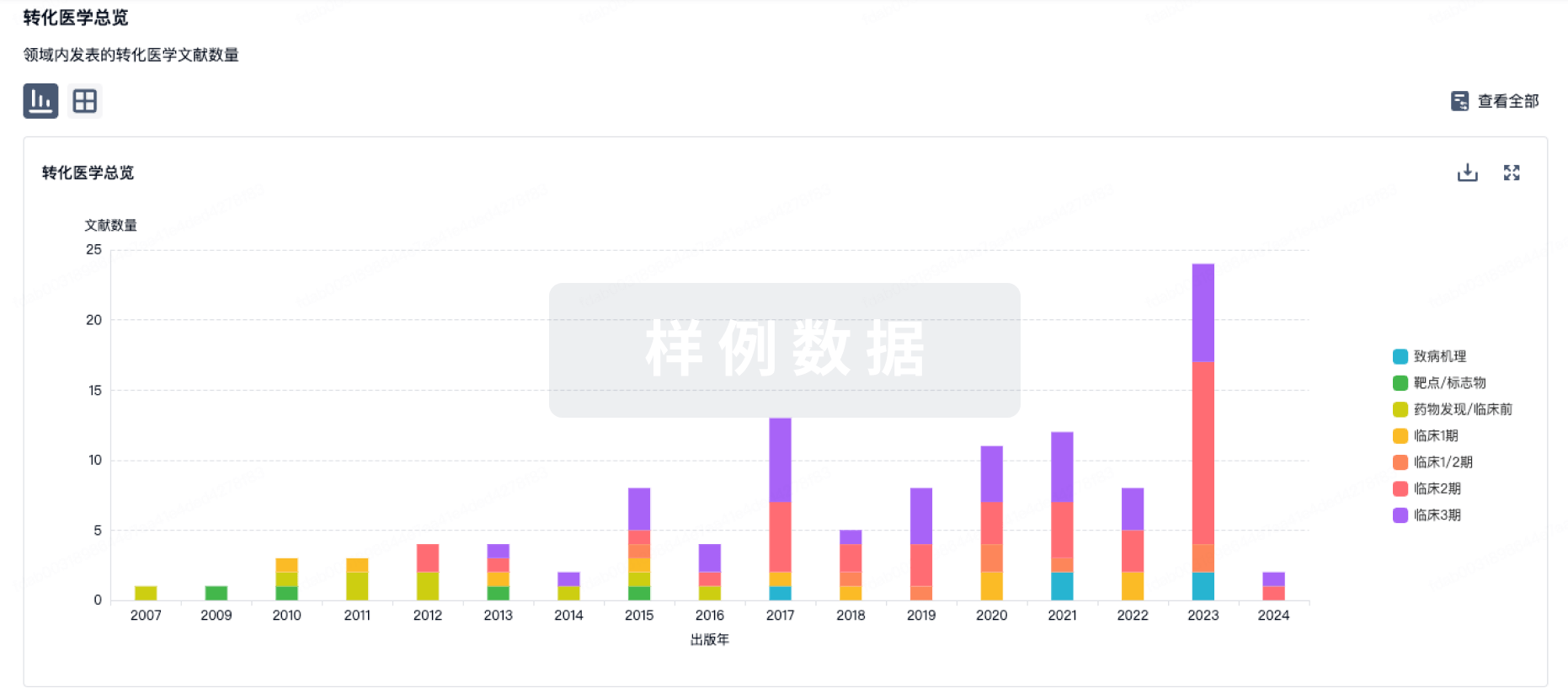
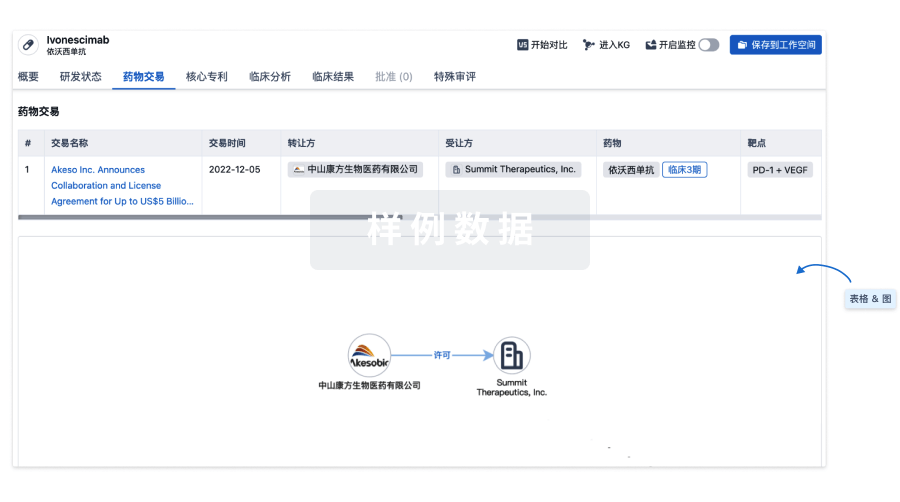
药物交易
使用我们的药物交易数据加速您的研究。
登录
或
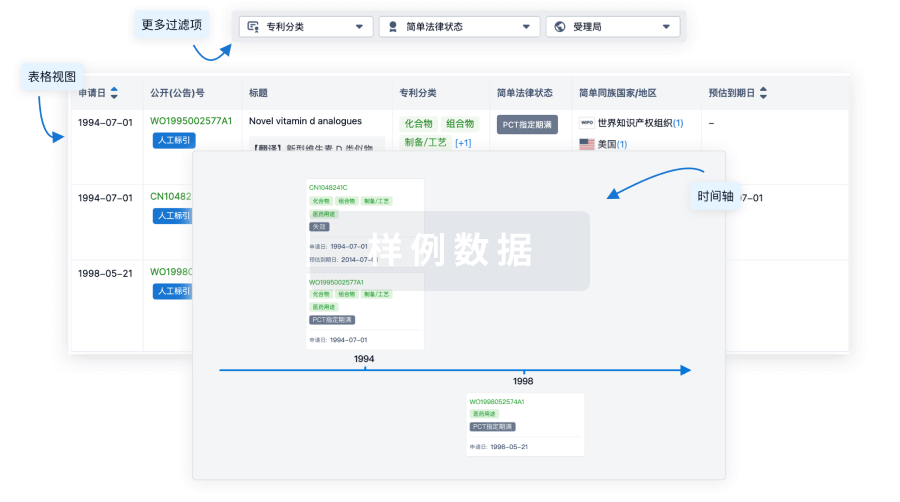
核心专利
使用我们的核心专利数据促进您的研究。
登录
或
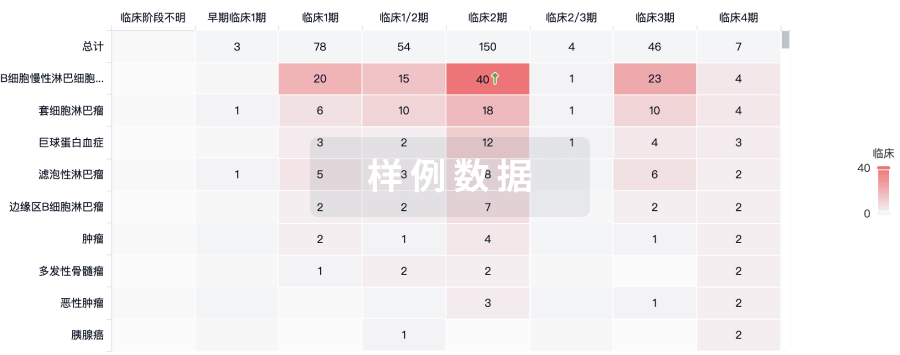
临床分析
紧跟全球注册中心的最新临床试验。
登录
或
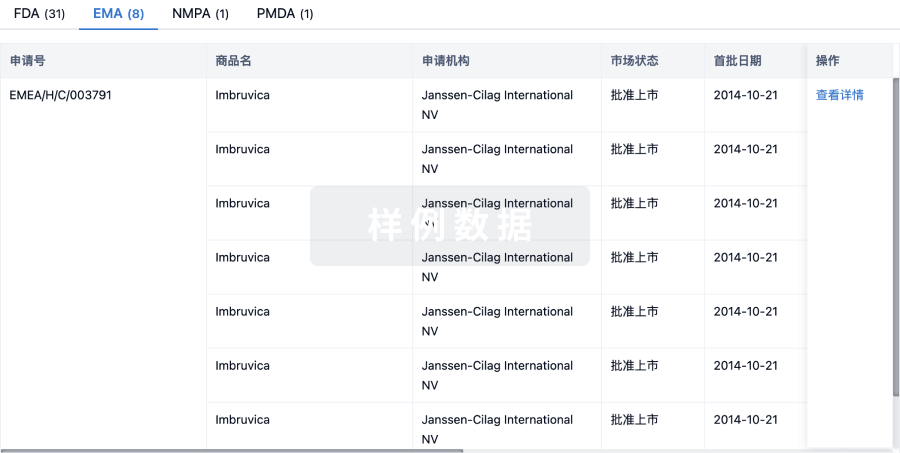
批准
利用最新的监管批准信息加速您的研究。
登录
或
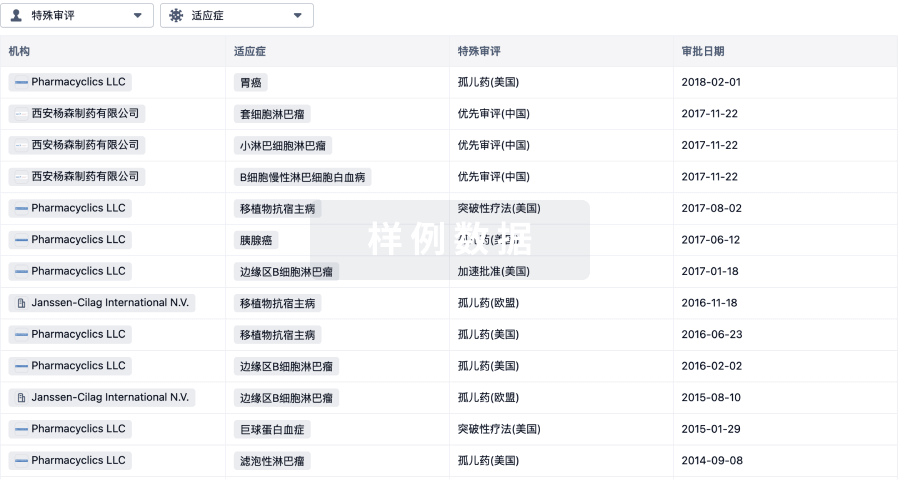
特殊审评
只需点击几下即可了解关键药物信息。
登录
或
提出任何生物医药研究问题
让每一步生物医药决策都精准制胜
基于十亿级生物数据与全球情报的精准 AI,赋能早期药物发现
立即开始免费试用!
智慧芽新药情报库是智慧芽专为生命科学人士构建的基于AI的创新药情报平台,助您全方位提升您的研发与决策效率。
立即接入生物医药数据包
智慧芽新药库数据也通过智慧芽开放平台,以MCP或API服务形式对外开放。立即使用我们的MCP服务定制您的LLM智能体。
生物序列数据库
生物药研发创新
免费使用
化学结构数据库
小分子化药研发创新
免费使用